Performance testing of an application is basically the process of understanding how the web application and its operating environment respond at various user load levels. In general, we want to measure the latency, throughput, and utilization of the website while simulating attempts by virtual users to simultaneously access the site. One of the main objectives of performance testing is to maintain a website with low latency, high throughput, and low utilization.
The performance test measures how well the application meets the customer expectations in terms of,
Performance problems are usually the result of contention for, or exhaustion of, some system resource. When a system resource is exhausted, the system is unable to scale to higher levels of performance. Maintaining optimum Web application performance is a top priority for application developers and administrators.
Performance analysis is also carried out for various purposes such as:
Typically to debug applications, developers would execute their applications using different execution streams (i.e., completely exercise the application) in an attempt to find errors. When looking for errors in the application, performance is a secondary issue to features; however, it is still an issue.
Identify the physical test environment and the production environment as well as the tools and resources available to the test team. The physical environment includes hardware, software, and network configurations. Having a thorough understanding of the entire test environment at the outset enables more efficient test design and planning and helps you identify testing challenges early in the project. In some situations, this process must be revisited periodically throughout the project’s life cycle.
Identify the response time, throughput, and resource utilization goals and constraints. In general, response time is a user concern, throughput is a business concern, and resource utilization is a system concern. Additionally, identify project success criteria that may not be captured by those goals and constraints; for example, using performance tests to evaluate what combination of configuration settings will result in the most desirable performance characteristics.
Identify key scenarios, determine variability among representative users and how to simulate that variability, define test data, and establish metrics to be collected. Consolidate this information into one or more models of system usage to be implemented, executed, and analyzed.
Prepare the test environment, tools, and resources necessary to execute each strategy as features and components become available for test. Ensure that the test environment is instrumented for resource monitoring as necessary.
Develop the performance tests in accordance with the test design.
Run and monitor your tests. Validate the tests, test data, and results collection. Execute validated tests for analysis while monitoring the test and the test environment.
Consolidate and share results data. Analyze the data both individually and as a cross-functional team. Reprioritize the remaining tests and re-execute them as needed. When all of the metric values are within accepted limits, none of the set thresholds have been violated, and all of the desired information has been collected, you have finished testing that particular scenario on that particular configuration.
Functions of a Typical Tool
The following are the only few attributes out of many that were considered during performance testing:
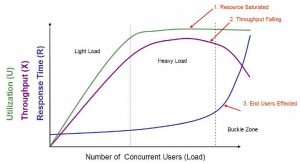
Throughput and Response time with different user loads
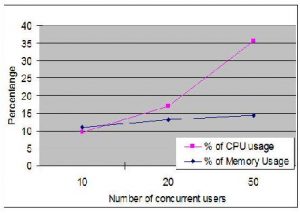
CPU and Memory Usage with different user loads
Have questions? Contact the software testing experts at InApp to learn more.