Mobile applications have transformed business. Most companies, including SMEs and startups, are using apps for both internal and external software needs. In such a highly competitive market, developers use new tools and frameworks for cross-platform mobile app development to reduce dev time and costs.
By using cross-platform app development, companies can widen the reach of an app while controlling the budget. As a result, most companies prefer cross-platform mobile app development over native mobile app development.
Moreover, if you want a simple mobile application without complex functions and animation, cross-platform mobile app development works great.
To select the best cross-platform app framework for your requirement, you should consult an experienced developer. The right technology and framework will fuel the growth of your business.
Before we talk about the most common cross-platform app development frameworks, let’s learn a little about the basics.
A cross-platform mobile app development framework is a set of tools or software to develop native-like apps for multiple platforms such as iOS, Android, Windows, Blackberry, and Web with a single codebase. Cross-platform app development allows you to reach a larger targeted audience at a lower cost and in less time.
As one of the most popular development methods today, most mobile app development companies use it extensively.
Programming languages used in some open-source, cross-platform app development frameworks include:
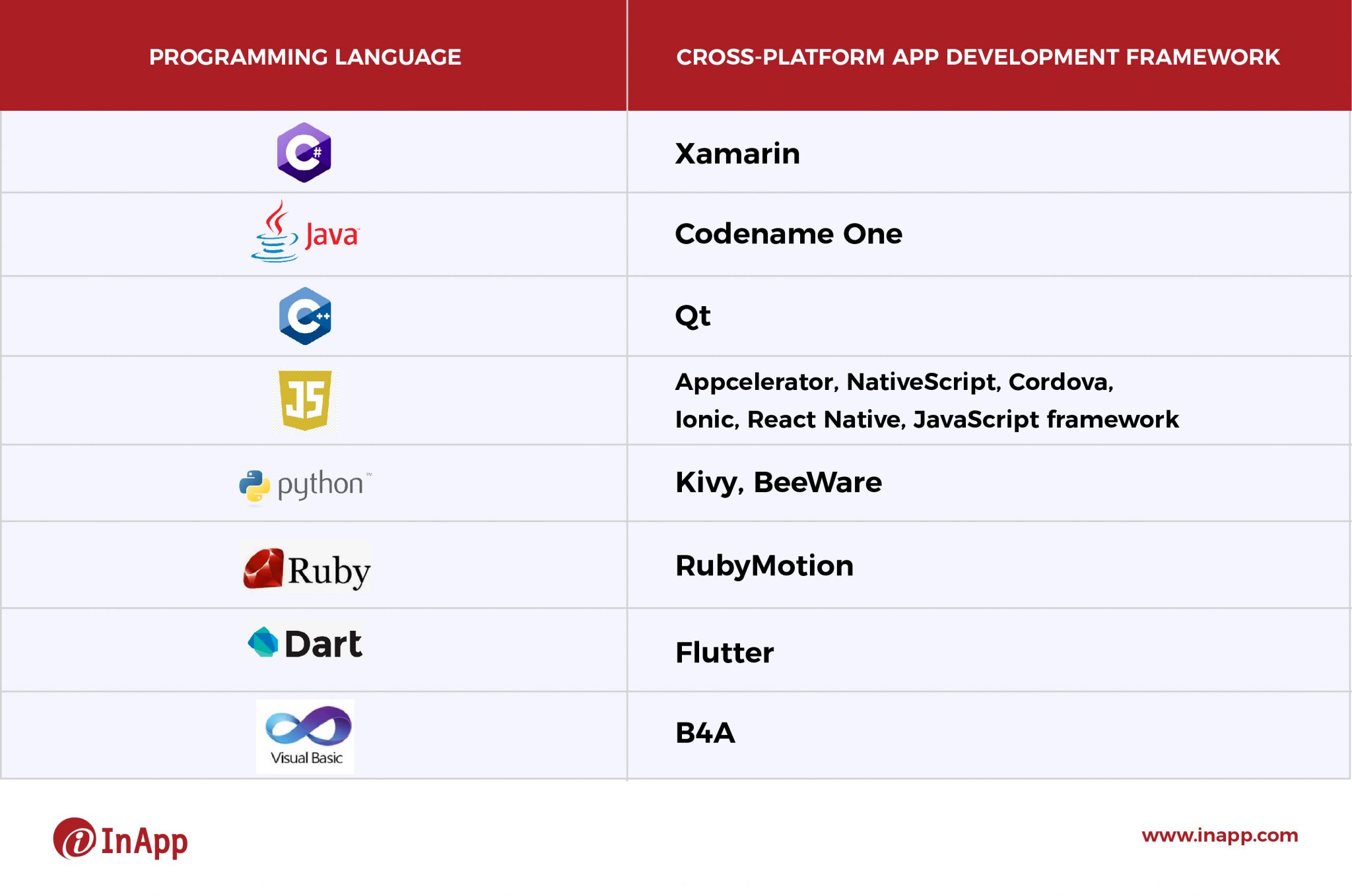
The benefits of cross-platform app frameworks include reduced costs and faster timeframes. Let’s discuss these advantages in more detail.
Cross-platform app development frameworks reduce your overall costs because this method requires fewer resources. That helps you balance quality, budget, and development time.
Also called “Write Once Run Anywhere” (WORA), the reusability of code is one of the biggest advantages of cross-platform frameworks. Developers write the code once and then reuse it on multiple platforms—saving time, effort, and operational costs.
With a single codebase for multiple platforms, an app is easier and faster to deploy, maintain, and update, which results in savings of both time and effort.
With cross-platform frameworks, you can easily share a unified UI/UX across different platforms while maintaining platform-specific standards.
Because you can deploy your app on multiple platforms, you get wider exposure to the targeted audience.
Ionic is an open-source, cross-platform framework created in 2013 by Max Lynch, Ben Sperry, and Adam Bradley of Drifty Co. It allows changes in code structure. Apps developed on this framework are highly interactive and native-like. That makes Ionic perfect for developing progressive web applications (PWA). The latest version is 5.5.4, which was released on February 4, 2021.
Features
An open-source mobile app development platform, the Flutter web development framework was introduced by Google in 2017. The object-oriented language contributes to app development for platforms such as Mac, Windows, Android, iOS, Linux, and Google Fuchsia from a single codebase. Its latest version is 1.22.6, released on January 26, 2021.
Features
React Native is a popular open-source, cross-platform mobile app development framework for both Android and iOS. Officially released by Facebook in 2015, it’s supported by a large community and undergoing regular improvement. Its latest version is 0.63, and it’s considered by most developers to have the potential to combine the best features of JavaScript and React.JS.
Features:
Xamarin is a cross-platform used for developing applications for iOS, Android, and Windows. It uses .NET and C#, and it shares 90% of the code on other platforms for crafting intuitive and engaging mobile apps. It’s based on the Microsoft technology stack, and version 5.0 is the latest release.
Features
Native Script allows you to develop cross-platform apps using XML, CSS, and JavaScript. It’s suitable for both iOS and Android platforms. You don’t need to install any plugins to access the camera, GPS, etc.
Features
In mobile app development, cross-platform app development frameworks create opportunities for startups, SMEs, and enterprise organizations. If you want to select the best cross-platform solution for your project, consult with experts in the field. InApp has been developing apps for two decades on many cross-platform solutions. If you have any questions, contact us.
There are many cross-platform frameworks available in the market. You can select from a variety of options. Most of these frameworks will ensure the smooth functioning of your app. The best way to get started is to contact experts in mobile app development.
It’s an ongoing debate in the tech community whether cross-platform is better than native development. Both tools are still evolving. However, because of the lower costs and reduced development time, most companies favor cross-platform.