Today’s internet is all about web apps and the advancement of web applications and other technologies that change the way we do business. Applications with valuable data make them a high-priority target for a security breach. The types of data that are often stolen include valuable information like core business data, customer identification, access controls, etc. These data threats make it imperative to follow web application security best practices.
So if security matters, you have to be proactive and not reactive. Assuming that the network firewall that you have in place to protect your network will secure your websites and web applications won’t help. Ensuring security is about identifying the risks and implementing appropriate countermeasures. This requires developers to spend time scanning and identifying vulnerabilities than fixing them.
Application security is a need for users and the responsibility of the developers. This is a need since software security breaches cost millions of dollars for any organization; fixing defects after the release is relatively risky and expensive; security issues can cause negative publicity. A responsibility to protect your site visitors, protect your brand image, and protect your customer’s trust.
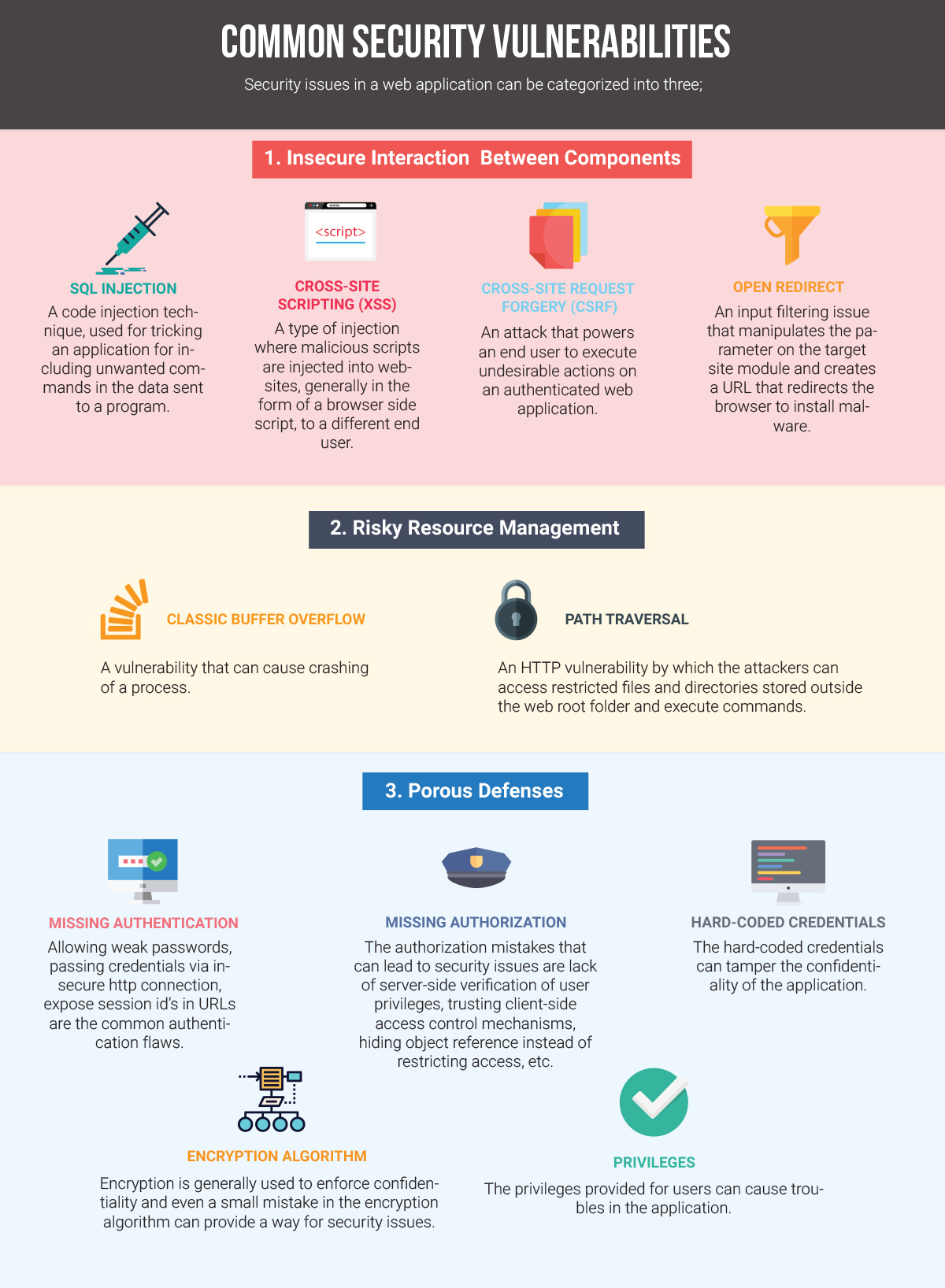
As a preventive measure, web app developers typically adopt threat modeling, a methodology for identifying threats, their causes, prevention, and mitigation strategies to avoid the negative effects of security risks. It complements the security code review process by looking at an application from the attacker’s perspective. This model ensures that applications are being developed with built-in security from the very beginning.
Additionally, there are some basic practices that every developer can and should be doing as a matter of course for preventing security issues. For securing web applications you must identify all security issues and vulnerabilities within the application before an attacker identifies and exploits them. Scan your web application using a black box scanner, do a manual source code audit, and do an automated/manual scan for identifying coding problems.
Almost all technical vulnerabilities can be identified using automated scanning methods like SQL Injection, Cross-Site Scripting, etc, whereas manual scanning will help in identifying logical vulnerabilities. Try to limit the remote access of a web application to a specific set of IP addresses. The administrator must always take some time to analyze every web application that is running and ensure the least possible privileges are provided to the user, application, and service. Make sure to differentiate your live environment from the development and testing environment.
The most important process in securing your web application is to always install security patches so that the attackers cannot find and exploit any known vulnerabilities in the software. Making use of web application firewalls (WAF) will check the incoming traffic and block any attempts made for the attack. Apart from this, you can use various security tools to scan web applications.
Some of the free tools used for testing web application security are: