The right technology stack makes development easier because it incorporates the programming languages, software tools, and technology services needed to run an application. The MEAN and MERN stacks are two common technology stacks with JavaScript frameworks, but each one offers specific advantages and challenges. Let’s learn more about their similarities and differences, and how to pick the right one for your software development project.
The abbreviation of MEAN stands for MongoDB, Express, Angular, and Node, respectively. This technology stack is open source and commonly used for web and hybrid mobile app development. MEAN is a complete JavaScript-based stack that combines clients, databases, and servers.
In general, the MEAN stack offers some productivity advantages for web applications, particularly for big data and/or real-time application projects for large-sized, enterprise-level applications, and websites. Benefits include…

MERN is short for MongoDB, Express, React, and Node, after the four key technologies that make up the stack. Like MEAN, MERN offers a collection of JavaScript-based databases, frameworks, and runtime environments. The MERN stack offers an end-to-end framework for developers, and its popularity is growing rapidly.
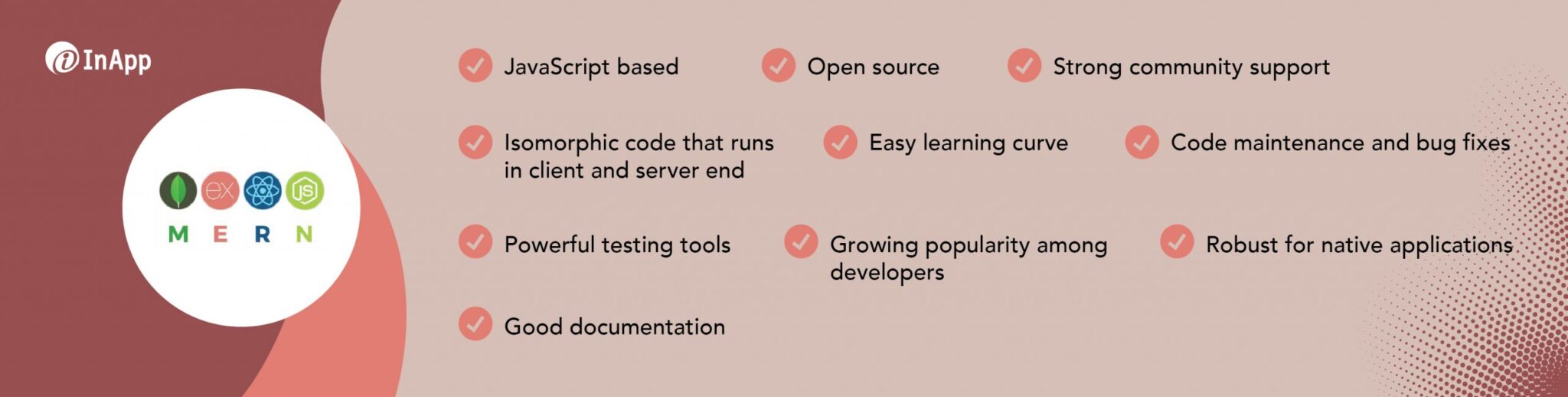
MERN provides the advantage of both front-end development and back-end development, as well as advantages for mobile development. Benefits include…
Your project requirements will drive your choice of technology stack. Picking the right one depends on your needs:
Both the MERN and MEAN stacks use MongoDB, Express, and Node. The difference is between Angular and React. Built and maintained by Google, Angular is an open-source web application framework. React is the JavaScript-based front-end library from Facebook.
Have specific questions about MEAN vs MERN? Contact the experts at InApp. We can help you save time and money by picking the right technology stack for your project.