Many businesses start with Business Process Automation (BPA) in their quest for digital transformation. The direct effect of BPA technologies on workflows and operations makes it easy to see the impact — and the benefits.
BPA takes common business processes (invoicing, communication, purchase orders, data entry, onboarding, etc.) and uses technology to replace manual processes. Automation improves efficiencies and prevents delays or bottlenecks with these transactions, while also freeing up employees to focus on more important tasks.
BPA is a tool for business process management, and it can be used for almost any standard workflow. Some of the most common applications include:

BPA sounds similar to Robotic Automation (RPA), which also automates repetitive tasks. In general, RPA is used to complete simple tasks, like a machine designed to pack boxes in a factory. RPA typically does not need to interface with other software, and its implementation process does not require specific skills.
BPA, in contrast, is customized for an organization and integrated into existing systems. Much of the confusion lies in the fact that comprehensive BPA solutions may include RPA components. Also, advanced solutions for both BPA and RPA may use similar emerging technologies, like Artificial Intelligence and machine learning tools.
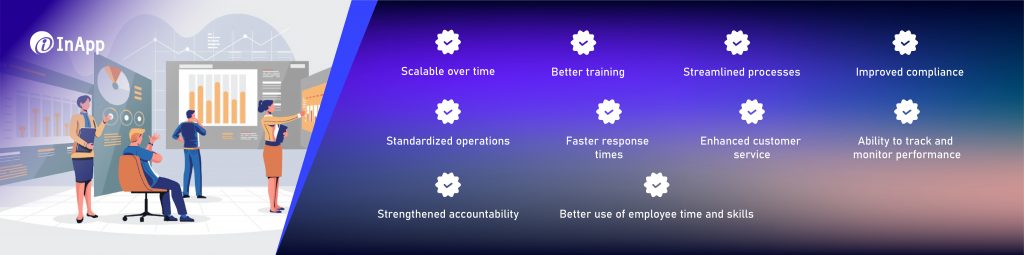
The increased interest in BPA results from the benefits that can make a big impact. These advantages include:
Much like any project, your BPA implementation process should start with a well-defined plan. These steps include…
While almost any business process can benefit from BPA, many companies start with simple tasks in data entry, financial management, human resources, or communication.
BPA can streamline both sending and receiving invoices, reducing the time and paperwork involved. For sending invoices, a BPA solution could automate the data gathering, compiling, and dispatching of invoices. For accounts payable, the software may systematize the receiving, approval, and payment process according to predetermined criteria.
Managing personnel requires different functions, from hiring to onboarding to training and more. BPA can automate the process so that each task is completed in a specific order, completed tasks are documented, and information is consistent. Among other things, BPA can help HR employees reduce paperwork, respond faster, and prevent costly errors.
BPA can help employees provide customers with the most accurate and consistent information possible. For example, call centers and support personnel can use BPA to optimize call flow and scripts that provide standard responses to common interactions with customers, including inquiries, complaints, sales, and support. That helps to streamline communication and improve customer satisfaction.
Companies of all sizes can benefit from BPA, improving efficiency and reducing costs. Contact the BPA experts at InApp to learn more about our BPA solutions.