
The Manifest Crowns InApp as India’s Most Recommended Software Developer for 2021

Having the right software is crucial for growing businesses that want to scale their markets, but what’s more important is having the right team and technologies behind it. Here at InApp, we’re known for our world-class solutions that disrupt industries and set new standards. Over the years, we’ve earned the trust of our customers by providing incredible solutions for their needs. Because of the extraordinary care and attention we put into our clients’ projects, we’ve been officially recognized by The Manifest as India’s most recommended software development company for 2021! This is such a huge honour that we’re genuinely proud to add to our collection. Looking back at our inception back in 2000, we understood how crucial it is to back your business with impactful technologies. As the market evolved, we continued to further ourselves to best serve our clients. InApp is known for many things — our cost-effective pricing ranges, our experienced teammates, our undeniable expertise in the field, and most importantly, our client’s success. Thanks to the wonderful support of our clients, we’ve been recognized by The Manifest in their inaugural awards recognition. For those who aren’t familiar with them, The Manifest is an independent B2B blog platform where you can browse through past work and projects of countless service providers like us. Encompassing the IT, marketing, and business services spaces, the site hosts a marvellous collection of helpful content to help millions of users globally. According to their recent findings, InApp is among the top 15 service providers in the segment for its demonstrated track record. The support of our clients helped us get to where we are today, making this achievement extra sweeter for us. Big cheers to everyone who supported us throughout this journey. Looking for a technology partner that you can grow with for the long haul? We’re the right team for you! Work with us and see for yourself why our clients are always satisfied. Send us a message and tell us more about your business.
DevOps vs DataOps: What’s the Difference?

DevOps services manage software development and delivery. DataOps is an end-to-end approach to delivering data products efficiently and effectively.
What is Custom Software Development?
What is Custom Software Development?
Differences Between Custom Software Development and Commercial Off-the-Shelf Software
Top 5 Web Application Development Platforms

The web application development space is expanding. You’ll find frameworks with various features that are introduced every year. Some of the top web application development frameworks on the market today include…
The Role of DevOps and Agile in Digital Transformation
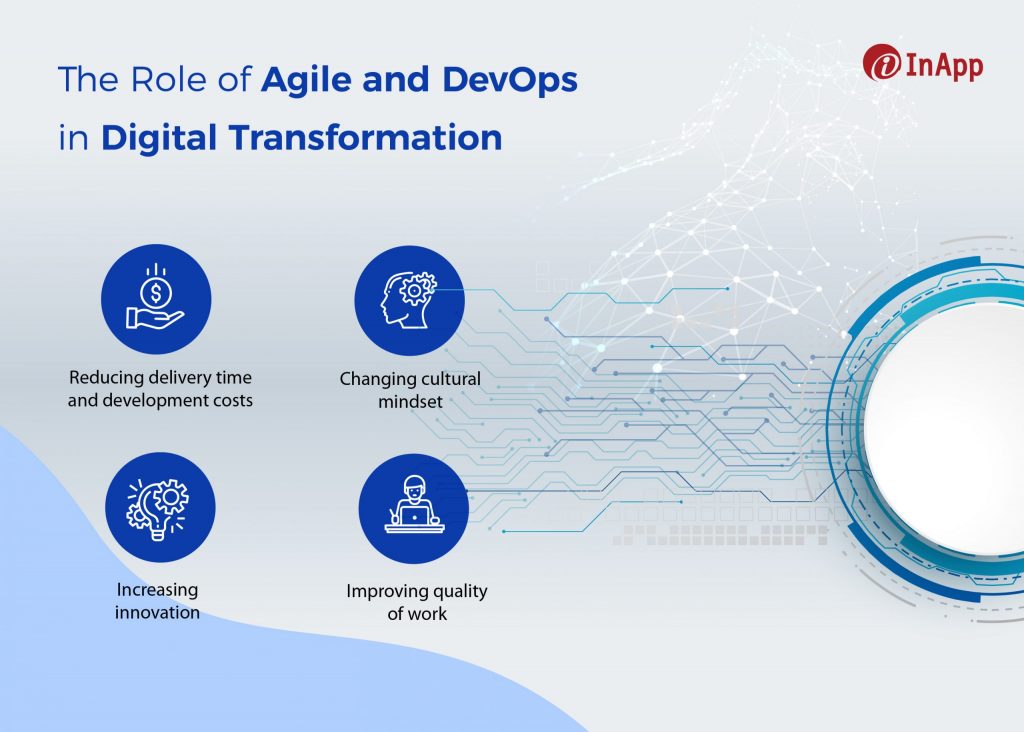
We live in an era of technology dominated by software applications and business requirements. Be it a small enterprise or a large industry, we can see the impact of digital transformation everywhere. Digital is empowering the world in many ways. Also called the fourth industrial revolution or Industry 4.0, digital transformation stands on the four pillars of the Internet of Things (IoT), cyber-physical systems, cognitive computing, and cloud computing. These components are bringing rapid transformation to manufacturing technologies and boosting automation. But, all industries want to reap the benefits of digital transformation for economic growth and competitive advantages. Looking at the importance of digital transformation in the business world, it becomes imperative to answer the question: What methods help us the most? Software developers have talked about the immense benefits of Agile and DevOps, advanced data analytics methods, and DevSecOps as the key software methodologies that have been redefining the process of digital transformation. Most global companies are leveraging Agile and DevOps to deliver the highest standards in customer service. While companies used the Waterfall model for a long time as the key software development methodology, they’ve switched to Agile for better problem-solving, flexibility, and collaboration. DevOps comes from ‘Development’ (Dev) and ‘Operations’ (Ops). It’s a set of software development practices that shortens systems’ development life cycle. Role of Agile in Digital Transformation In Agile methodology, you define every step of software development. It follows an iterative approach. It makes each phase of digital transformation faster, more reliable, and more flexible. It fits in perfectly with the fast-changing preferences and requirements of consumers. Organizations are moving away from traditional frameworks for digital transformation. For a smooth transition, they have to take into account things like collaboration, transparency, and accountability, among others, for successful delivery. In such a situation, training is imperative for a smoother change and better outcome. And this shift is being effectively driven by Agile. Using Agile, organizations build frameworks that can help them release a particular software solution in rapid iterations. Agile also helps organizations to build a secure digital platform. Role of DevOps in Digital Transformation Here are the 4 ways DevOps helps with digital transformation. Reducing delivery time and development costs Fast delivery is important for digital transformation. Duplicate work, isolation of multiple teams and departments, and unnecessary delays can make software development costly and inefficient. DevOps bring operation and development teams closer. Thus, it reduces handoffs. Collaboration reduces duplicate work and eliminates unnecessary waits and delays. Overall, it results in savings of both time and money. Changing cultural mindset DevOps promotes and encourages automation and collaboration. Automation saves time and reduces the potential for error. Collaboration helps teams deliver high-quality products for their customers. Both automation and collaboration are critical for the success of digital transformation. This cultural change also enhances the efficiency and satisfaction of team members. Increasing innovation DevOps automates repetitive tasks and saves time for both development and operations. That makes teams happier and gives them more time to focus on innovative activities. Improving the quality of work The culture of automation and collaboration that DevOps promotes can reduce human error and improve the quality of work. What are the benefits of using Agile and DevOps in Digital Transformation? Maximum collaboration Better work environment Simplified key processes Minimum hardware provisioning Modern IT infrastructure and applications API-enabled legacy systems Services with one-click deployment Continuous integration and delivery pipeline Empowered software teams Conclusion Higher customer expectations and the rapidly changing business environment require digital transformation for more efficiency and improved competitiveness. Considering the benefits, DevOps and Agile will play an important role in the process. Most global organizations have implemented them or are in the process of doing so. Even if DevOps and Agile will not solve all software development problems, they can help organizations improve customer satisfaction and keep up with the unpredictable business environment. We at InApp have been leveraging multiple open-source software solutions and cloud-computing platforms to optimize and automate the work of our clients. To learn more about software solutions and services for digital transformation, please contact us here.
Top Node.JS Web Application Development Frameworks

There’re many Node.JS frameworks available in the market. But which are the top ones? Here we introduce you to some of the best Node frameworks available in the market in 2021.
6 Ways Artificial Intelligence is Improving Manufacturing

With the application of Artificial Intelligence-powered systems, manufacturing organizations have started using the data collected over years to increase their efficiency and reduce costs. Now, AI is considered to be a game-changer at every level in manufacturing. Every industry is supposed to be affected dramatically by Artificial Intelligence within 10 years.
6 Things You Should Know Before Choosing Serverless Web Application Development

The serverless market is forecast to be at a CAGR of 22.7% from USD 7.6 billion in 2020 to USD 21.1 billion by 2025, according to Markets and Markets. The big four companies in cloud computing Google, Amazon, IBM, and Microsoft have already introduced many services and products in serverless technology that have the potential to radically change the way the software is developed.
Why Scriptless Test Automation Shouldn’t Be Ignored
Since early 2020, the world’s technology landscape has witnessed a great deal of churn due to Covid-19. One byproduct is the acceleration of digital transformation in many industries. People are increasingly looking at technology to solve problems, and independent software testing organizations have felt the need to improve QA processes. Scriptless test automation was named one of the top 15 software trends of 2021 in a research study. For many independent software testing teams, delivering the highest quality software rapidly remains one of the biggest challenges. Scriptless test automation holds the potential to help in the simplification of test automation maintenance and development. Using Artificial Intelligence and Machine Learning technology, testers can use scriptless test tools to automate powerful and reusable tests. What is Scriptless Test Automation? Many traditional test automation methods are ineffective in meeting the rising business expectations for faster delivery. They face maintenance issues, lack quick feedback, and require a substantial upfront investment. Also, now the prime focus of any independent software testing team has shifted from testing an app’s functionality to the technical development and execution of codes. Scriptless test automation offers a solution by providing faster results and reducing the time needed to understand the relevant code. In scriptless testing or codeless testing methods, you can automate tests using tools and don’t need to write test scripts. These tools are based on test automation frameworks such as Selenium. What are the Advantages of Scriptless Test Automation? The scriptless automation testing framework takes a methodical and well-structured approach to implement test automation. It offers some valuable advantages such as improved quality and reduced costs, and simpler and easier automation. It also allows all the stakeholders in the process to play an active role. The following are some of the advantages of scriptless automation testing: You can rapidly automate large test suites using scriptless test automation. Go-to-market and speed of delivery can significantly improve. It helps in the early detection of bugs. It uses a simple test and development process and includes an instinctive UI that helps in the faster development of tests. As the testing is codeless, scriptless test automation enables smooth communication between business analysts and programmers. They can easily review all concerns related to testing cases together. The testers are not expected to have any programming skills. Automated tests easily fit into the Agile approach. What are some of the best Scriptless Test Automation Tools? Following are some of the best tools for scriptless test automation: Perfecto Scriptless (Formerly TestCraft) Ranorex Studio ACCELQ ZeuZ Robot Framework Conclusion As software technology advances, scriptless test automation will become increasingly important. It’s helping to bridge the barrier between technical and business experts. As a result, scriptless testing automation is being widely adopted by organizations. Choosing scripted or scriptless testing depends on the level of the system functionality you target. Our InApp independent software testing team recommends scriptless automation tests for high-level function scalability and verification for future feature enhancements. Then for middle and lower-level testing, we recommend standard script-based testing. If you’re looking for test automation as a service, contact us.
Simulators, Emulators, or Real Devices: Which is the Best for Mobile Testing?

Software testing to find bugs is an integral part of the overall software development process. You make sure users will not have problems like navigation hiccups, breaks in payment processing, or issues with signup forms through software testing. Independent software testing teams will build cross-browser testing or browser compatibility testing strategies. But you need to decide on the testing environment early on. The environment and device can make a big difference in your results. Mobile testing has three options to choose from simulators, emulators, or real devices. Or, you can mix and match any of these three. All of these testing environments offer benefits but also some drawbacks. Let’s learn about the differences, advantages, and disadvantages of testing with simulators, emulators, and real devices. Differences Between Simulators, Emulators, and Real Devices Testing on real devices means you use the same mobile handsets that your users would use to test the behavior and functionality of your website or app. In real device testing, independent software testing teams or in-house software testing teams use actual mobile Android phones, Blackberry, iOS, tablets, or iPads to test an application and ensure it will run smoothly for your customers. Simulators and emulators are virtual devices or software programs on a computer that provide the same functionality as a real phone. Let’s learn about the differences between a simulator and an emulator: Simulator Emulator Simulates the internal state of a phone. Emulates or mimics the outer behavior of a phone. Testers prefer simulators to test the mobile’s internal components like firmware, internal hardware, etc. Emulators are used when a team wants to test a mobile’s external behavior like transactions, calculating, etc. It’s a partial re-implementation of the original software. It’s often a complete re-implementation of the original software. Written in a high-level language. Written in machine-level assembly language. Difficult to debug. Often easier to debug. What are the advantages of simulators/emulators? Variety Virtualization of a variety of devices and OS allows them to validate multiple platforms easily. They also are useful in cases that require specific OS combinations and devices. Price Both local and cloud solutions are substantially cheaper than real devices. Baseline When testing on virtual devices, you can always start from the same state. However, if you want to do it on a real device, you may need to do a factory reset, which requires more effort. What are the advantages of testing on real mobile devices? Better UI Validation To validate the accuracy of the UI, you should test it on real devices. You can easily find usability issues with real device testing. Real Thing If you want to test whether your application is working or not true, use a real device. While some tests may pass on virtual devices, you can only test certain problems on real devices. Accurate Performance Testing Testing on real devices offers you more reliable and accurate performance measures. What are the disadvantages of simulators/emulators? If you want to validate your application’s performance, simulators and emulators are not always the best testing solution. They are mostly suitable for some types of functional test case executions. They do not support certain applications. They do not support all kinds of mobile app testing. What are the disadvantages of testing on real mobile devices? Real devices are more costly than virtual devices and lower your profitability. Acquiring all the mobile devices available on the market can become a big strain on your budget and timeline. When you use real mobile devices for unit testing and similar purposes, they could be harder to connect with IDE. That can lead to problems in debugging and may also delay your project and overextend your budget. Your testing efforts may be hampered if the mobile devices are not secure enough. Yet, making them more secure may increase your expenditures. Conclusion: Deciding Which One to Use When it comes to independent software testing, you should understand that it’s not an either/or proposition. You’ll have to find the right balance through continuous deployment and integration between virtual devices and real devices for your best testing results. For any mobile app testing, make decisions on a case-by-case basis. It also depends on where you are in your software development cycle. If changes affect both UI and mobile app architecture, it’s best to use both real and virtual devices. Start slow with a few devices and gradually scale up your testing operations. If you’re looking for more information regarding software testing, contact us. Frequently Asked Questions What is a Real Device in Mobile Testing? Real device testing means you test your application on an actual mobile device. It is very useful to understand how your application will work in the user’s hands. What is a Virtual Testing Device? A virtual testing device is a software program that provides simulation for testing the important features of an actual mobile app. It mimics real devices and is cost-efficient, but it lacks accuracy and reliability. Virtual testing can be done through either emulators or simulators. What is an Emulator in Mobile Testing? Emulators emulate the experience of a device. They mimic the hardware, device software, and the OS of the actual device. They tend to be better at mimicking the device’s functionalities. What Is a Simulator in Mobile Testing? Simulators mimic the internal behavior of a device without considering its hardware.