
Best Cloud Computing Services, and Why You Need a Services Company to Implement It
Cloud computing services have revolutionized the IT services marketplace, offering new opportunities for companies of all sizes. Cloud technology enables organizations to use a virtual IT structure and software that’s independent of an operating system. It provides a wide range of services like on-demand storage, computing services, and application development platforms. Cloud computing is a key part of any digital transformation strategy. Companies are attracted by the lower costs and increased flexibility of cloud computing services. As most services follow a pay-as-you-go model, it’s easy to scale up or down as needs change because you only pay for what you need. Cloud computing also works well with mobile devices and typically comes with improved disaster recovery tools. Why You’ll Want an IT Services Company To Implement it While the benefits of cloud computing services are attractive, it’s vital to consider the challenges as well. Once you choose a cloud service provider, it’s difficult to change again without considerable effort. Additionally, many organizations underestimate the time and expense involved in the migration process to cloud services. That’s why it’s recommended that you work with a reputable IT services company or consultant that specializes in cloud computing. Their experience with the loopholes and hidden costs of cloud computing services can save a lot of time, hassle, and money in the long run. You can avoid problems with security, accessibility, and outages, as well as surprises hidden deep in cloud computing contracts. Best Cloud Computing Services You have many different choices in cloud computing service providers. Here are the market leaders. Microsoft Azure The Microsoft Azure cloud platform offers more than 200 products and cloud services to build, run, and manage applications across multiple clouds, on-premises, and at the edge, with the tools and frameworks of your choice. It provides software as a service (SaaS), platform as a service (PaaS), and infrastructure as a service (IaaS). It also supports many different programming languages, tools, and frameworks, including both Microsoft-specific and third-party software and systems. One strength of Microsoft Azure is its high-speed and geographically decentralized infrastructure, which creates limitless options for disaster recovery plans. That ensures your critical application and data can run from redundant sites during recovery periods that last minutes or hours instead of days. While Microsoft Azure is used by two-thirds of the world’s Fortune 500 companies, its scalability makes it accessible for small businesses too. Google Cloud Platform Google Cloud Platform, offered by Google, is a suite of cloud computing services that runs on the same infrastructure that Google uses internally for its end-user products, such as Google Search, Gmail, Google Drive, and YouTube. Alongside a set of management tools, it provides a series of modular cloud services including computing, data storage, data analytics, and machine learning. Google Cloud Platform provides IaaS, PaaS, and serverless computing environments. Google’s strength lies in big data processing tools, Artificial Intelligence (AI) and machine learning initiatives, and container support. Google’s BigQuery and Dataflow bring strong analytics and processing capabilities for companies that work heavily with data, while Google’s Kubernetes container technology allows for container cluster management and eases container deployment. Google’s Cloud Machine Learning Engine and various machine learning APIs make it easier for businesses to leverage AI in the cloud. Amazon Web Services Amazon Web Services, Inc. (AWS) is a subsidiary of Amazon providing on-demand cloud computing platforms and APIs to individuals, companies, and governments, on a metered pay-as-you-go basis. These cloud computing web services provide a variety of basic abstract technical infrastructure and distributed computing building blocks and tools. Fees are based on a combination of usage, hardware, operating system, software, or networking features chosen by the subscriber-required availability, redundancy, security, and service options. Amazon markets AWS to subscribers as a way of obtaining large-scale computing capacity more quickly and cheaply than building an actual physical server farm. One AWS service is Amazon Elastic Compute Cloud (EC2), which allows users to have at their disposal a virtual cluster of computers, available all the time, through the Internet. AWS’s virtual computers emulate most of the attributes of a real computer, including hardware central processing units (CPUs) and graphics processing units (GPUs) for processing; local/RAM memory; hard-disk/SSD storage; a choice of operating systems; networking; and pre-loaded application software such as web servers, databases, and customer relationship management (CRM). The AWS technology is implemented at server farms throughout the world and maintained by an Amazon subsidiary. Oracle Cloud Infrastructure Oracle Cloud is a cloud computing service offered by Oracle Corporation providing servers, storage, network, applications, and services through a global network of Oracle Corporation-managed data centers. The company allows these services to be provisioned on-demand over the Internet. Oracle Cloud provides IaaS, PaaS, SaaS, and Data as a Service (DaaS). These services are used to build, deploy, integrate, and extend applications in the cloud. This platform supports numerous open standards (SQL, HTML5, REST, etc.), open-source applications (Kubernetes, Spark, Hadoop, Kafka, MySQL, Terraform, etc.), and a variety of programming languages, databases, tools, and frameworks including Oracle-specific, Open Source, and third-party software and systems. IBM Cloud The IBM Cloud platform combines PaaS with IaaS to provide an integrated experience. The platform scales and supports both small development teams and organizations, as well as large enterprise businesses. IBM Cloud offers a next-generation hybrid cloud platform, advanced data and AI capabilities, and deep enterprise expertise across 20 industries. Solutions are available depending on your needs for working in the public cloud, on-premises, or a combination. IBM Cloud provides solutions that enable higher levels of compliance, security, and management, with proven architecture patterns and methods for rapid delivery for running mission-critical workloads. Available in data centers worldwide, across 19 countries with multi-zone regions in North and South America, Europe, Asia, and Australia, users can deploy locally with global scalability. CloudLinux CloudLinux OS is a commercial Linux distribution marketed to shared hosting providers. It is developed by software company CloudLinux, Inc. Instead of a cloud-computing provider, CloudLinx is a cloud platform that can be built across internally hosted servers.
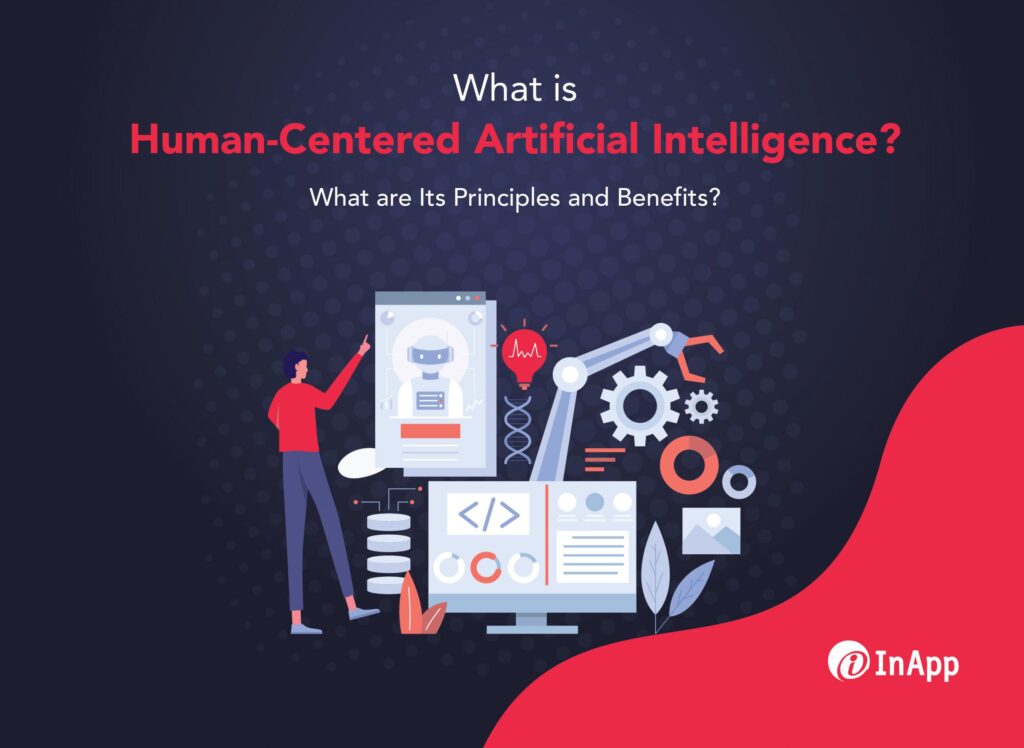
What is Human-Centered Artificial Intelligence? What Are Its Principles and Benefits?
Companies relying on legacy applications miss out on the benefits of technological advancements, including improved insights, productivity, and revenue generation.
Clutch Recognizes InApp Among the Leading Application Modernization Services Providers for 2022
Companies relying on legacy applications miss out on the benefits of technological advancements, including improved insights, productivity, and revenue generation.
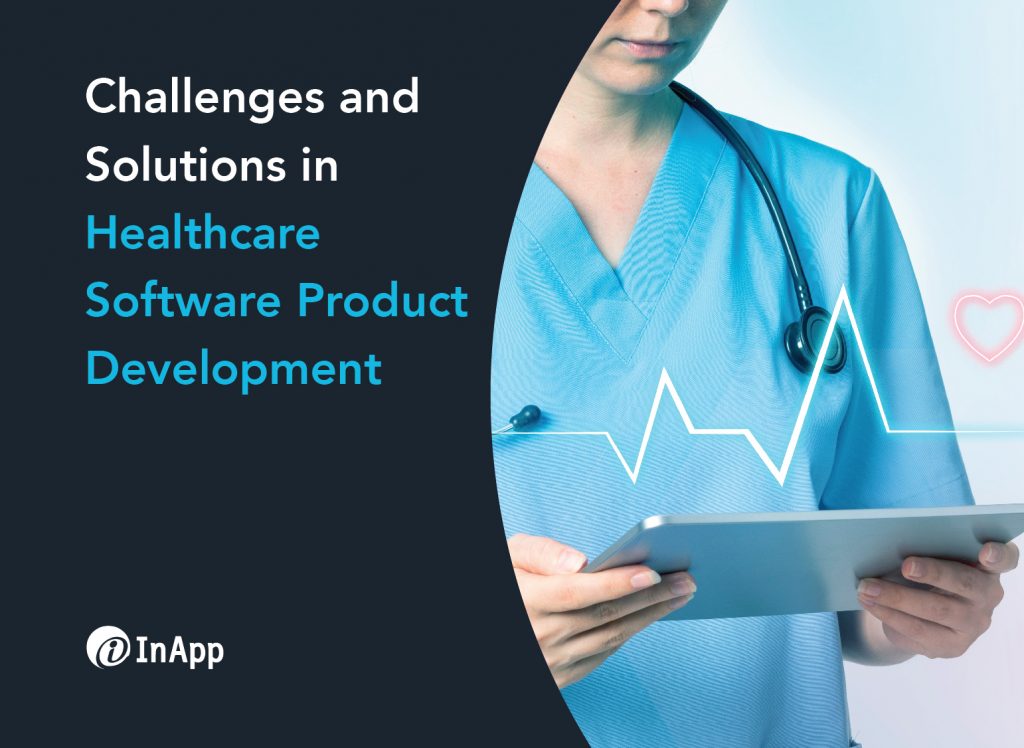
Challenges and Solutions in Healthcare Software Product Development
Companies relying on legacy applications miss out on the benefits of technological advancements, including improved insights, productivity, and revenue generation.
6 Reasons to Go for Legacy Application Modernization
Companies relying on legacy applications miss out on the benefits of technological advancements, including improved insights, productivity, and revenue generation.
7 Approaches to Legacy Application Modernization
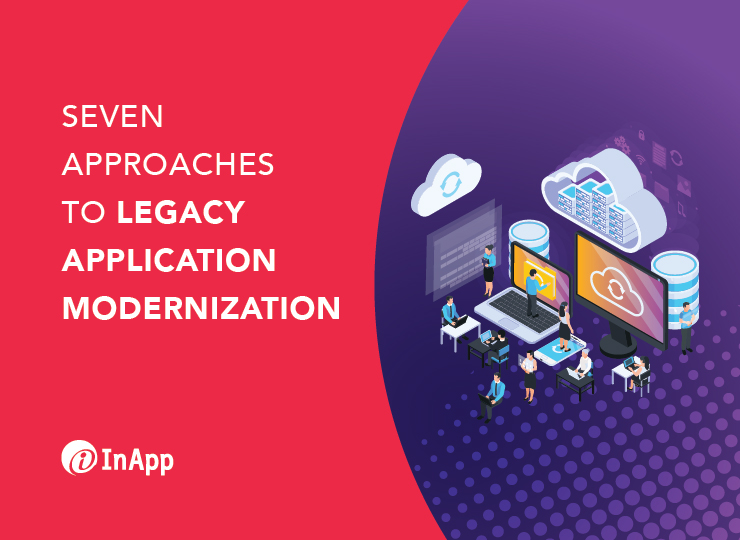
When choosing the right approach for your organization, consider the return on investment. Let’s learn about seven common approaches to legacy application modernization.
10 Myths of Custom Software Product Development
Custom software product development can help businesses streamline their workflows and improve business operations. But without experience, some organizations might hear myths that perpetuate concerns about custom software—and miss out on the opportunities that it offers.
Make sure you have up-to-date information about custom software product development and offshore development—not just assumptions or perceptions. Let’s start by dispelling the 10 most common myths you’ll hear.
What Is Edge Computing? What Are the Opportunities and Challenges in Edge Computing?
Similar to the migration from on-premise servers to cloud computing, companies are investing in the next technological progression—edge computing. As the name suggests, edge computing brings the computational infrastructure closer to the data source (i.e., the edge of a network), where it enables faster and more reliable services, as well as improved flexibility. This network architecture helps to overcome some of the issues with cloud computing because nearby devices are used as servers to improve response times and reduce latency. Organizations from all industries are looking closely at edge computing as a component of their digital transformation strategies. What Is Edge Computing? In simple terms, edge computing brings the computational infrastructure closer to the data source, which can provide faster access to and analysis of that data. The proximity of the data source and the data computation addresses some of the limitations of cloud computing by improving bandwidth, reducing latency, and lowering costs. Edge computing is particularly useful in situations with limited bandwidth or unreliable networks because it doesn’t require an Internet connection. It’s also helpful with artificial intelligence or machine learning applications where a great deal of real-time data is produced and needs to be analyzed quickly. Additionally, multi-access edge computing refers to the edge of any network, while mobile edge computing refers to the edge of only the mobile network. How Does Edge Computing Support the Internet of Things (IoT) The objective of edge computing is that computing should happen in the proximity of data sources. As a result, edge computing is particularly beneficial for supporting the Internet of Things (IoT), sometimes called machine-to-machine (M2M) communications in the industrial world. Because the IoT generates a lot of data in a short time, edge computing offers improvements over other cloud computing infrastructures. The IoT gathers information directly from multiple devices, which can be almost anything with a sensor—including computers, vehicles, smartphones, appliances, building automation systems, and production equipment. Typically cloud computing is not efficient enough to handle the growing quantity of data generated by all those devices. Edge computing brings computation closer to IoT devices, improving response time, reducing latency, improving bandwidth, and lowering costs. What are the Benefits of Edge Computing? Edge computing extends cloud-based computing to geographically distributed locations, bringing computation closer to the devices that produce data. That offers benefits such as improvements in… Bandwidth Power consumption Response time Security Reliability Performance Latency Scalability Costs What are the Challenges of Edge Computing? Unlike cloud computing, where servers are located elsewhere, edge computing involves physical devices located in close locations. As a result, it requires professional IT services to set up and monitor the network. Like any technological innovation, challenges must be addressed before implementation. These challenges include… Stable power supply Hardware location Maintenance Security Edge computing is still a nascent technology, although the market is expected to expand rapidly. Many companies are looking at edge computing as part of their long-term digital transformation strategies because of its ability to streamline business processes. The appeal is the ability to extend conventional cloud computing with a distributed infrastructure where applications are closer to the sources where the data is captured. Contact InApp for more information about edge computing, and how it can help your organization.
Impact and Examples of Digital Transformation on the Business World
Digital transformation helps companies future-proof their technology landscape by implementing a modern digital backbone. But it requires more than just technology. It also serves as a business transformation — a way to rethink how an organization uses technology to fundamentally improve business performance. It should affect all areas of an organization, changing the way it operates and the way it offers value to its customers. What digital transformation means for business? Digital transformation integrates specific technologies that improve operations. It helps companies boost their technology initiative, which can result in the ability to increase revenue, cut costs, improve security, and streamline business processes. Business areas where digital transformation can significantly improve business functions include… Decreased operating costs: Digital transformation decreases operating costs by reducing the time needed for workflows, eliminating manual tasks, and incorporating new functionalities. Increased revenue: Digital innovation can improve the sales process, increasing market research and finding new customers for businesses of all sizes. Mining customer data: Customer data can provide a wealth of business information, revealing new possibilities and insight once that data is centralized and analyzed. Streamlined workflows: Digital innovation can improve collaboration, remove or reduce bottlenecks in processes, and speed up workflows. Improved customer satisfaction: Service operations can be streamlined and improved, strengthening the relationship with customers. How do you digitally transform a business? While digital transformation will look different based on a company’s needs, some of the major components remain the same. Key steps include… Develop a digital business strategy: Outline a transformation strategy that shows what the business wants to achieve using technology. Define customer needs: Review the needs of customers and identify how to align products and services to meet those requirements. Outline process improvements: Identify bottlenecks, tasks, and workflows that play a significant role in business operations, and find ways for improvement. Identify tools and technology: Evaluate digital tools and disruptive technologies that offer opportunities to improve processes and workflows. Make data-driven decisions: Use data and analytics to provide actionable insights that help in evidence-based decision-making. Examples of Digital Transformation in the Business World InApp has helped our clients drive a digital change agenda and future-proof their technology landscape by implementing a modern digital backbone. Learn how these InApp customers have used digital transformation to streamline business processes. Investments in Modern Technology Digital transformation works for more than just private businesses. The Trivandrum and Calicut Airports were one of the first to use computers for handling cargo. As part of the modernization process, the Government of India decided to refresh and replace conventional messaging systems in all airports. The new design had to communicate with other government systems. InApp replaced the system with a modern web-based and communications-enabled system, thereby making it possible to work with users like forwarding agents, statutory government agencies, and global airports. We developed a cargo management system to interact with related government systems and integrated functions like import/export cargo and warehousing operations. Data-Driven Decision Making An InApp client in the pharmaceutical industry used several automated systems for most of its business and administrative areas of operation, not all of which communicated with each other. With data existing in multiple locations, the client had trouble getting a clear view of their business and was struggling with reporting and budgeting. The challenge was to connect all these disparate systems and deliver improved business intelligence. InApp created an end-to-end, scalable integrated system that captured and stored data from different sources, empowering users to deliver and act on meaningful analytics throughout the enterprise. The result was improved trend analysis, forecasting, and business performance management. Streamlined Operations As a large manufacturer, our customers provided aerospace parts for global enterprises like Boeing, Bombardier, Rolls Royce, GE, and more. Separate applications were used for different businesses such as production, supply chain management, and accounting. The client hired InApp as a long-term partner to migrate their legacy application to a more efficient web-based model. InApp’s dedicated offshore team developed an upgraded web-based version of the company’s Enterprise Resource Planning (ERP) application. The result was an all-in-one secure and effective ERP tool that was capable of handling the overall tasks and functionalities. For example, the new functionality significantly improved inventory management and order tracking mechanism, achieving more than 95% accuracy. An improved revenue tracking and billing system also eradicated errors that existed in the older version of the application. For more than 20 years, InApp’s digital transformation experts have helped companies invest in the best technologies to boost their digital strategy, increase revenue, cut costs, improve security, and streamline business processes. Contact us to learn more about how we can help your organization.
A Detailed Write Up on Software Product Development Methodologies and Steps
Software product development enables companies to create custom solutions that meet specific business requirements. For example, your business can optimize internal business processes and automate logistical functions by developing a custom solution.
Let’s discuss the phases of software product development, and common methodologies used in the process.