AI is entering a new phase in construction. While companies have explored predictive analytics, automation platforms, and digital project systems, the focus is now on using AI to transform project planning, execution, and management.
AI-driven automation is advancing from basic rule-based tasks to refined systems that reason, plan, and manage complex construction workflows.
Construction companies use these capabilities to increase efficiency, reduce costs, and speed up project delivery. The following trends are shaping this transformation.
An important development is the emergence of AI agents that operate independently. Unlike standard chatbots or assistants, these agents monitor project systems, make decisions, and perform tasks using minimal human input.
These agents function as digital coworkers in construction settings. For example, an AI agent may detect material-delivery delays, analyze project schedules, and automatically initiate rescheduling and notifications.
In enterprise environments, such agents are increasingly used for:
As these systems advance, they are expected to manage entire workflows instead of individual tasks.
Automation is no longer limited to one AI agent. Companies now use several specialized agents that work together.
For example, in a construction project setup:
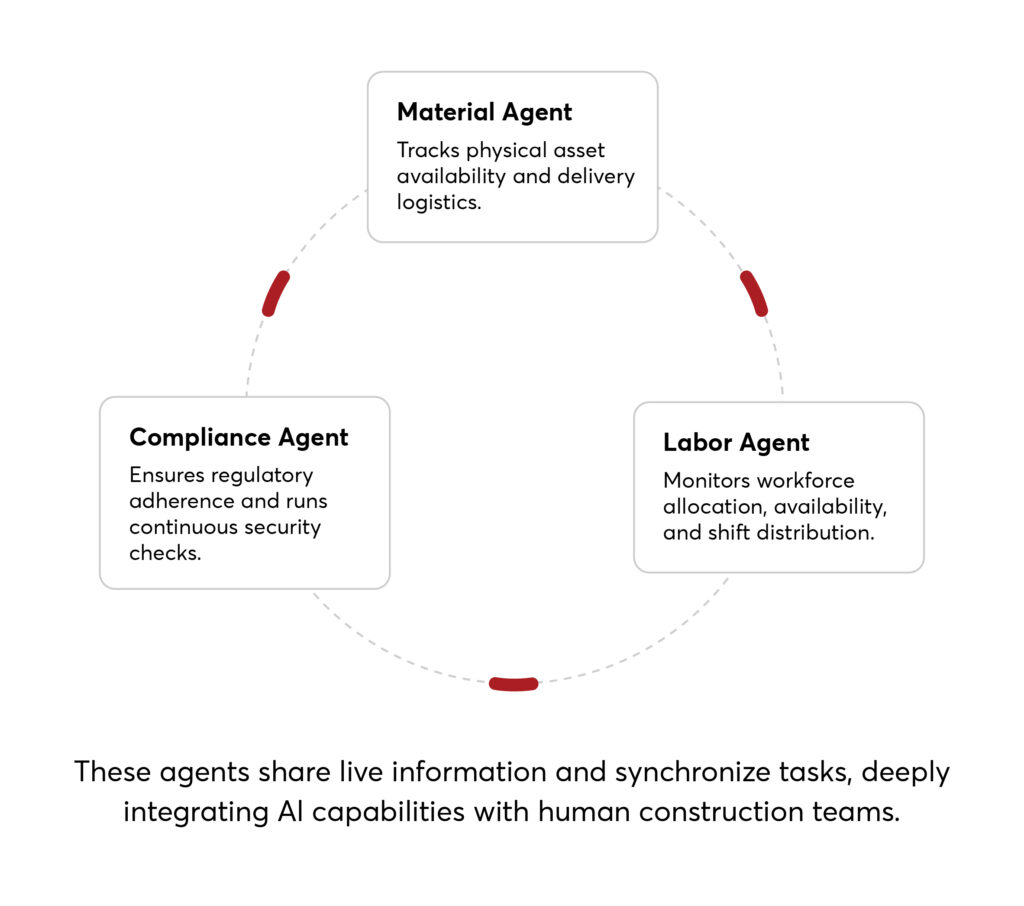
These agents share information and synchronize tasks to enhance efficiency and accuracy. This digital workforce approach integrates AI systems with human teams to increase productivity.
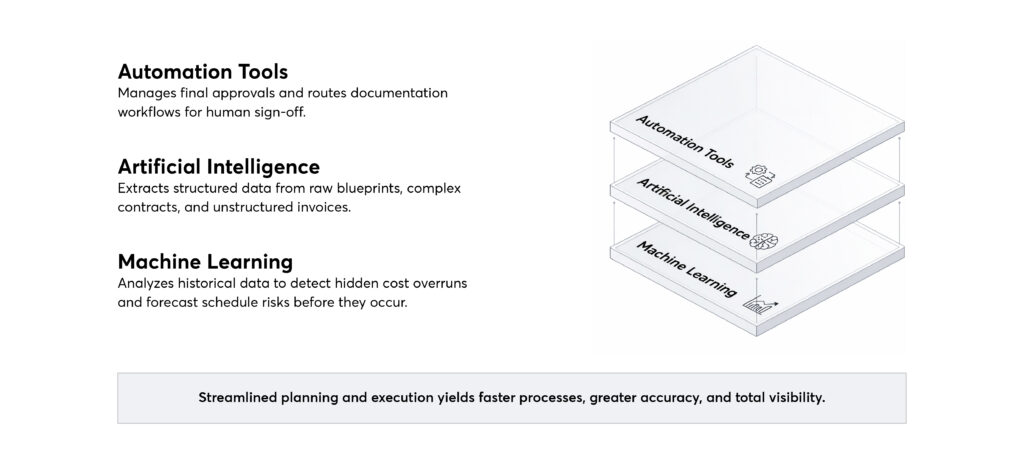
Hyperautomation integrates AI, Robotic Process Automation, Machine Learning, and analytics to automate complete processes.
For example, in a construction workflow:
This approach streamlines planning and execution, resulting in faster processes, greater accuracy, and better visibility.
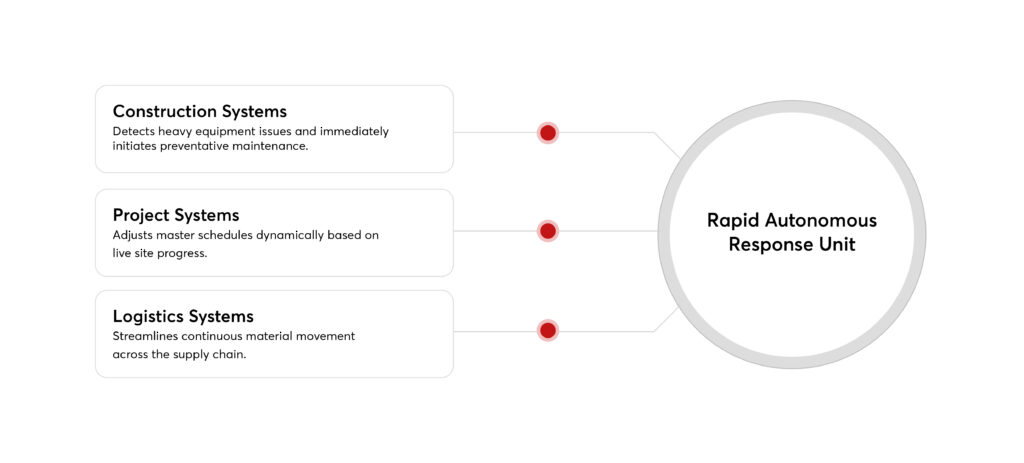
AI automation is gaining strength through real-time data integration. These systems analyze live inputs and make rapid decisions.
Examples include:
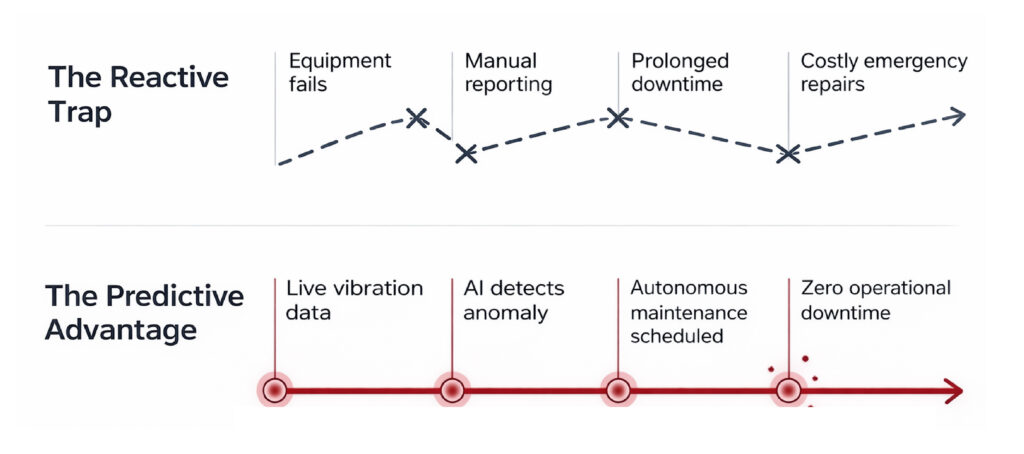
With real-time automation, companies can shift from reacting to problems to predicting and preventing them.
As automation advances, governance and security are becoming top priorities. Many companies are now investing in AI governance frameworks to promote transparency, accountability, and compliance.
Key governance measures include:
Security strategies such as zero-trust architectures are becoming increasingly important. These approaches ensure that every device, user, and AI system is verified before it can access sensitive data.
AI-driven automation is becoming central to construction operations. As adoption increases, the focus is shifting to building reliable, integrated automation ecosystems.
Companies that invest in effective strategy and integration will be more likely to deliver projects more quickly and efficiently. The objective is not just to automate tasks but also to enable smarter work practices.
Autonomous AI agents are systems that independently monitor, analyze, and act on project data with minimal human input. They manage tasks such as scheduling, procurement tracking, and site monitoring.
Multi-agent systems deploy specialized AI agents that collaborate and share data. This creates a digital workforce that improves efficiency, coordination, and accuracy across projects.
Hyperautomation integrates AI, RPA, machine learning, and analytics to automate complete workflows.
It streamlines processes like document handling, approvals, and risk detection.
AI systems use real-time data to monitor progress and make immediate adjustments. This enables issue prediction, schedule optimization, and better operational efficiency.
AI increases efficiency, reduces costs, and accelerates project delivery. It supports smarter planning, proactive decision-making, and more effective resource utilization.