AI is entering a new phase. Recently, businesses have tried out chatbots, predictive analytics, and automation tools. In recent times, the main focus will be on using AI to transform the way organizations operate. AI will play a key role in decision-making and value creation, not just in supporting existing processes.
AI driven automation is changing from simple rule-based tasks to advanced systems that can reason, plan, and handle complex work. Organizations in finance, healthcare, manufacturing, and retail are using these tools to work more efficiently, cut costs, and grow faster.
A major development is the rise of AI agents capable of operating independently. Unlike regular chatbots or assistants that only respond to prompts, these AI agents can monitor systems, make decisions, and carry out tasks with minimal human intervention.
These agents act like digital coworkers in an organization. For example, an AI agent could spot a drop in customer purchases, analyze past data to identify the cause, suggest ways to retain customers, and automatically set up follow-up actions.
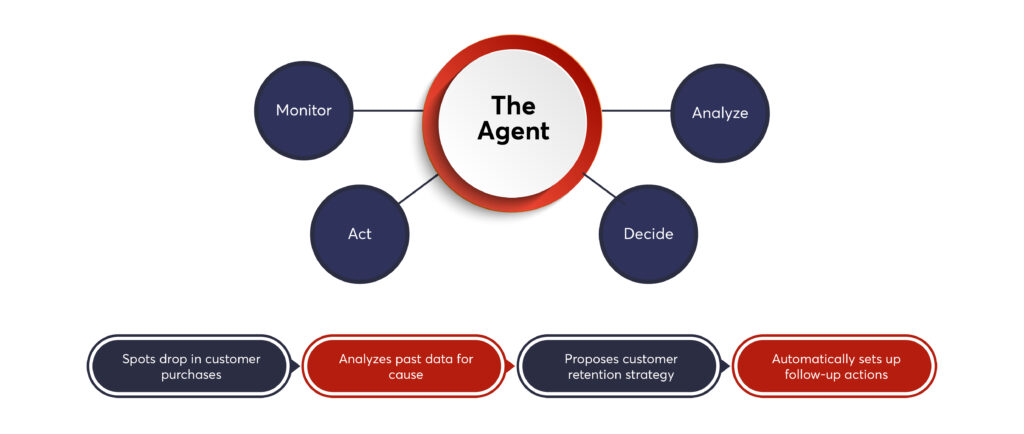
In enterprise environments, such agents are increasingly used for:
As these systems improve, they are expected to handle entire workflows rather than just single tasks.
Automation is no longer limited to one AI agent. Organizations now use several specialized agents that work together to handle complex tasks.
For example, in a customer onboarding workflow:
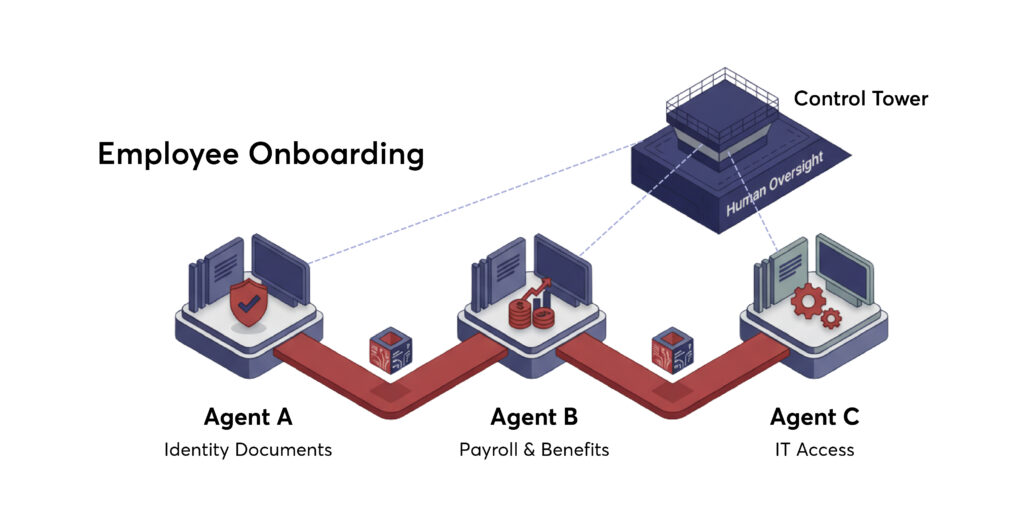
These agents share information and coordinate tasks to work more efficiently. Using multiple agents speeds up workflows, improves accuracy, and reduces human intervention.
This approach is often referred to as a digital workforce, where AI systems collaborate with human teams to increase productivity.
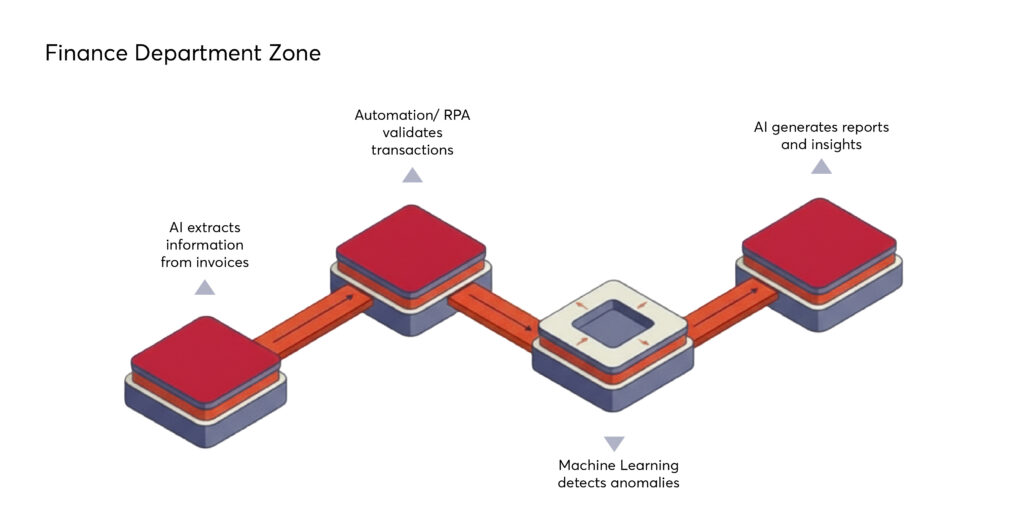
A major trend now is hyperautomation. This approach combines AI, Robotic Process Automation (RPA), Machine Learning, and analytics to automate entire business processes.
Traditional automation handled single tasks. Hyperautomation connects different technologies to automate end-to-end workflows across departments.
For example, in a finance department:
This results in faster work, greater accuracy, and lower costs. More organizations are making hyperautomation central to their digital transformation plans.
AI agents are now often built with preset skills, which are modular capabilities that encode domain-specific expertise. These skills make agents specialized, reusable, and composable across workflows. They allow agents to work autonomously, collaborate with others, and execute complex processes with minimal human oversight.
Skills may include instructions, metadata, and resources. They can be pre-built, such as Excel or PDF tools, or custom-developed for specific organizational workflows. Ensuring security and using trusted sources is essential when deploying skills.
In an agent-to-agent model, multiple AI agents use these skills to coordinate and complete end-to-end workflows with minimal human intervention.
Example in practice:
In an employee onboarding workflow:
The agents communicate and coordinate automatically, requiring human oversight only for exceptions or critical decisions.
Generative AI systems sometimes struggle with accuracy. To solve this, many organizations are now using Retrieval-Augmented Generation (RAG).
RAG systems enable AI models to pull information from trusted organizational sources, such as internal documents, knowledge bases, or policy repositories, before creating responses or making decisions.
This method makes automation more reliable and helps systems use accurate, current information. It matters most in regulated fields such as healthcare, banking, and government, where adherence to rules and record-keeping is crucial.
AI automation is becoming more powerful as it connects to real-time data. Rather than relying on past data or waiting for batch processing, these systems can now analyze live data and make quick decisions.
Here are a few examples:
With real-time automation, organizations can move from reacting to problems to predicting and preventing them.
As AI adoption increases, organizations are moving away from generic tools toward industry-specific automation solutions.
Instead of building automation systems from scratch, organizations can deploy AI models and workflows tailored to their sector. These solutions often include compliance rules, domain knowledge, and optimized workflows.
Examples include:
Industry-focused automation reduces implementation time and improves accuracy by training systems on relevant data and real business scenarios.
As automation advances, governance and security are becoming top priorities. Many organizations are now investing in AI governance frameworks to promote transparency, accountability, and compliance.
Key governance measures include:
Security strategies such as zero-trust architectures are becoming increasingly important. These approaches ensure that every device, user, and AI system is verified before it can access sensitive data.
AI-driven automation is rapidly becoming a core part of how modern enterprises operate. As organizations move from experimentation to large-scale adoption, the focus is shifting toward building reliable, well-governed automation ecosystems.
Organizations that invest in the right strategy, governance, and integration will be better positioned to unlock long-term value from AI. The goal is not simply to automate tasks, but to create systems that enable smarter, more efficient ways of working.