AI technology is transforming safety management on construction sites. The advanced technology reviews live camera feeds, sensor data, and past trends to spot threats early. This not only reduces false alarms but also maintains thorough records for compliance and insurance purposes.
Read on to discover 6 ways AI is helping construction companies improve job site safety, reduce security risks, and make more proactive safety decisions.
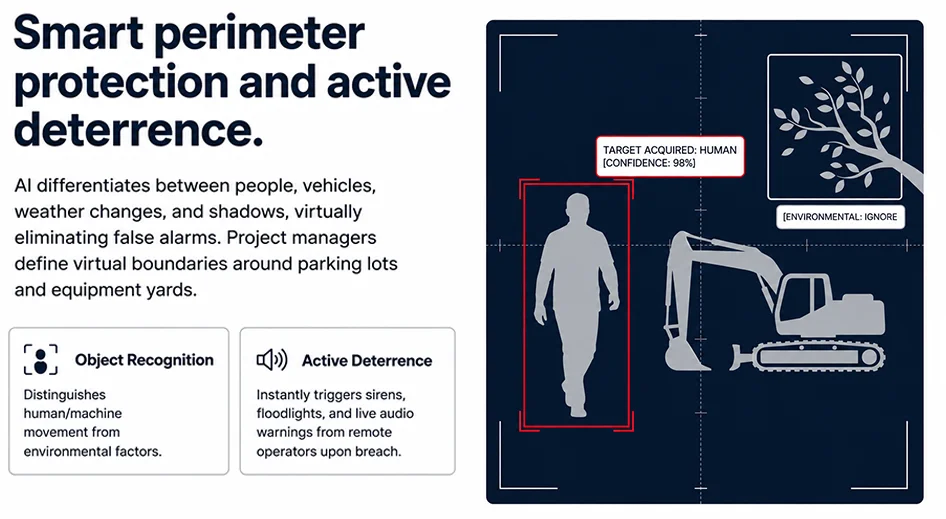
AI-powered virtual boundaries provide an additional layer of security by detecting movement in designated areas of a construction site. Project managers use software to define areas like parking lots, equipment yards, and building entrances. The system sends an instant alert when someone or a vehicle crosses these digital lines.
Accurate surveillance relies on recognizing different objects. AI recognizes people, cars, animals, weather changes, and even shadows in video footage. This helps cut down on false alarms that older motion sensors used to trigger. By studying regular patterns like worker shifts, delivery schedules, and equipment use, AI can catch unusual activities with a lot of accuracy.
Active deterrence stops intruders immediately. If an unauthorized person enters the area, the system will activate sirens, floodlights, and speakers that broadcast live warnings. Another added advantage is that remote operators can also speak to intruders through on-site speakers immediately.
Construction companies lose a significant amount each year due to equipment theft. AI helps tackle this issue with GPS tracking, smart cameras, and IoT monitoring.
GPS and IoT devices are placed on machines like bulldozers, excavators, and cranes to send real-time location data to a central platform. Geofencing, on the other hand, sets digital boundaries around job sites and sends alerts if equipment moves outside the marked areas during off-hours.
Smart cameras monitor valuable equipment with motion detectors, floodlights, and systems that let operators talk to intruders. The cloud reviews threats in seconds and sends SMS or email alerts with video evidence, allowing quick action from the staff. Some systems can even disable equipment remotely or alert staff if someone tries to remove a tracking device.
Computer vision systems check video feeds and data from wearable sensors in real time. They look for PPE violations, unsafe actions, and health risks such as heat stress.
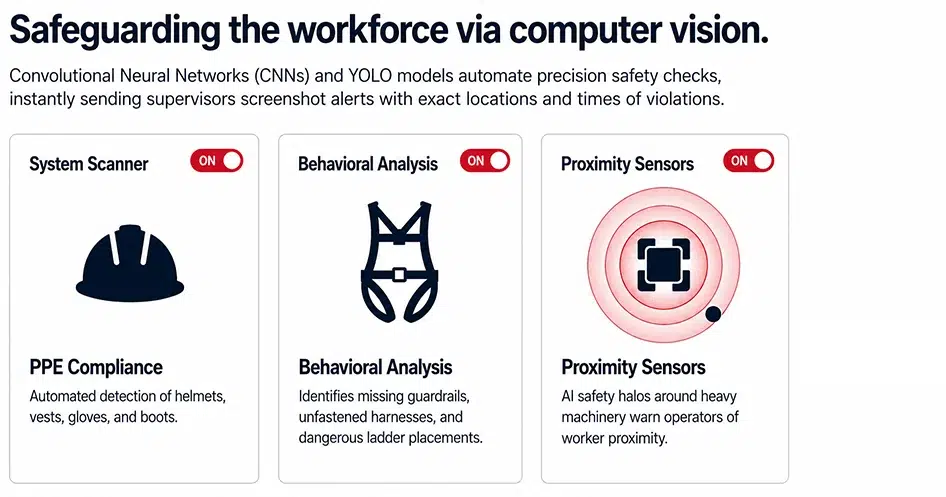
Advanced technologies such as convolutional neural networks (CNNs) and YOLO models automate PPE compliance checks. It detects helmets, gloves, vests, and safety boots with precision. It also examines if helmets are worn and harnesses are secured. If it spots a violation, it sends supervisors an alert that includes a screenshot, the location, and the time.
This is one of the key benefits of AI in construction sites. Wearable devices track heart rate, breathing, skin temperature, and posture in real time. Construction workers face a higher risk of heat-related illnesses. Smart bands measure heart rate as accurately as medical tools and can detect signs of heat strain. When readings reach dangerous levels, the devices vibrate and alert supervisors to help prevent heat emergencies.
Smart cameras mounted on scaffolding, ledges, and high platforms identify absent safety rails, missing guardrails, unfastened harnesses, and dangerous ladder placement. AI-powered proximity sensors on construction machinery warn operators when workers approach equipment, thereby minimizing workplace incidents.
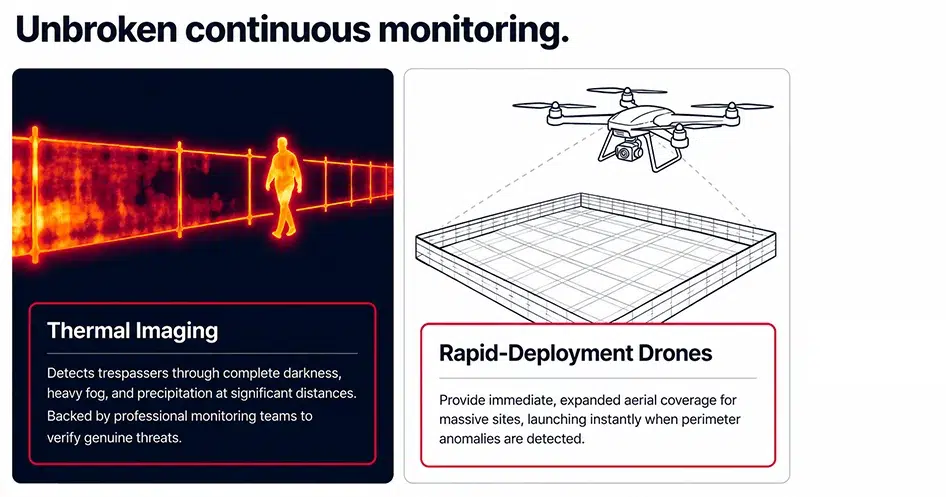
Theft and vandalism occur on weekends or during public holidays. AI surveillance operates 24/7 and secures locations without requiring on-site security personnel.
On the other hand, thermal imaging detects trespassers through complete darkness, heavy fog, or precipitation at significant distances. Professional monitoring teams verify genuine threats prior to issuing notifications, preventing penalties from incorrect alerts. For bigger areas, drones provide extra coverage and can launch fast when required.
Studies show that multiple near-misses occur ahead of a documented injury. Computer vision technology can track and record near-miss situations before they result in accidents.
In addition, sensor logs and high-quality video with timestamps help resolve disputes during investigations. When video claims are included with claims, insurance providers may offer significant deductible reductions. Additionally, cloud storage makes it easy to search reports by project, date, or incident type for audits.
Machine learning algorithms review past safety data, weather, production schedules, and crew details to predict where and when accidents are most likely to happen.
XGBoost and LightGBM can analyze large construction data sets very accurately. Weekly risk forecasts help companies find the few projects that could cause the most safety problems. These tools lead to fewer incidents and lower workers’ compensation costs.
AI systems suggest the best actions for high-risk projects, like adding more supervision, increasing checks, or pausing work until conditions improve. Risk mapping shows which parts of a construction site are safest and which are most dangerous.
AI in construction safety has moved beyond experimental phases to deliver measurable protection for workers. Although there are still challenges, such as data privacy, training, and occasional false alerts with implementation, these obstacles shouldn’t deter companies from adopting this advanced technology.
Before picking an AI safety system, companies should look at the specific risks on their site and make sure the system works well with their current processes. A thoughtful implementation focused on genuine hazard reduction will protect the workforce while strengthening safety culture.
AI systems spot unsafe conditions, notice close calls, and even detect when workers are tired or overheating. They send alerts fast to supervisors. This cuts down accidents and keeps injuries from happening.
Yes, it can. AI tracks equipment using tools like GPS, geofencing, sensors, and smart cameras. It can alert you if someone moves equipment without permission.
Predictive risk analytics uses machine learning to analyze safety records, weather conditions, project timelines, and worker data. This helps identify risky situations and suggests ways to stop problems before they happen.
AI-powered surveillance watches the site all day and night, cuts down on false alarms, finds unauthorized access, helps manage sites from a distance, and allows faster responses to security threats, theft, or safety problems.
Many AI safety tools can be set up for projects of any size. Small and medium construction companies can pick options like PPE monitoring, equipment tracking, or site surveillance to match their needs and budgets.