For years, construction projects have relied on reactive decision-making, addressing equipment failures, safety incidents, and project delays only after they occur. As projects become more complex, labor shortages persist, and margins tighten, making this approach increasingly costly. Today, the Internet of Things (IoT) and AI are helping construction organizations shift from reacting to problems to predicting and preventing them before they impact schedules, budgets, or safety.
Instead of waiting for equipment failures, safety violations, or quality concerns to emerge, project teams can monitor assets, workers, and job site conditions in real time and respond proactively.
When IoT devices work together with AI analytics, they transform how projects are managed across the construction lifecycle. Real-time monitoring, predictive insights, and automated alerts enable teams to make faster, better-informed decisions while improving safety, reducing costly delays, and optimizing project performance.
In this blog, we will explore how IoT in building construction makes these predictive capabilities possible and how you can apply them to your sites.
“You can use an eraser on the drafting table or a sledgehammer on the construction site.” – Frank Lloyd Wright, Architect.
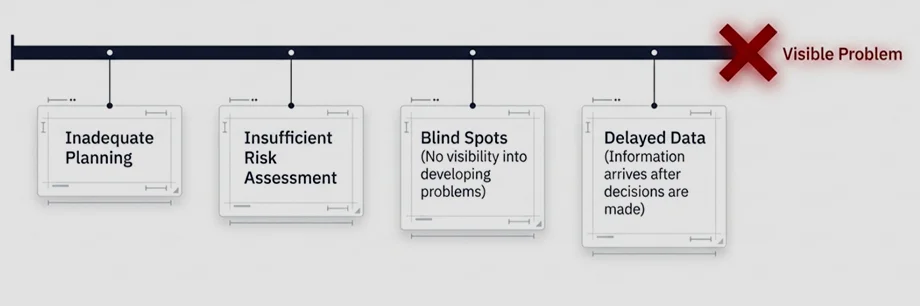
Reactive construction management operates on an after-the-fact basis. That is, teams address problems only when they become visible. This approach leads teams to scramble to resolve issues that have already disrupted schedules, budgets, or safety protocols.
Reasons for issues include:
Equipment downtime exposes the weakness of reactive methods. If a machine breaks down without warning, you still have to pay for things like crew wages, insurance, and equipment rentals, even though work has stopped. Sometimes, quick fixes made during a crisis become regular practice, even if they aren’t the best solution.
The reactive cycle keeps going because information comes in too late, after decisions are made. Teams end up spending more time figuring out what went wrong than planning ahead. As a result, the same problems keep happening on new projects because the root causes aren’t fixed. Before IoT was available, this was the norm in construction, even though it wasn’t efficient.
IoT sensors deployed on construction sites collect continuous streams of data that were previously impossible to capture. These include:
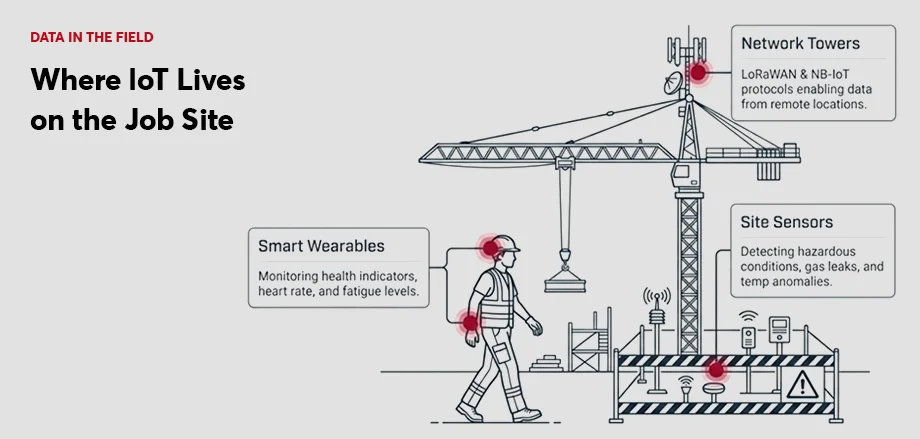
AI algorithms process this data by detecting patterns and correlations that human analysis would miss. Models built through machine learning based on earlier projects help identify risks and forecast potential dangers. As issues arise, site managers receive notifications letting them respond before trouble occurs. This ability is shown through predictive maintenance:
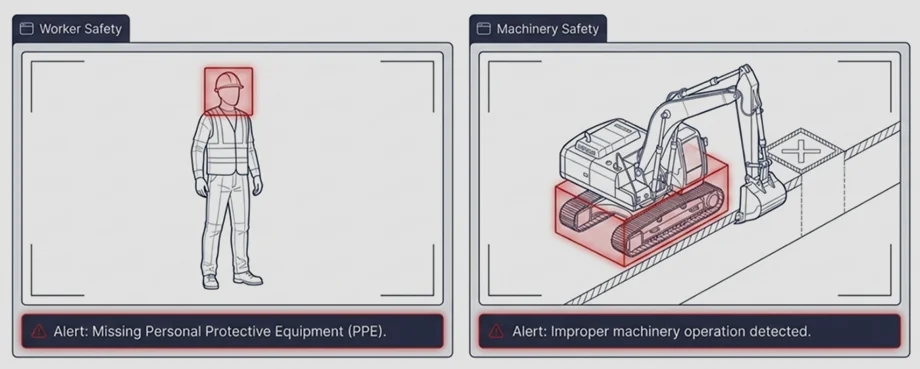
Start by identifying one or two specific areas where predictability delivers the most value to your operations. You should focus on:
Focusing on a small area first helps avoid confusion that occurs when making big changes all at once without enough planning.
Your systems need to connect before AI can work. Cost data and field reports in separate platforms mean predictive systems have incomplete information and produce unreliable outputs. Centralizing project records across all stakeholders is the foundation of accurate forecasting and risk detection.
Data quality determines prediction quality. Standardize how your teams input information and establish common data formats. Also, maintain consistent record-keeping across projects. This allows machine learning models to identify relevant patterns instead of processing inconsistent inputs.
Additionally, phase your implementation to build capabilities over time. This includes:
Measure success through operational improvements rather than automation metrics alone. This includes tracking the following indicators to reveal whether IoT in construction delivers tangible business value to your organization.
The construction industry stands at a key transition point. You can continue managing sites reactively, addressing problems after they disrupt schedules and budgets, or you can adopt IoT and AI to predict and prevent problems before they materialize. Strategic implementation of these predictive capabilities transforms project outcomes. Start with focused applications and build progressively. Better yet, the technology is available now, making this change achievable for projects at any scale.
IoT sensors on construction sites collect continuous real-time data that was previously inaccessible. These devices monitor equipment performance, worker safety, and environmental conditions. The data allows site managers to identify issues early and intervene before incidents occur.
IoT devices gather extensive data from construction sites, while AI analyzes this information to generate insights, forecast outcomes, and adapt to changing conditions. Together, they enable automated decision-making and intelligent responses, turning raw data into actionable predictions.
Predictive maintenance uses sensors to check things like vibration, temperature, and pressure on equipment. AI compares these numbers to normal levels to spot problems before they cause breakdowns. This helps avoid sudden downtime, reduces emergency repairs, and keeps projects running smoothly.
Start by picking one or two areas where being able to predict things would help most, like preventing safety incidents or making equipment more reliable. Try out IoT devices in a small test, bring all your project data together, and teach your team to use data for decisions. Check your progress by looking for fewer delays, less rework, and better schedules.
Common IoT devices include wearable safety equipment, sensors, GPS trackers, environmental sensors, smart cameras, drones, and asset-tracking systems. These devices deliver real-time insights into site conditions, equipment health, and workforce safety.
Yes, they can. Many IoT and AI tools can grow with your business, adding them step by step. If smaller construction companies start with important areas like equipment monitoring or safety, they can see real benefits before taking on bigger projects.