Manual processes, limited visibility, and rigid planning reduce manufacturing efficiency and impact competitiveness. Business Process Automation (BPA) addresses these challenges by integrating workflows, reducing errors, and enabling real-time decision-making, helping manufacturers improve productivity and scale operations effectively.
In this blog, we will examine how these challenges occur and explain how BPA can help address them.
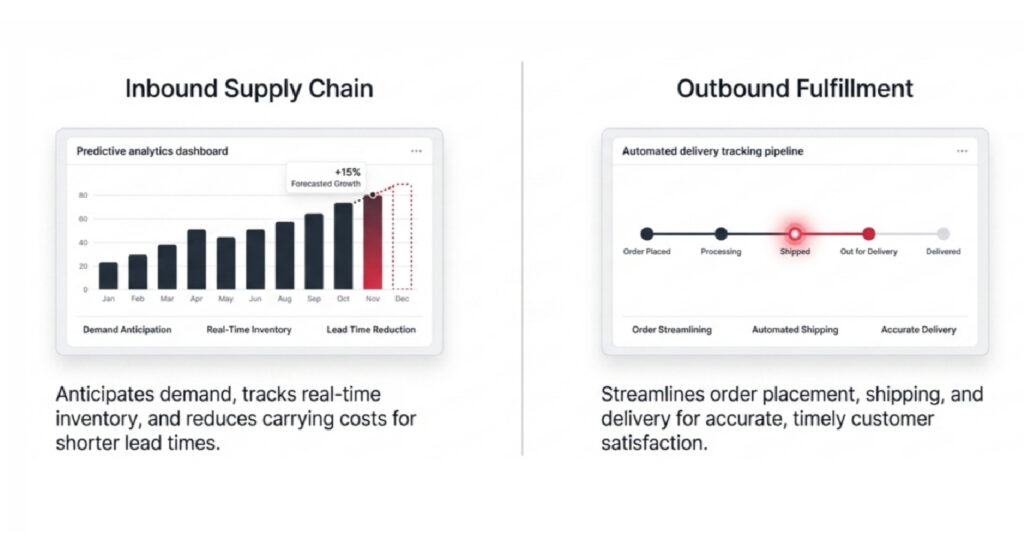
Business Process Automation improves supply chain management by facilitating real-time inventory tracking and informed decision-making.
Predictive analytics help manufacturers anticipate demand, optimize inventory, and reduce carrying costs. These capabilities support timely procurement, optimized inventory management, and real-time shipment tracking. This results in shorter lead times, lower operating costs, and enhanced supply chain visibility.
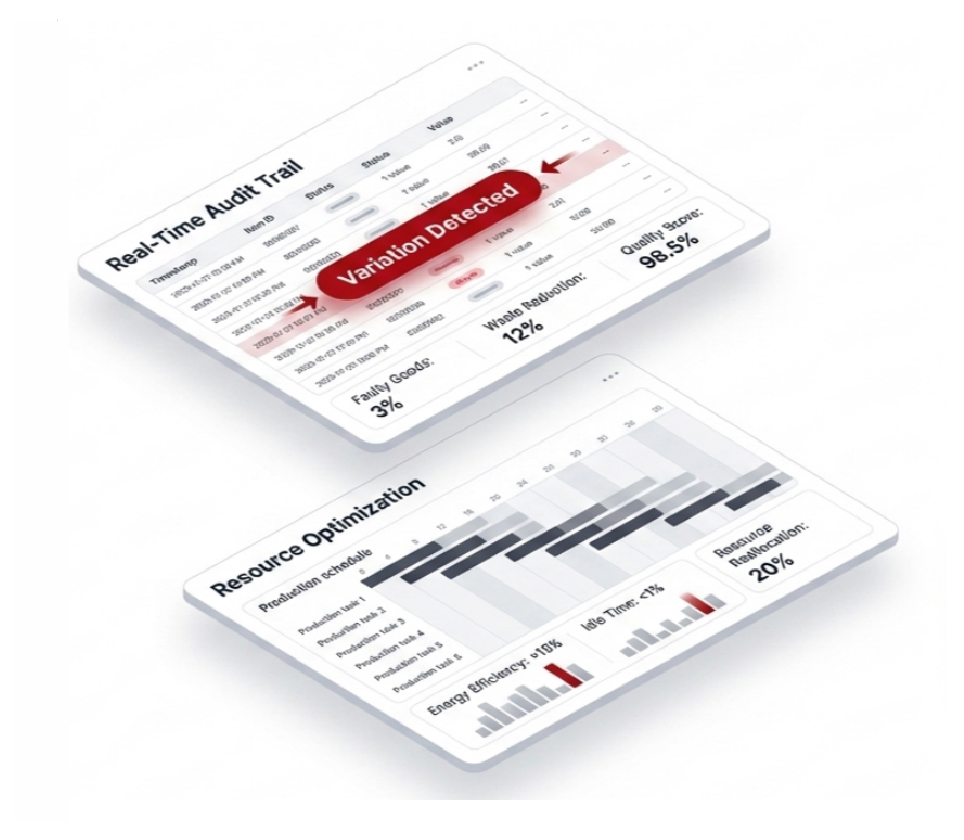
BPA tools continuously monitor the production process and detect variations from quality requirements right away. This ensures that faulty goods are identified early in the manufacturing process, reducing waste and increasing consumer satisfaction across the board.
BPA also provides a comprehensive audit trail. This allows manufacturers to address compliance issues, reduce the risk of regulatory violations, improve compliance reporting, and strengthen operational integrity.
BPA platforms, especially when combined with AI, analyze large volumes of data, revealing opportunities for development and enabling ongoing process optimization in manufacturing efficiency.
These analytics-based insights enable organizations to navigate the complicated dynamics of the modern manufacturing environment and make well-informed decisions.
Business Process Automation optimizes production schedules and reduces idle time, thereby helping conserve energy.
Since BPA takes over repetitive tasks, it lowers the need for additional human resources, reducing dependency and costs.
This enables reallocation of resources to higher-value, more challenging jobs, resulting in a staff that is competent and motivated.
BPA platforms are able to streamline order fulfillment procedures, including order placement, shipping, and delivery. This allows manufacturers to ensure accurate, timely deliveries and increase overall customer satisfaction through workflow automation.
BPA, when combined with predictive analytics and remote monitoring, allows manufacturers to anticipate equipment failures, schedule preventive maintenance, and limit downtime. This leads to boosted operational effectiveness and client uptime in industrial automation environments.
InApp supports manufacturers in adopting Business Process Automation by digitizing and connecting workflows for production, procurement, and inventory. Using rule-based automation and API integration, we help create smooth data flow, consistent processes, and less manual work.
With centralized workflow management, exception handling, and real-time monitoring, InApp gives manufacturers greater control over operations, more accurate data, and faster decision-making across their processes.
Efficiency gaps in manufacturing often go unnoticed in daily operations, yet they have a substantial impact. Adopting BPA allows manufacturers to improve efficiency, foster innovation, enhance customer experiences, and support scalable automation. This leads to more agile, cost-effective, and data-driven operations that support long-term growth.
Manufacturing inefficiency often stems from fragmented systems, manual processes, limited real-time visibility, and inflexible planning models that hinder responsiveness and accuracy.
BPA increases manufacturing efficiency by automating tasks, integrating systems, reducing manual work, and delivering real-time data to support faster, informed decision-making.
BPA enables real-time inventory tracking, demand forecasting, and better collaboration. These capabilities reduce costs, increase transparency, and speed up deliveries.
Yes, BPA monitors production, detects issues early, and keeps records to enhance quality and simplify compliance.