
The Serverless Architecture Market Size is Projected to Register a 26% CAGR from 2023 to 2032. What Does That Mean?
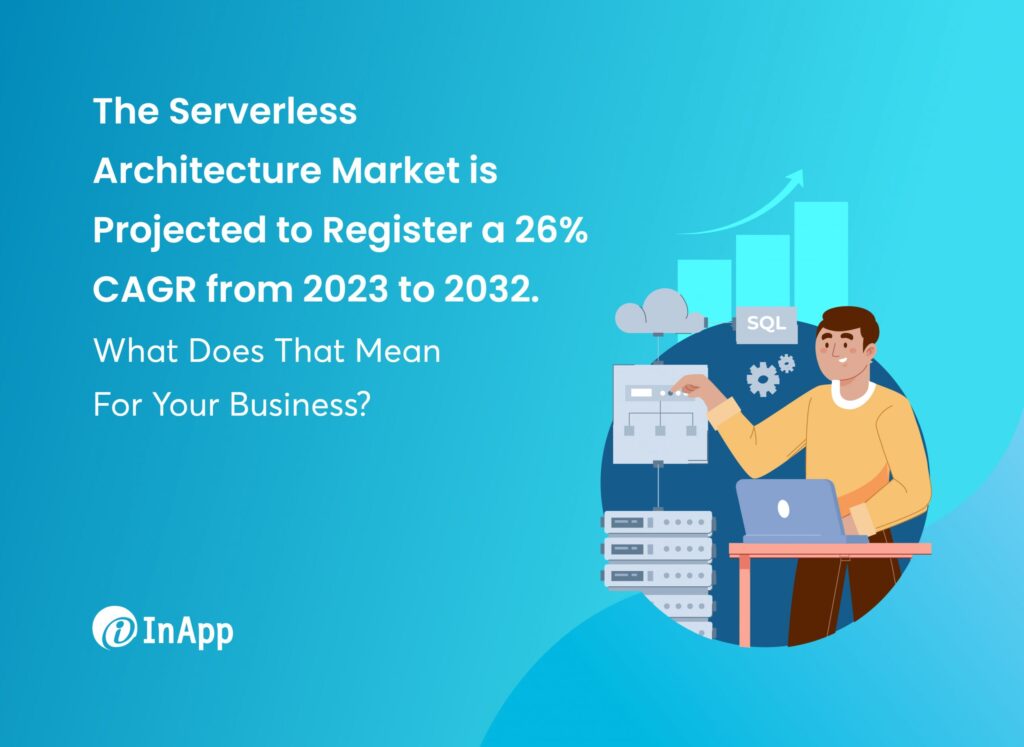
In today’s digital era, the adoption of innovative solutions determines the trajectory of an organization’s growth. One exciting development is the projected 26% compound annual growth rate (CAGR) of the serverless architecture market, according to a report published by Global Market Insights. This report brings forth a compelling opportunity for forward-thinking businesses to leverage the power of serverless architecture and its transformative potential. With its advantages of reduced infrastructure management, enhanced scalability, and improved security, serverless architecture is poised to revolutionize the way businesses operate in the digital landscape. In this article, we explore the implications of this remarkable growth projection and what it means for your business. What Is Serverless Architecture? As the name suggests, serverless architecture is a way to build and run applications without having to manage the infrastructure. Unlike traditional modes (like physical servers and on-premises infrastructure) where business owners must manage and provision servers to run their applications, there is no need for server management in a serverless model. Compared to traditional methods, the serverless architecture enables businesses to significantly reduce costs and improve efficiency by eliminating the need for server management and provisioning, allowing them to focus on developing applications and responding rapidly to changing demands. With serverless, you pay only for the actual usage of your code, making it cost-effective. Additionally, it offers automatic scaling, high availability, and reduced operational complexity. What Are the Different Types of Serverless Architecture? Several different serverless architectures can be used based on specific use cases and requirements. Common serverless architectural patterns include the following. 1. Function as a Service (FaaS): FaaS is a core serverless architecture where applications are built using individual functions. Each function performs a specific task or handles a specific event. Functions are executed in response to events, and the cloud provider manages the underlying infrastructure and scaling. 2. Backend as a Service (BaaS): BaaS is a serverless architecture that focuses on providing pre-built backend services and APIs. It removes the need to develop and manage backend infrastructure, allowing developers to leverage ready-made services for functionalities such as data storage, authentication, push notifications, and more. 3. Composite Serverless Applications: This architecture combines multiple serverless services and components to create complex, multi-tier applications. Different services, such as serverless functions, databases, storage, and APIs, are integrated to build scalable and modular applications. How Does a Serverless Architecture Work? Serverless architecture works by avoiding the underlying infrastructure management and allowing businesses to focus solely on their application code. For the sake of simplicity, let us have a quick look at the Function as a Service (FaaS). Benefits of Serverless Architecture Serverless architecture offers several benefits that can significantly impact businesses and application development. For more information on the benefits and use cases of serverless architecture, you can read this blog post. The Growing Market of Serverless Architecture The global serverless architecture market has witnessed significant growth, with its size surpassing USD 7.6 billion in 2020. It is projected to experience a robust CAGR of 22.7% and reach USD 21.1 billion by 2026. One key factor is the increasing demand to shift from CAPEX (capital expenditure) to OPEX (operational expenditure) models, eliminating the need to manage servers and thereby reducing infrastructure costs. Organizations are embracing serverless architecture as it allows them to focus on core business functionalities while eliminating the overhead of server management. Large enterprises, in particular, are adopting serverless architecture service types at a high rate due to the growing demand for cloud automation. With the need to automate various tasks regularly and manage vast amounts of data, large enterprises invest in advanced technologies to enhance productivity and efficiency. Implementing serverless architecture service types helps them reduce both CAPEX and OPEX, leading to cost savings and improved business operations. Monitoring and performance management are crucial aspects of maintaining stability and ensuring operational protection in a serverless architecture. However, monitoring becomes more challenging in a serverless context due to the distributed nature of applications. Performance management services enable quick troubleshooting, debugging, and optimization of serverless functions. Monitoring services provide comprehensive visibility across various cloud deployments, offering key network metrics and detecting issues with containers, load balancers, disconnected hosts, and third-party providers. Serverless architecture provides organizations with the flexibility to scale their applications effortlessly. By leveraging serverless platforms, businesses can automatically scale their resources based on demand, ensuring optimal performance even during peak periods. This agility enables companies to quickly adapt to changing market conditions and handle sudden spikes in user traffic, resulting in improved user experiences and customer satisfaction. Who Should Use Serverless? Serverless architecture is suitable for a wide range of use cases and can benefit various types of businesses and developers. Here are some scenarios where serverless can be particularly advantageous. 1. Startups and Small Businesses: Serverless architecture allows startups and small businesses to focus on developing their core products or services without the burden of managing infrastructure. It enables them to rapidly build and deploy applications with reduced upfront costs and scalability as the business grows. 2. Event-Driven Applications: Applications that are event-driven, with unpredictable traffic patterns, can benefit from serverless architecture. 3. Microservices Architecture: Serverless architecture aligns well with microservices-based applications. Each microservice can be implemented as an individual function, enabling independent development, scaling, and deployment. This modular approach allows developers to focus on specific services. 4. DevOps and Agile Development: Serverless architecture aligns with the principles of DevOps and agile development. It enables rapid iteration, continuous integration, and deployment of individual functions. Developers can independently work on functions, test them in isolation, and deploy updates without impacting the entire application. 5. Burstable Workloads and Spikes in Traffic: Applications that experience unpredictable or seasonal bursts in traffic can benefit from serverless architecture. Functions can automatically scale up to handle increased workloads during peak periods, ensuring optimal performance and cost efficiency. 6. Prototyping and MVP Development: Serverless architecture allows for quick prototyping and minimum viable product (MVP) development. Developers can rapidly build and iterate on small, focused functions without the need for extensive
How Customized Software Solutions Drive Business Growth
Imagine a software solution tailor-made for your business, like a powerful tool designed specifically for your unique requirements. Custom software development offers just that. With custom software, the possibilities are endless as the software is carefully crafted to align with your workflows and industry-specific challenges. It’s like having a personal assistant who knows your business inside and out, optimizing every aspect of your operations. In the long run, custom software proves to be a wise investment, optimizing costs by eliminating unnecessary licenses and reducing reliance on manual processes. So, fasten your seatbelts as we embark on a thrilling journey through the realm of custom software development. Discover the untapped potential that awaits your business and unleash the power of technology to fuel your growth story. What Are Custom Software Solutions? Custom software solutions are tailor-made software applications designed to meet the unique needs of a specific business or organization. Unlike off-the-shelf software, which offers a standardized solution for a broad range of users, custom software is precisely crafted to align with the workflows, processes, and objectives of a particular business. The key advantage of custom software lies in its ability to be scalable and flexible. It can evolve alongside the business, accommodating changing requirements and supporting expansion. By adapting to the specific needs of the organization, custom software empowers businesses to gain a competitive edge, differentiate themselves in the market, and deliver enhanced experiences to their customers. It also provides long-term cost savings by eliminating the need for unnecessary software licenses and reducing reliance on manual workarounds. Benefits of Tailored Software Solutions Custom software development is at the forefront of digital transformation, enabling companies to address their specific needs, streamline operations, and gain a competitive advantage. Here are the core benefits of custom software solutions. Enhanced Efficiency and Productivity By streamlining processes, automating repetitive tasks, and integrating various systems, customized software can significantly enhance efficiency and productivity. The software can eliminate manual errors, reduce time-consuming manual interventions, and provide employees with intuitive tools that allow them to focus on value-added tasks. With tailored software, businesses can optimize their operations and maximize their output. Scalability and Flexibility Off-the-shelf software solutions often lack the scalability and flexibility needed to accommodate a growing business. Tailored software, on the other hand, can be developed with scalability in mind, allowing it to adapt and grow alongside the organization. Whether it’s adding new functionalities, integrating with other systems, or expanding user access, customized software can easily scale to meet evolving business needs. This flexibility ensures that businesses can stay agile and responsive to changes in the market, giving them a competitive edge. Improved Data Management and Decision Making Data is the lifeblood of any business, and tailored software solutions offer enhanced data management capabilities. Customized software can centralize data from various sources, providing real-time insights and analytics that drive informed decision-making. By harnessing the power of data, businesses can identify trends, uncover opportunities, and mitigate risks. The ability to access accurate and up-to-date information empowers businesses to make strategic decisions with confidence, leading to better outcomes and a stronger competitive position. Enhanced Security and Data Protection Cybersecurity threats are an ever-present concern for businesses. Tailored software solutions can address these challenges by incorporating robust security measures tailored to the specific requirements of the business. Customized software can implement stringent access controls, encryption protocols, and regular security updates to protect sensitive data and prevent unauthorized access. How Do Custom Software Solutions Impact Business Success? In today’s competitive business landscape, custom software solutions have emerged as a catalyst for driving success. These tailor-made software applications are designed to address specific business needs, streamline processes, and provide a competitive edge. Enhanced Efficiency and Streamlined Processes Custom software solutions are built with a deep understanding of a business’s unique workflows and requirements. By automating manual tasks, eliminating inefficiencies, and integrating disparate systems, tailored software significantly enhances operational efficiency. By streamlining processes, employees can focus on value-added activities, leading to increased productivity, reduced errors, and optimized resource utilization. Improved Customer Satisfaction and Experience One of the key drivers of business success is customer satisfaction. Custom software solutions enable businesses to deliver personalized experiences that cater to their customer’s specific needs and preferences. By leveraging customer data, tailored software applications can provide targeted recommendations, efficient order management, and personalized communication. This level of customization enhances customer satisfaction, fosters loyalty, and sets businesses apart from their competitors. Fostering Innovation and Competitive Advantage Custom software solutions empower businesses to innovate and differentiate themselves in the market. By tailoring software to meet unique business requirements, organizations can implement cutting-edge features and functionalities that align with their strategic goals. Tailored solutions also enable businesses to stay ahead of industry trends, adapt to changing customer demands, and embrace new technologies. This strategy fosters innovation, drives creativity, and helps businesses gain a competitive advantage, positioning them for long-term success in a rapidly evolving business landscape. Scalability and Growth As businesses grow, their software requirements evolve. Custom software solutions offer the flexibility and scalability needed to support business expansion. Unlike off-the-shelf software, custom solutions can be designed to accommodate future growth and seamlessly integrate with existing systems. Whether it’s adding new modules, expanding user access, or integrating with third-party applications, custom software solutions can scale alongside the business. How Much Does It Cost to Build a Customized Software Solution? When it comes to custom software solutions, understanding the cost involved is a crucial aspect of the decision-making process for businesses. Custom software development offers a tailored approach to address specific needs and drive success. These factors influence the cost. 1. Project Complexity: The complexity of the desired software solution plays a significant role in determining the cost. Factors such as the scope of functionalities, integration requirements, and technical intricacies can impact the development effort and, consequently, the cost involved. 2. Development Timeframe: The timeframe allocated for software development also affects the cost. Tighter deadlines may require additional resources and expedited development, potentially increasing the overall cost. 3. Technical
How AI Will Revolutionize Customer Service with Chatbots, Conversational AI, and Virtual Assistants
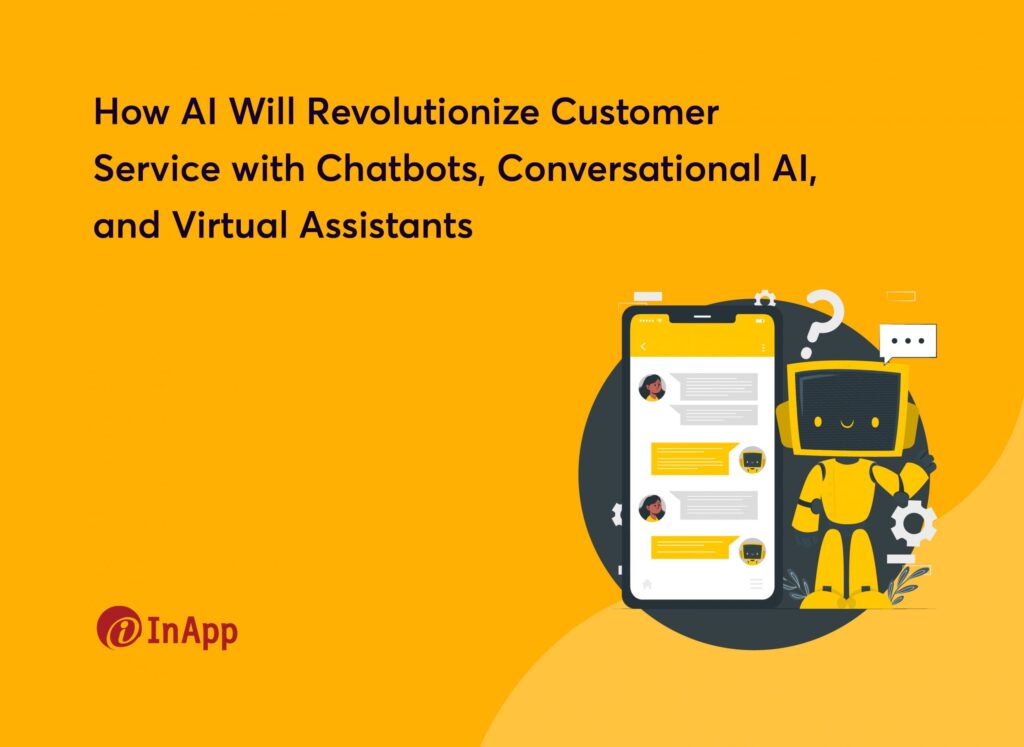
In today’s fast-paced digital landscape, businesses are constantly seeking innovative ways to enhance customer experiences and streamline support processes. Artificial Intelligence (AI) powered technologies, such as chatbots, conversational AI, and virtual assistants, have emerged as game-changers in the realm of customer service. In this article, we will delve into how these intelligent systems are reshaping the customer service landscape and revolutionizing the way businesses interact with their customers. We will explore the benefits of leveraging chatbots that provide instant responses and reduce customer waiting times. Additionally, we will examine how conversational AI and virtual assistants are taking customer interactions to new heights with their ability to understand natural language and deliver personalized experiences. Join us as we uncover the immense potential of AI in transforming customer service and driving customer satisfaction to unprecedented levels. Chatbots, Conversational AI, and Virtual Assistants Demystified While the terms chatbots, conversational AI, and virtual assistants are often used interchangeably, they refer to distinct concepts within the realm of AI and customer service. Chatbots are computer programs designed to simulate human-like conversations with users. They utilize predefined rules or machine learning algorithms to process user inputs and provide relevant responses. Chatbots can be deployed across various platforms, such as websites, messaging apps, or voice interfaces, and are typically used to handle common customer inquiries, provide basic information, or assist with simple tasks. Conversational AI, on the other hand, represents a broader concept. It encompasses technologies and systems that enable more natural and human-like interactions between humans and machines. Conversational AI utilizes natural language processing (NLP) techniques to understand and interpret user inputs, enabling fluid and context-aware conversations. Unlike chatbots, conversational AI systems can comprehend complex queries, engage in multi-turn dialogues, and provide more sophisticated responses. Virtual assistants are a specific application of conversational AI. They are AI-powered entities designed to assist users with various tasks and provide personalized experiences. Virtual assistants can understand and respond to natural language inputs, perform tasks, retrieve information from databases, and even integrate with other systems or devices. They often have a human-like persona and are capable of learning and adapting over time to better serve user needs. In summary, while chatbots focus on simulating conversational interactions, conversational AI encompasses a broader range of technologies that enable more natural and context-aware conversations. Virtual assistants, as a subset of conversational AI, are advanced AI entities that provide personalized assistance to users. Understanding the distinctions among these terms helps us appreciate the different capabilities and potential use cases for each of these AI-driven solutions in transforming customer service. Limitations of Traditional Customer Support Methods Traditional customer support methods have long been the standard approach for businesses to address customer inquiries and resolve issues. However, these methods have inherent limitations that can impact customer satisfaction and hinder the overall customer support experience. Availability of Support Agents One major limitation is the availability of support agents. Traditional customer support often operates within specific working hours, leaving customers without assistance outside those time frames. This limited availability can lead to delayed responses and frustrate customers who require immediate support. Additionally, relying solely on human agents can result in long wait times during peak periods, leaving customers feeling ignored and dissatisfied. Chances of Human Error Another limitation is the potential for human error. Support agents are susceptible to making mistakes, which can lead to misinformation or incomplete resolutions. Miscommunication or misunderstanding of customer issues may arise, resulting in a poor customer experience. Additionally, agents may vary in their level of expertise, leading to inconsistent support quality. Lack of Scalability Traditional customer support methods also struggle with scalability. As businesses grow and face increasing customer volumes, it becomes challenging to maintain the same level of support quality and response times. Hiring and training additional support agents can be time-consuming and costly. As a result, customers may experience extended wait times or receive subpar support. Lack of Personalization Moreover, traditional methods often lack personalization. Support agents may have limited access to customer history and preferences, making it difficult to provide tailored assistance. Without a comprehensive understanding of the customer’s background, agents may not address specific needs or offer relevant recommendations, resulting in a generic and impersonal support experience. To overcome these limitations and provide an enhanced customer support experience, businesses are increasingly turning to AI-driven technologies such as chatbots, conversational AI, and virtual assistants, which offer solutions to these longstanding challenges in customer support. Advantages of AI-Powered Customer Service Solutions AI-powered customer service solutions offer numerous advantages that significantly enhance the customer experience and streamline support processes. Here are several key advantages of leveraging AI in customer service: 24/7 Availability AI-powered solutions, such as chatbots and virtual assistants, can operate round-the-clock, providing instant support to customers at any time. Unlike traditional support methods with limited working hours, AI-powered systems ensure customers can access assistance whenever they need it, thereby improving response times and overall customer satisfaction. Instant and Efficient Responses AI-powered chatbots and virtual assistants can handle a high volume of customer inquiries simultaneously, providing instant responses and reducing customer waiting times. These systems can quickly retrieve information, answer frequently asked questions, and assist with simple tasks, which enables faster issue resolution and a more efficient support process. Scalability AI-powered customer service solutions are highly scalable and capable of handling an increasing number of customer interactions without compromising performance. Unlike traditional support methods that require hiring and training additional agents to accommodate growth, AI systems can effortlessly scale to meet demand, which ensures consistent support quality and response times. Personalization AI technologies enable personalized customer interactions by leveraging data analytics and machine learning algorithms. AI-powered systems can analyze customer data — such as past interactions, purchase history, and preferences — to deliver tailored experiences. Personalization enhances customer satisfaction as customers receive relevant recommendations, customized solutions, and a more personalized support experience. Improved Efficiency and Cost Effectiveness By automating routine and repetitive tasks, AI-powered solutions free up human agents’ time, allowing them to focus on more complex customer inquiries.
8 Best Practices for Successful Cloud Migration

With organizations recognizing the numerous benefits cloud computing offers, cloud migration has gained immense importance in today’s digital landscape. Cloud migration enables businesses to enhance their agility and efficiency, optimize resource utilization, and access advanced technologies. However, cloud migration is not without its challenges. Organizations often face complexities related to data security, application compatibility, network connectivity, and resource allocation during the migration process. The transition also requires careful planning, risk assessment, and a well-defined strategy to ensure a smooth and successful transition. To overcome these challenges and maximize the benefits of cloud migration, it is crucial to follow certain best practices. By adhering to these best practices, organizations can minimize disruptions, mitigate risks, and achieve a successful transition to the cloud, ultimately realizing the full potential of cloud computing for their business operations. Best Practice 1. Analyze Business Requirements & Objectives Assessing business requirements and objectives sets the foundation for successful cloud migration. Understand the specific goals and objectives that drive the need for cloud migration. The reasons may include reducing infrastructure costs, improving scalability, enhancing collaboration, or enabling faster time-to-market for products and services. By identifying these goals, organizations can align their cloud migration strategy with their broader business strategy, ensuring that the migration delivers tangible benefits. Best Practice 2. Evaluate Cloud Providers and Services The second step in a cloud migration strategy requires evaluating cloud providers and services that can cater to your unique requirements. You can start with thorough research and comparison of various cloud providers. This process involves examining factors such as reputation, track record, customer reviews, and industry recognition. Understanding the strengths and weaknesses of each provider is crucial for making an informed decision. After you develop a shortlist of potential service providers, you should begin assessing the suitability of their cloud services. This evaluation considers factors like scalability, security, performance, reliability, and compliance with industry regulations. The cloud services should align with your organization’s requirements and be capable of supporting the desired workloads and applications. Best Practice 3. Develop a Migration Plan Creating a migration roadmap and timeline provides a structured approach for the successful execution of the transition. To begin, organizations must develop a comprehensive migration plan that outlines the step-by-step process for moving applications, data, and other resources to the cloud. This plan should consider factors such as prioritization of workloads, data migration strategies, and any necessary application modifications or testing. Setting realistic timelines and milestones is essential to ensure a smooth migration. Organizations should consider the complexity of their infrastructure, the volume of data to be migrated, and any potential disruptions to ongoing business operations. By establishing achievable timelines, it becomes easier to manage resources, communicate expectations, and track progress throughout the migration process. Identifying dependencies and potential risks is a critical component of creating a migration roadmap. Organizations must identify any interdependencies between different applications or systems and plan their migration accordingly. Additionally, potential risks — such as data loss, security breaches, or compatibility issues — should be identified and appropriate mitigation strategies should be put in place. Best Practice 4. Create an Inventory Before the migration begins, organizations need to assess the current infrastructure and applications in detail. Start by gathering information about hardware, software, networking components, storage systems, and databases. It is essential to have a comprehensive view of the entire infrastructure to determine which components can be migrated to the cloud and which ones may require modifications or replacements. Identifying dependencies and interdependencies among applications is another crucial aspect of the inventory process. Organizations should document the relationships between different applications, including any shared data or integrations. This information helps in planning the sequence of migration and ensures that all dependencies are considered to avoid disruptions during the migration process. Best Practice 5. Address Compliance Requirements Addressing security and compliance requirements is of utmost importance during the cloud migration process to protect sensitive data, maintain regulatory compliance, and build trust with customers. Organizations need to address their security and compliance needs. This assessment should include identifying the sensitivity of the data being migrated, identifying any specific regulatory requirements applicable to their industry, and understanding the potential risks and threats involved. Once the security and compliance needs are identified, appropriate security measures must be implemented in the cloud environment. This process should include implementing strong access controls, encryption mechanisms, and network security protocols to safeguard data and prevent unauthorized access. Organizations should also consider implementing intrusion detection and prevention systems, regular vulnerability assessments, and security monitoring tools to ensure ongoing protection. Ensuring adherence to industry regulations and standards is equally important. Organizations must understand and comply with relevant regulations such as the General Data Protection Regulation (GDPR), Payment Card Industry Data Security Standard (PCI DSS), and Health Insurance Portability and Accountability Act (HIPAA), among others. Companies need to implement specific security controls, data handling processes, and privacy policies as required by the regulations. Best Practice 6. Identify the Right Migration Strategy Choosing the right migration strategy is a crucial decision in the cloud migration process, as it determines the approach for moving applications and data to the cloud. Firstly, organizations need to understand the different migration strategies available, such as lift-and-shift, re-platforming, and re-architecting. In a lift-and-shift strategy, applications are migrated to the cloud with minimal changes, aiming for quick and straightforward migration. Re-platforming involves making some adjustments to the applications to optimize them for the cloud environment. Re-architecting, on the other hand, involves redesigning applications to fully leverage cloud-native capabilities. The selection of the most suitable migration strategy should be based on business goals and available resources. Organizations should consider factors such as cost, complexity, and the impact on day-to-day operations. A lift-and-shift strategy may be appropriate when time is a critical factor, while re-platforming or re-architecting strategies may be chosen when the objective is to optimize performance or take advantage of cloud-native features. Best Practice 7. Test the Migrated Application Testing and validating migrated applications is a crucial step in the cloud migration process to
The Use of AR/VR in Architecture and Design: Visualizing Concepts in 3D
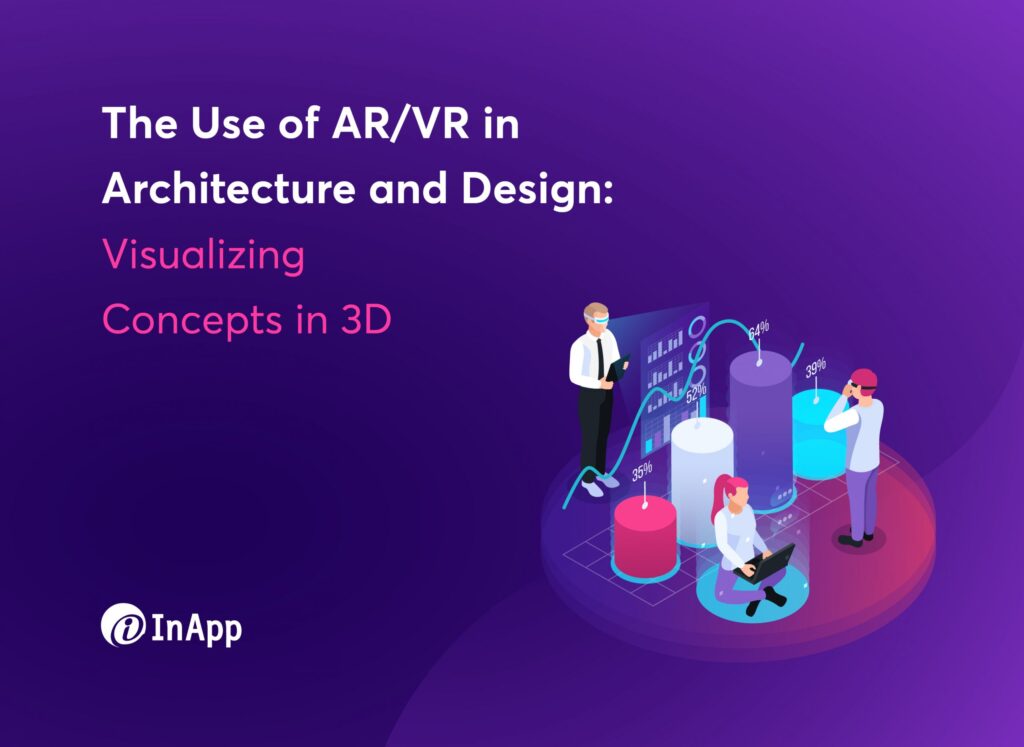
The field of architecture and design has always relied heavily on visualizing concepts to bring ideas to life. From sketches and blueprints to computer-aided design (CAD) software, architects and designers have continually sought innovative ways to create immersive representations of their vision. In recent years, the emergence of augmented reality (AR) and virtual reality (VR) technologies has revolutionized the way professionals in the industry approach visualization. AR/VR technologies offer architects and designers the ability to experience their creations in three dimensions, taking their designs from flat drawings to interactive, lifelike environments. This shift from 2D to 3D visualization has brought about a profound transformation in the field, enabling professionals to better communicate and explore their ideas. In this blog post, we will delve into the various ways AR/VR is revolutionizing the architecture and design industry by enabling the visualization of concepts in 3D. We will explore the benefits, applications, and future possibilities of these technologies, highlighting the profound impact they have on the way professionals approach their work. Applications of AR and VR in Architecture and Design In architecture and design, AR/VR technologies offer immersive and interactive experiences that revolutionize the way professionals visualize and communicate their concepts. By combining digital overlays with the physical world, AR enables architects and designers to superimpose 3D models, textures, and annotations onto real-time camera views. This capability allows for a deeper understanding of spatial relationships, materiality, and design intent. VR, on the other hand, provides a fully simulated environment that users can navigate and interact with. By donning a VR headset, architects and designers can step into their designs and explore them from a first-person perspective. This level of immersion offers a sense of scale, ambiance, and spatial experience that cannot be fully captured through traditional mediums. While AR and VR share the goal of enhancing visualization, they differ in their applications within the field. AR is well-suited for architectural presentations, where digital overlays can provide contextual information about a building, such as its energy efficiency or structural components. It can also be used during the construction phase for visualizing 3D models on site, aiding in coordination and decision-making. VR, on the other hand, excels in design exploration and client engagement. It allows stakeholders to experience and navigate virtual spaces, providing a realistic sense of what the final design will look and feel like. VR is particularly useful for showcasing interior designs, creating virtual walkthroughs, and facilitating interactive design reviews. In the following section, we will see three ways AR and VR have been helping in architecture and design. 1. Enhancing the Design Processes One of the key benefits of AR/VR is the ability to create immersive and interactive experiences that bridge the gap between the digital and physical worlds. Architects and designers today use AR/VR to transform their 2D drawings and models into three-dimensional representations, allowing them to better understand the spatial relationships, scale, and proportions of their designs. This immersive experience enables them to make more informed decisions and identify design flaws or improvements that may not be apparent in traditional mediums. Moreover, AR/VR facilitates iterative design processes. Architects and designers can quickly and easily make modifications to their designs in the virtual environment, instantly seeing the impact of these changes. This iterative workflow reduces the time and effort required for design iterations, enabling professionals to explore multiple design alternatives efficiently. Virtual walkthroughs are another significant advantage offered by AR/VR. Instead of relying on static images or physical models, architects and designers can create virtual environments that stakeholders can navigate and experience first-hand. Clients and project collaborators can take virtual tours of buildings, interiors, or urban environments, gaining a realistic sense of the design and providing valuable feedback. 2. Facilitating Interactive Design Reviews AR/VR technologies play a crucial role in facilitating interactive design reviews and fostering collaboration among stakeholders in the architecture and design industry. These technologies offer a range of advantages that transform traditional design review processes into immersive and engaging experiences. AR/VR allows for virtual meetings and remote design reviews, eliminating the need for all participants to be physically present in the same location. Through virtual meetings, architects, designers, clients, and other stakeholders can gather in a shared virtual environment to review designs, provide feedback, and make collaborative decisions. The interactive nature of AR/VR enhances design reviews by enabling stakeholders to actively engage with the virtual environment. They can explore the design from various perspectives, walk through spaces, and interact with virtual objects. This level of interactivity fosters a deeper understanding of the design intent, allowing stakeholders to provide more meaningful and informed feedback. AR/VR also enhances client engagement during the design process. Clients can virtually experience their future spaces, visualizing how different design elements come together and gaining a sense of scale and ambiance. This immersive experience helps clients better understand the design concept and make well-informed decisions. For example, in the interior design industry, AR/VR can enable clients to virtually walk through a proposed space, visualize different furniture arrangements, and see how lighting and materials affect the atmosphere. 3. Simulating Realistic Environments AR/VR technologies offer architects and designers the ability to simulate realistic environments. By creating virtual environments, professionals can test various design elements such as lighting, materials, and spatial experiences before they are implemented in physical spaces. Architects can replicate natural and artificial lighting scenarios within the virtual environment, allowing them to analyze the interplay of light and shadow, assess the impact on visual aesthetics, and optimize lighting design for both functionality and ambiance. This simulation helps architects make informed decisions regarding the placement of windows, artificial light sources, and the overall lighting scheme. Materials play a crucial role in the design process, and AR/VR enables architects and designers to experiment with different materials virtually. They can visualize how various materials, textures, and finishes will look and feel within the designed space. By simulating realistic material appearances and characteristics, professionals can make informed decisions about material selection and evaluate their visual and tactile qualities in
Podcast on ‘Natural Language Processing and its Applications in Healthcare’

Elvin (Host): Hello and welcome to the InApp podcast, where we talk about empowering businesses with transformative digital solutions. I’m your host, Elvin. Today, we’re going to talk about natural language processing and its applications in healthcare. My special guest today is Mahalingam, a pre-sales manager here at InApp. He specializes in technologies that companies can use to boost their digital strategy and streamline business processes. Thanks for being with us today. Mahalingam (Guest): Thanks for having me, Elvin. It’s great to be here. Elvin: I’m really excited to learn more about natural language processing, and how it applies to healthcare, an industry that affects all of us, now more than ever. Let’s start with a quick introduction to natural language processing or NLP. What is it? And how does it work? Mahalingam: Putting it in simple terms, NLP is all about making the interaction between humans and computers easier than writing programs. Nowadays, whenever we want the computer to do something and give an output, we either write programs or give some written commands that are preprogrammed into the operating system. NLP eliminates that need and helps us give instructions in a form closer to the human language. A very common case study for the same is that of our smart assistants like Google Assistant, Siri, Cortana, Alexa, etc. We communicate with them using our voices, and they understand what we mean to a good extent. They even respond in a way that closely resembles human voices. I use that feature every day when I just say “Siri, remind me to take my medicine after two hours”, and Siri is able to understand that I want to set a reminder, that I want to set for a time two hours from now, and automatically sets it. Some other examples are autocorrecting systems in MS Word or Google Docs or similar applications. Nowadays we are all familiar with the likes of ChatGPT. That can also be considered as an NLP application that performs both understanding and generation of natural language text. Elvin: I use those features all the time too. How does it work? Mahalingam: NLP involves a large pipeline of tasks, which are being fine-tuned after decades of research. The program needs to start by listening to conversations or typed text and understanding where they start and end. Once that chunk is received, it may have to perform some noise removal. Once a clean piece of input is ready, it needs to be broken into individual words called tokens, and each token has to be understood separately. Processes like stemming and lemmatization help convert all higher forms of words into the base form. The tokens will be interpreted one by one, and context is added whenever some confusion is encountered. Contextual information can be managed using models like n-grams, bag-of-words, LSTM, etc. Eventually, they get converted into an intermediate form which can be processed by underlying programs. This pipeline can either be based on a set of predefined rules or using a machine learning approach to learn on the go. In short, you can consider it analogous to how programming languages are processed, but at a larger scale and complexity. The reason is that programming languages have standardized syntax and semantics that are verified by the compiler or interpreter prior to further processing, whereas there is nothing of that sort in natural language. But one thing is to be remembered. The success of NLP depends on how well the input is managed. It may be voice, text, or even handwritten. Generative models like GPT take this one step further by leveraging state-of-the-art computing facilities and billions of language tokens to ensure the generated text is as logical and sensible. When we talk about NLP, the application that always comes to our mind is the one I mentioned earlier, which is smart assistants. There are hundreds of other applications that will benefit from NLP, and healthcare is one of the most important ones. That’s why I feel today’s theme is to the point. Elvin: Fascinating. And how does natural language processing work in the healthcare industry? Mahalingam: A very good question. As I was exploring the opportunities of NLP in healthcare, I came across an article from Hitachi Solutions. It mentioned applications like clinical assertion, medical de-identification, and anonymization, clinical entity recognition, clinical note digitization, etc. The clinical assertion will help in medical decision-making by ensuring that a given list of symptoms corresponds to a particular diagnosis, based on a number of rules. De Identification helps to identify personally identifiable information from the medical text and remove them for regulatory purposes like HIPAA. Clinical entity recognition will help identify aspects like which tests were done, and what is the diagnosis, based on a verbal transcript. Note digitization is one of the most common applications where legacy handwritten clinical notes are converted into digital formats for integrating with Electronic Health Records (EHRs). We should note that none of these can actually replace any medical professional, but they can support them and point out if there are any fallacies. Elvin: So, it’s more about helping medical professionals by streamlining these processes. It sounds like the healthcare industry is already embracing natural language processing. Why the sudden increase in adoption? Mahalingam: Two major reasons – are access to large data volumes and storage capacity and access to computing resources that can handle complex NLP pipelines on large datasets. Most hospitals are currently running in electronic mode using EHRs. With cloud providers gaining popularity with affordable storage and computing, hospitals now have a way of using them to gain insights. Some cloud providers have even come with healthcare-specific applications. An example is “Amazon Comprehend Medical” offered by AWS. Even otherwise, complex NLP pipelines on medical data can now be executed on the cloud with customizable VM configurations, and deployment options like Kubernetes. Elvin: We know there’s a lot of patient data in an electronic health record system. What are the steps involved in making
Four Real-World Applications of Machine Learning in Business and Industry
In today’s data-driven world, businesses and industries are generating more data than ever across various domains and operations. This surge in data has paved the way for the rise of data science and its powerful applications in the business landscape. To leverage these enormous amounts of data to improve business processes, organizations are turning to technologies like Machine Learning (ML) to unlock hidden insights. With its ability to analyze, detect patterns, and make accurate predictions, ML has become a game-changer for all sectors. The growing adoption of ML signifies the recognition of its immense potential to drive innovation, increase efficiency, and gain a competitive advantage in the dynamic business landscape. The impact of ML can be witnessed in industries such as e-commerce, where personalized recommendations powered by ML algorithms drive customer engagement and boost sales. Similarly, in supply chain management, ML-based predictive analytics and demand forecasting enable businesses to optimize inventory and streamline operations. Of course, the adoption of ML is not limited to e-commerce and supply chain management. This blog will discuss in detail four real-world examples where ML is widely used. 1. Enhancing Customer Experience In today’s competitive business environment, providing personalized experiences makes all the difference. ML plays a crucial role in achieving this goal by powering recommendation systems in various domains such as e-commerce, OTT platforms, and social media platforms. ML algorithms can analyze vast amounts of user data — including browsing history, purchase patterns, demographics, and social interactions — to understand preferences and behaviors. That enables recommendation systems to deliver highly accurate and tailored product suggestions to users. For example, e-commerce giants like Amazon and Alibaba use ML algorithms to analyze customer browsing and purchase history to generate personalized product recommendations. These recommendations not only enhance the shopping experience but also drive sales and customer satisfaction. When it comes to streaming services like Netflix and Spotify, ML algorithms analyze user interactions, such as viewing history and music preferences, to curate personalized content recommendations. By understanding user preferences, ML algorithms can suggest relevant movies, TV shows, or songs to improve user engagement and retention. Additionally, businesses can also use ML for personalized marketing and targeted advertising campaigns. By analyzing customer data — including demographics, browsing history, and purchase behavior — ML algorithms can identify patterns and preferences. That insight enables businesses to create targeted advertisements and deliver personalized marketing messages to specific customer segments, maximizing the impact of their campaigns. 2. Improve Operational Efficiency By leveraging ML algorithms and techniques, businesses can optimize processes, enhance decision-making, and streamline operations to improve their operational efficiency. Here’s how ML can help. 3. Better Fraud Detection and Enhanced Cybersecurity In recent years, ML algorithms have become instrumental in detecting and preventing fraud in financial transactions and online platforms. By analyzing vast amounts of data, ML algorithms can effectively identify fraudulent activities and minimize potential losses. ML algorithms rely on two techniques, anomaly detection, and pattern recognition, to improve cybersecurity. In anomaly detection, the algorithm analyzes the transactional data and checks for unusual patterns or behaviors that deviate from regular transactions and reports them. Pattern recognition in ML algorithms can identify fraudulent behavior based on historical data and known fraud patterns. By continuously learning from new data, these algorithms can adapt and detect emerging fraud techniques that might go unnoticed by traditional rule-based systems. 4. Revolutionizing Healthcare ML has revolutionized the healthcare industry by advancing disease diagnosis, medical image analysis, and drug discovery. Its application in these areas has the potential to transform healthcare delivery and improve patient outcomes. Today, ML algorithms are used in disease diagnosis, leveraging large datasets of patient records, symptoms, and medical imaging. By analyzing patterns and correlations within this data, ML algorithms can assist healthcare professionals in accurate and timely diagnosis. For instance, ML algorithms have demonstrated high accuracy in diagnosing diseases such as cancer, cardiovascular disorders, and neurological conditions. Medical image analysis is another critical area where ML is leveraged in the healthcare sector. ML algorithms can analyze complex medical images such as MRI scans, x-rays, and pathology slides to assist in disease detection and characterization. These algorithms can detect abnormalities, assist radiologists in making diagnoses, and provide quantitative measurements for treatment planning. ML also plays a significant role in predicting disease outcomes and enabling personalized treatment recommendations. By analyzing patient data — including demographics, medical history, and genetic information — ML models can identify early warning signs and risk factors for diseases. As a result, healthcare providers may be able to intervene earlier to improve patient outcomes and reduce healthcare costs. In drug discovery, ML algorithms are transforming the traditional trial-and-error approach (source). ML can analyze large-scale genomic data to identify potential drug targets, predict drug efficacy, and accelerate the discovery of new therapeutic compounds. By analyzing genetic and molecular data, ML can identify relationships between genes, proteins, and diseases, aiding in the development of targeted therapies. To Sum Up ML has emerged as a transformative force across industries, revolutionizing the way businesses operate and enhancing various aspects of human life. From improving customer experiences and operational efficiency to detecting fraud and revolutionizing healthcare, ML has demonstrated its immense potential. Looking to the future, ML will also influence other technologies such as natural language processing, robotics, autonomous vehicles, and smart systems. These advancements have the potential to further enhance human lives, drive innovation, and create new opportunities. While celebrating the progress and future potential of ML, it is also crucial to emphasize the need for ethical considerations and responsible implementation. As ML algorithms become more sophisticated and autonomous, issues surrounding privacy, bias, and fairness become paramount. It is essential for businesses, policymakers, and researchers to work together to ensure that ML is used responsibly with proper safeguards in place.
How AR/VR Is Revolutionizing Training and Development Programs
In today’s rapidly evolving landscape of training and development, augmented reality (AR) and virtual reality (VR) have been revolutionizing traditional training methods. By seamlessly merging the digital and physical worlds, AR and VR are delivering immersive experiences that accelerate learning. Here are six ways these technologies are changing training and development programs: 1. Better Engagement and Interaction The integration of AR and VR into learning and development programs has paved the way for immersive and interactive learning experiences. These cutting-edge tools provide trainees with a learning environment that goes beyond passive observation, allowing them to actively engage with the course content. With AR, trainees can better visualize and interact with virtual elements seamlessly integrated into their surroundings. This interplay between the physical and digital worlds fosters a heightened level of engagement. Users can manipulate objects, explore simulated environments, and practice real-life tasks within a risk-free setting. VR, on the other hand, transports trainees to entirely virtual realms, immersing them in realistic simulations. Here, they can interact with objects, navigate through virtual spaces, and engage in hands-on activities. The level of interactivity is unparalleled as trainees can manipulate virtual objects, collaborate with simulated characters, and make decisions that directly impact their learning journey. Studies have shown that active participation and interaction with virtual content led to a remarkable improvement in knowledge retention. The immersive nature of these technologies creates memorable experiences that enhance information recall and transfer. 2. Realistic Simulations for Practical Training AR/VR technologies have revolutionized training and development programs by offering realistic simulations of various scenarios and environments. Through these immersive technologies, trainees can engage in practical training experiences that resemble real-life situations. This aspect of AR/VR training provides several significant advantages. Firstly, practical training through simulated experiences allows learners to gain hands-on experience in a safe and controlled environment. For instance, healthcare professionals can practice complex surgical procedures without the risks associated with live operations. Similarly, aviation trainees can familiarize themselves with cockpit procedures and emergency situations without endangering passengers or aircraft. Furthermore, AR/VR simulations offer an opportunity for repetitive practice, which is crucial for skill development. Trainees can repeat scenarios as many times as needed until they achieve proficiency, without the limitations of real-world constraints. 3. Reduces Training Cost Traditional training often requires substantial investments in physical equipment, venues, and resources. However, incorporating AR and VR eliminates these expenses. Instead of purchasing and maintaining costly equipment or booking physical spaces for training sessions, organizations can leverage virtual environments to deliver immersive and interactive learning experiences at a fraction of the cost. Moreover, virtual training saves time for both trainers and trainees. In traditional settings, arranging multiple training sessions for a large number of participants can be time-consuming and logistically challenging. AR/VR technology allows for simultaneous training sessions, enabling multiple individuals to participate concurrently. This capability not only maximizes efficiency but also minimizes downtime for employees because they can access the materials and modules at their convenience. Additionally, AR/VR facilitates remote training, which eliminates the need for travel and accommodation expenses associated with in-person training. Trainees can access the training content from any location, reducing logistical constraints and allowing organizations to train employees more efficiently. 4. Ensures a Safe Learning Environment AR/VR technologies offer a safe learning environment for trainees, allowing them to practice and explore various scenarios while limiting real-life risks. By immersing learners in virtual environments, AR/VR training mitigates potential hazards and provides a controlled setting for skill development. Trainees can engage in hands-on experiences and encounter realistic challenges without facing physical or emotional harm. For instance, firefighters can practice battling intense blazes in virtual simulations without being exposed to actual flames, heat, or smoke. As a result, they can develop critical decision-making skills and improve their response strategies in a safe and controlled environment. In high-risk industries such as healthcare, where mistakes can have serious consequences, AR/VR provides a valuable tool for training. Surgeons, for example, can practice complex procedures in virtual operating rooms, allowing them to refine their techniques before performing surgeries on real patients. AR/VR also reduces the potential for errors, enhances patient safety, and boosts the confidence of medical professionals. 5. Deliver Personalized Learning With AR/VR-powered learning, instructors can tailor training experiences to individual learners. This customization enhances the effectiveness and efficiency of training programs, ensuring that each learner receives a targeted and personalized learning experience. The benefits of personalized learning in AR/VR are many. Firstly, learners can progress at their own pace, ensuring that they fully grasp each concept before moving forward. This approach fosters deeper understanding and knowledge retention. Additionally, personalized learning allows for the customization of training content to align with the trainee’s specific needs, interests, and learning style. This level of personalization enhances engagement and motivation because learners feel more connected to the material. Moreover, adaptive learning promotes efficiency by focusing on areas where the trainee requires more practice or improvement. This targeted approach optimizes training time, as learners can bypass content they have already mastered. It also reduces the risk of learner boredom or frustration, as the system keeps the challenge level appropriately aligned with the trainee’s abilities. 6. Global Collaboration and Remote Training AR/VR technologies have opened new possibilities for global collaboration and remote training programs. These immersive technologies enable trainees from different locations to interact and learn together in virtual environments, transforming the way organizations approach training. AR/VR facilitates global collaboration by breaking down geographical barriers. Trainees from across the world can come together in shared virtual spaces, allowing for seamless communication, collaboration, and knowledge exchange. This capability fosters a diverse and inclusive learning environment where participants can benefit from different perspectives, cultural insights, and expertise. Virtual environments in AR/VR enable trainees to engage in real-time interactions and simulations, replicating face-to-face training experiences. They can communicate through avatars, engage in group activities, and work on collaborative projects, just as they would in physical settings. This interactivity promotes teamwork, problem-solving, and effective communication skills. Unleashing the Transformative Power of AR/VR in Training and Development The
Adopting XAI to Build Transparent and Accountable AI Systems

With the integration of Artificial Intelligence into almost every part of our daily lives, skepticism is growing regarding the transparency and accountability of these intelligent systems. Though AI has made our life a lot easier in many ways, there are certain areas where we can’t blindly trust AI. For a better understanding, let’s consider the healthcare industry. With AI increasingly used in diagnosis, imagine an AI-powered diagnostic system recommending a treatment plan for a patient. The stakes are high, yet the rationale behind the system’s decision remains obscure. So the question arises, how can we trust such a system without understanding the factors influencing its recommendations? In short, considering the decisions made by AI can profoundly impact human lives, the need for Explainable Artificial Intelligence (XAI) amplifies. With XAI, we can ensure that the AI is not an enigmatic black box. Instead, it becomes a tool that can be scrutinized, understood, and ultimately harnessed for the greater good. The Need for Transparent AI Systems Transparent AI systems give the end user clear explanations as to how they came to a decision. These systems allow users to understand the underlying processes and reasons behind those outcomes. In short, transparency, in the context of AI, refers to the ability of an AI system to shed light on how it arrives at its conclusions and provide understandable justifications for its behavior. Transparent AI systems are essential for these key reasons: 1. Trust and Acceptance As with any product, trust is crucial for an AI system. The widespread adoption of an AI system only occurs when people have confidence in it. One way to gain trust is transparency. When users, stakeholders, and the public understand the rationale behind AI decisions, they are more likely to believe in the system’s outputs. Transparent AI systems build trust by providing clear explanations and justifications for their actions, reducing the perception of AI as a “black box” that cannot be understood or trusted. 2. Legal and Ethical Considerations In fields like healthcare, finance, or criminal justice where AI is used for critical decision-making, transparency is essential to ensure compliance with legal and ethical standards. By providing explanations for their decisions, transparent AI systems enable regulators, policymakers, and users to assess the fairness and accountability of the system’s outputs. 3. Bias Detection and Mitigation An AI system is only as good as the data it was trained on. If the training data contains biases, the AI system can inherit those biases, leading to unfair or discriminatory outcomes. Transparent AI systems allow users to understand how the system processes and interprets data, making it easier to identify biases. By detecting biases, stakeholders can take corrective actions to mitigate them, ensuring that AI systems operate in a fair and unbiased manner. 4. Error Detection and Corrective Actions When a transparent AI system makes an incorrect decision, users and developers can understand the reasons behind the error and work on rectifying it. This understanding empowers stakeholders to identify and rectify the underlying issues irrespective of whether they stem from flawed data, biased algorithms, or other factors. 5. User Empowerment and Collaboration Transparent AI systems empower users by providing them with explanations. When users can comprehend why an AI system arrived at a specific decision, they can provide feedback, challenge incorrect outcomes, or suggest improvements. Transparency promotes collaboration between users and AI systems, facilitating a more effective human-AI partnership. 6. Algorithmic Accountability and Responsibility If an AI system’s decision causes harm or violates ethical standards, explanations help identify the root causes and hold the responsible parties accountable. Transparency ensures that AI developers, organizations, and stakeholders can take appropriate measures to rectify errors, improve system performance, and prevent future harm. What Is Explainable Artificial Intelligence (XAI)? XAI refers to the development of AI systems that provides understandable and transparent explanations of how the system came to its decision. Unlike traditional AI systems, XAI is about making the end user better comprehend and trust the outcomes generated by these systems by making the system more transparent. Traditional AI models like the ones that rely on deep neural networks often work like a black box where the end user doesn’t have a clue about how the system works or came to a conclusion. Considering an AI system is only as good as the data it was fed, this lack of transparency often raises questions on bias, errors, and the potential inability to hold AI systems accountable. Here’s where the significance of XAI comes in. XAI addresses these issues by shedding light on the decision-making process to provide a clear picture to the end user on how it came to certain conclusions. Because humans gain insight into the factors that influenced an AI’s output, with XAI there is better trust. Different Approaches and Techniques Used in XAI XAI encompasses various approaches and techniques to provide transparency and interpretability in AI systems. Some of the commonly used methods in XAI include the following. 1. Rule-based Systems In a rule-based system, human-made rules are used to store, sort, and manipulate data to mimic human intelligence. The rule-based approach utilizes a set of predefined if-then rules and logic to make decisions and provide explanations to users. Rule-based systems are transparent as they reveal the reasoning behind their decisions. 2. Model Interpretability Methods These techniques focus on understanding the internal workings of AI models, such as neural networks or decision trees. They aim to extract meaningful insights from the model’s structure and parameters. Some commonly used model interpretability methods include Feature Importance, Partial Dependence Plots, and Local Interpretable Model-agnostic Explanations (LIME). 3. Surrogate Models Surrogate models are simplified and interpretable models built to mimic the behavior of complex models. These models are trained to approximate the predictions of the original AI model while being more understandable. 4. Attention Mechanisms Attention mechanisms, commonly used in deep learning models, highlight the input elements that are most relevant for a given prediction. They provide insights into which parts of the input data the model focuses on, enhancing the AI system’s interpretability.
Exploring the Power of Predictive Analytics: How Data Science is Revolutionizing Business Decision-Making
In today’s business landscape where organizations can amass vast amounts of data, the significance of data science in shaping decision-making processes has increased. Leveraging the benefits of advanced algorithms and statistical modeling techniques, data science has been pivotal in extracting valuable insights and predicting future outcomes from data. At the core of data science lies predictive analytics, a vital tool for transforming raw data into actionable intelligence. By analyzing historical data with statistical models, predictive analytics can help identify trends and forecast future scenarios for organizations to optimize various aspects of their operations. Data science forms the basis for predictive analytics by offering the necessary tools and approaches to gather, refine, convert, and examine data. By applying statistical models and Machine Learning (ML) algorithms, data scientists can unlock hidden patterns and relationships within the data, enabling accurate predictions and insights. As data science continues to advance and predictive analytics becomes more sophisticated, the impact on business decision-making is poised to expand further, revolutionizing how organizations operate in an increasingly data-driven world. This article discusses the revolutionary potential of predictive analytics and data science, exploring how they reshape business decision-making processes in today’s dynamic landscape. The Evolution of Data Science and Predictive Analytics The evolution of data science has been a fascinating journey, transforming the way we understand and utilize data in the modern era. The roots of data science can be traced back to the early 20th century when statisticians began using statistical methods to analyze data. However, it wasn’t until the advent of computer technology and the exponential growth of digital data that data science truly took off. With the significant advancements in computation and the abundance of available data, data scientists started integrating various disciplines such as mathematics, statistics, computer science, and domain knowledge to tackle complex data problems. Additionally, the rise of big data propelled the development of advanced techniques and tools in data science further. Today, data science plays a crucial role in unlocking valuable insights from vast amounts of data. It involves processes such as data collection, cleaning, transformation, and analysis, enabling organizations to make informed decisions and drive innovation. With advancements in technology, including cloud computing and Artificial Intelligence (AI), data science continues to evolve, offering new opportunities and challenges. The Rising Popularity of Predictive Analytics Across Verticals The adoption of predictive analytics has been on the rise, revolutionizing industries across the board. According to a survey by Forbes, 86% of executives believe that predictive analytics has contributed significantly to their organizations’ success. The retail sector has experienced substantial benefits, with predictive analytics helping companies optimize pricing strategies, improve inventory management, and personalize customer experiences. In finance, predictive analytics has become indispensable, enabling banks to detect fraud, predict market trends, and mitigate risks. Healthcare organizations are leveraging predictive analytics to enhance patient care, identify at-risk populations, and improve treatment outcomes. The impact of predictive analytics is also evident in manufacturing, where it facilitates predictive maintenance, optimizes machinery performance, and reduces downtime. In marketing, predictive analytics empowers companies to target customers effectively, customize marketing campaigns, and maximize return on investment. These examples highlight the increasing adoption and effectiveness of predictive analytics in various industries. As organizations continue to embrace data-driven decision-making, predictive analytics will play an even more significant role in shaping strategies, optimizing operations, and driving competitive advantage. The Key Components of Predictive Analytics Predictive analytics comprises many components that work together to extract valuable insights from data, which are then used to make accurate predictions. Here is a summary of the key components of predictive analytics. 1. Data Collection: The first step in predictive analytics is collecting relevant data. This stage involves identifying data sources, gathering data from these sources, and ensuring that the data is complete. It is important to note that the data collected should encompass the necessary variables and features to build robust predictive models. 2. Data Pre-processing: Once the data is collected, it needs to be pre-processed to enhance its quality for analysis. This stage involves tasks such as data cleaning, handling missing values, and transforming data into a consistent format. Pre-processing is done to ensure that the data is well prepared for modeling and analysis. 3. Modeling: Modeling involves choosing appropriate statistical or machine learning techniques to build predictive models. These models learn from historical data patterns and relationships to make predictions on new or unseen data. Common modeling techniques include regression analysis, decision trees, random forests, support vector machines, and neural networks. 4. Evaluation: The performance of predictive models needs to be evaluated to assess their accuracy and effectiveness. Evaluation metrics such as accuracy, precision, recall, and area under the curve (AUC) are used to measure the model’s performance. This step helps determine the reliability and robustness of the predictive models and identify areas for improvement. In addition to these technical components, domain expertise, and contextual understanding are essential in predictive analytics. Subject matter experts with deep domain knowledge provide insights into the data, guide feature selection, interpret the model’s outputs, and ensure that the predictions align with the specific industry or business context. Their expertise helps refine the models, validate predictions, and make informed decisions based on the forecasts. The Impact of Predictive Analytics on Business Decision-Making Predictive analytics has a wide-ranging impact on organizations, with three core effects observed across various industries. 1. Improved Operational Efficiency Operational efficiency has been found to have significantly improved through predictive analytics. By analyzing historical data and identifying patterns, businesses can optimize their inventory levels, anticipate demand fluctuations, and streamline their supply chain processes. As a result, companies can reduce costs, enhance resource allocation, and increase productivity. 2. Promotes Customer-Centric Decisions Predictive analytics enables businesses to gain a deep understanding of customer preferences, behavior, and needs. Consequently, this data can support personalized marketing campaigns, precise product recommendations, and enhanced customer experiences. 3. Risk Mitigation Predictive analytics helps businesses in risk mitigation. By analyzing historical data, companies can identify potential risks and enable measures to prevent them. Additionally, predictive analytics can help in