
Exploring Serverless Architecture Use Cases and Benefits

Serverless computing is no longer a buzz term in the field of Information Technology following the gradual migration of industries and even startups towards the idea of dynamic resource management. Companies typically invest a good portion of their budget & manpower towards maintaining and upgrading servers that host different functionalities of an application. In fact, server maintenance is posed as an important and mandatory step since it’s necessary for the services to keep up with the ever-rising demand in customer base and workload without any downtime to the end-user interface. However, the advent of serverless computing has completely eliminated the need for companies such as Netflix and Codepen to rely on server maintenance as it is handled by third-party providers. What is Serverless Architecture? The name “Serverless” doesn’t necessarily imply that there are zero servers involved. Conversely, it indicates that product owners do not need to worry about provisioning or maintaining a server. In simple terms, serverless computing aids developers to run code without the need to provision or maintain either physical or virtual servers. Server maintenance is taken care of by third-party vendors with scalable architecture such as Amazon Lambda, Google Cloud, and Microsoft Azure. The idea is to provide continuous scaling of services without the need to monitor/maintain the resources. Developers are only required to build their code and upload it to the serverless architecture (e.g. Amazon Lambda or Azure/Google Function). Running the services & auto-scaling of instances are automatically taken care of by the selected third-party events. The events are triggered by any external HTTP requests (or any other AWS services) through API gateways. The event-driven approach is susceptible to varying incoming workloads and creates a real-time responsive architecture. This enables companies to reduce costs and utilize the workforce towards improving their product features. Serverless computing is extremely advantageous to startups given that it constitutes a pay-as-you-go model that charges only for the resources consumed during the computing time. This means if your code stays ideal no cost would be incurred. Why prefer Serverless over Microservices? The microservices-based model is characterized by the idea that business functionalities are split into multiple stable and asynchronous individual services with complete ownership provided to the respective developers. With the least fault tolerance, microservices do come with a set of advantages such as technological flexibility, scalability, and consumption-based billing. However, Infrastructure as a Service (IaaS) entails constant management overhead to ensure that they are up-to-date via patching cycles and maintaining backups. With respect to the serverless model, each action of the application is viewed as separate functions decoupled from each other. This is highly advantageous because the functions themselves can scale up depending on the workload. One of the most popular use cases is that CI/CD (Continuous Integration & Deployment) helps in deploying code and bug fixes in smaller increments on a daily basis. Serverless architecture can automate most of these tasks by having the code check-in as a trigger. Unlike microservices, creating builds and automatic rollbacks in case of any issues can be carried out without any direct management using serverless computing. Serverless Architecture Use Cases What is the right time to migrate to a serverless architecture? A few popular use cases that can define an organization’s need to adopt the FaaS model are as follows: IoT Support: A serverless architecture that can aggregate data from different devices, compute & analyze them and trigger respective functions can provide a more scalable and low-budget solution for industries. Serverless backends can be customized to handle mobile, web, and third-party API requests. Image & Video Processing: Image processing has emerged as an early frontrunner to adapt the serverless approach, especially the organizations dealing with facial and image recognition. In a 2016 conference, IBM demonstrated the use of its own serverless tool OpenWhisk, by using a drone to capture aerial pictures that were then subjected to cognitive analysis through custom APIs. More practical use cases of IBM’s OpenWhisk include surveying agricultural fields, detecting flood-affected areas, search and rescue operations & conducting infrastructure inspections. Hybrid Cloud Vendors: Enterprises possess varying needs with respect to cloud requirements and there are several providers in the market with different services. They tend to utilize the strongest services from each vendor making the application dependent on multiple third-party tools. However, serverless computing makes it possible to deploy any cloud providers of our preference and connect them using custom APIs. Benefits of adopting the serverless architecture Event-driven functions to execute business logic. Pay-as-you-go model that cuts major costs related to infrastructure maintenance. Reduced time to market, thereby enabling faster code deployment. Auto-scaling architecture with on-demand availability. Faster disaster recovery and rollback options to ensure that the user interface operates 24×7. The serverless model is in fact a brilliant concept that uses the cloud to its maximum potential without requiring infrastructure management. Given the evolution of market dynamics at a significantly accelerated pace, organizations are forced to keep up with the current trends and serverless computing acts as a catalyst for achieving that goal. Although the adoption of serverless computing entails a set of challenges, organizations are rapidly adopting the FaaS model due to its significant benefits, and this is projected to increase over time. The advent of various tools has further considerably simplified the development of serverless applications. Specifically, in the case of AWS, CloudFormation templates written in YAML constitute the basis via which services are specified for deployment although it could potentially become unmanageable. Tools, such as AWS Amplify, further simplify the same to enable developers to focus on their jobs while the tool focuses on deployment.
Web Application Security Issues and Solutions

Today’s internet is all about web apps and the advancement of web applications and other technologies that change the way we do business. Applications with valuable data make them a high-priority target for a security breach. The types of data that are often stolen include valuable information like core business data, customer identification, access controls, etc. These data threats make it imperative to follow web application security best practices. So if security matters, you have to be proactive and not reactive. Assuming that the network firewall that you have in place to protect your network will secure your websites and web applications won’t help. Ensuring security is about identifying the risks and implementing appropriate countermeasures. This requires developers to spend time scanning and identifying vulnerabilities than fixing them. Application security is a need for users and the responsibility of the developers. This is a need since software security breaches cost millions of dollars for any organization; fixing defects after the release is relatively risky and expensive; security issues can cause negative publicity. A responsibility to protect your site visitors, protect your brand image, and protect your customer’s trust. How to Prevent Web Application Security Issues? As a preventive measure, web app developers typically adopt threat modeling, a methodology for identifying threats, their causes, prevention, and mitigation strategies to avoid the negative effects of security risks. It complements the security code review process by looking at an application from the attacker’s perspective. This model ensures that applications are being developed with built-in security from the very beginning. Additionally, there are some basic practices that every developer can and should be doing as a matter of course for preventing security issues. For securing web applications you must identify all security issues and vulnerabilities within the application before an attacker identifies and exploits them. Scan your web application using a black box scanner, do a manual source code audit, and do an automated/manual scan for identifying coding problems. Almost all technical vulnerabilities can be identified using automated scanning methods like SQL Injection, Cross-Site Scripting, etc, whereas manual scanning will help in identifying logical vulnerabilities. Try to limit the remote access of a web application to a specific set of IP addresses. The administrator must always take some time to analyze every web application that is running and ensure the least possible privileges are provided to the user, application, and service. Make sure to differentiate your live environment from the development and testing environment. The most important process in securing your web application is to always install security patches so that the attackers cannot find and exploit any known vulnerabilities in the software. Making use of web application firewalls (WAF) will check the incoming traffic and block any attempts made for the attack. Apart from this, you can use various security tools to scan web applications. Web Application Security Tools Some of the free tools used for testing web application security are: Burp Suite, a comprehensive solution for web application security checks Netsparker, a tool used for testing SQL injection and XSS OpenVAS, the tool claiming to be the most advanced open source security scanner used for testing known vulnerabilities. SecurityHeaders.io is a tool to quickly report which security headers like CSP and HSTS a domain has enabled and correctly configured. Xenotix XSS Exploit Framework, a tool from OWASP (Open Web Application Security Project) that includes a huge selection of XSS attack examples, which you can run to quickly confirm whether your site’s inputs are vulnerable in Chrome, Firefox, and IE. OWASP ZAP, the Zed attack proxy is easy to use integrated penetration testing tool for finding vulnerabilities in web applications. OWSAP SWFIntruder (Swiff Intruder), is a first-in-case tool specifically developed for analyzing and testing the security of Flash applications at runtime. Subgraph Vega is a free and open-source scanner and testing platform to test the security of web applications. Vega can help you find and validate SQL Injection, Cross-Site Scripting (XSS), inadvertently disclosed sensitive information, and other vulnerabilities. Browser extensions can also help in securing web applications like: Firefox Live HTTP Headers – View HTTP headers of a page while browsing Firefox Tamper Data – Use tamper data to view and modify HTTP/HTTPS headers and post parameters Firefox Web Developer Tools – The Web Developer extension adds various web developer tools to the browser Firefox Firebug – Firebug integrates with Firefox to edit, debug, and monitor CSS, HTML, and JavaScript
Getting started with Angular Universal: How and Why?

Angular is designed to build powerful single-page web applications. In a Single-page application, normally we first bring the data to the client and then build the HTML that represents the data on the client-side.
Angular Universal allows us to run the Angular app on the server, thus enabling us to serve static HTML to the user.
Importance of Cloud Computing for Small Business and Startups

The cloud has become an integral part of the IT strategy of most large corporations, but for many small businesses & start-ups, it is still an unknown commodity. The benefits of cloud computing services in terms of business agility, financial prudence, etc, are pertinent for large corporations as well as start-ups and small businesses. But there are still many small businesses not completely sure about what is meant by cloud computing and where it fits into their IT strategy. What is Cloud Computing? To really understand how the cloud is beneficial for small businesses, let’s first understand what cloud computing really is: Cloud computing is a mechanism by which computing resources are available online. The computer resources can be in the form of data centers, processors, system-level software, or application-level software. These resources are shared and available on demand. These resources can be either publicly available or private (for use only within an organization). The cloud computing levels are: Infrastructure Processor Block Storage N/W Platform Database Queues Runtime Object Storage Application HRM CRM ERP Accounting Communication The importance of Cloud Computing levels mean for a Small Business or a Startup For a small business or a start-up arranging all the physical computing resources can be costly. Startups and small businesses are always concerned about the cost. Physical resources (Infrastructure layer) most times consume the bulk of the cost of setting up a startup or expanding a small business. It is here that the infrastructure layer of the cloud can be particularly beneficial. Instead of setting up separate servers or data centers, one can actually get these resources when required, on-demand, by using the cloud. As a small business or a start-up, the cloud gives immense flexibility. If required you can scale up really fast and also on the flip side, you can immediately cut costs by unsubscribing to unnecessary computing resources. Quite often when we are setting up our business we provision for peak demand. So if we feel that we might have X amount of peak data requirement, Y amount of peak processor requirement, and Z amount of Peak N/W port requirements. We would actually provision for X, Y & Z. However, the actual average utilization of these resources might be X/4, Y/4, and Z/4. This means most times the resources are ideal. Now if we were on the cloud and utilizing the infrastructure layer, we would be having the flexibility of using just as much as we require. The actual hardware and its complexity are hidden from the subscriber in this case. Virtual machines are being created in the background and provide this infrastructure. A Hypervisor runs this virtual machine. In simple terms, a Hypervisor is a computer that is running many virtual computers. It is allowing for the sharing of resources, such that it is possible to run multiple Linux, Windows, and OS X instances on a single physical x86 machine. An alternative to Hypervisors is Linux Containers which do away with the need to have separate computers (hypervisors) which are overhead. The management of this Virtual hardware is the headache of the infrastructure layer service provider. These additional human resources who manage IT infrastructure may not be required in-house. The platform layer provides databases, queues, temporary storage, etc, which can be used by application developers to develop software that can run on the cloud. Thus the underlying complexity of buying and managing hardware and software can be removed. Microsoft Azure & Google App Engine provides platform layer offers that will automatically scale with the application’s requirement of databases, queues, etc. Thus small businesses and start-ups that have limited budgets and resources can use such an offering to their advantage. Also because of its pay-as-you-go mechanism, it allows for the cost to be spread over a period of time. Finally, the Application layer is a way to get on-demand software. This software can be any of the business requirements that the business might have: CRM, ERP, HRM, Accounting, etc. Instead of developing this or installing it on the system, the software can be got on demand. Even the cost of maintaining the software is provided by the service provider. The pricing model for this is monthly in general and again gets spread out instead of being a one-time payment. This is again a huge benefit for small businesses. With the application stored centrally, updates can be released without the need for users to install the new software.
The Role of Procurement in Smart Manufacturing

Industry 4.0 is revolutionizing the way the manufacturing sector operates. It includes disruptive manufacturing technologies that support automation and drive seamless data exchange. It encompasses techniques such as the Industrial Internet of Things (IIoT), cloud computing, and Artificial Intelligence. With Industry 4.0, digital tools are empowering manufacturing to move to the next level of efficiency. The Industry 4.0 ecosystem has contributed to the growth of smart manufacturing facilities that connect multiple supply chain networks. Since the connectivity extends beyond the four walls of the manufacturing plant, suppliers and customers also benefit from the manufacturer’s digital transformation. Investing in disruptive technology and tools is one of the first steps in transitioning to a smart manufacturing plant, which involves the procurement department. The Role of Procurement in Smart Manufacturing The role of the procurement division comes into the picture when smart manufacturing facilities need to be leveraged for the growth of the manufacturing company. Companies may need to invest in sensors, actuators, controllers, and other hardware and software necessary to set up the smart ecosystem. In addition, procurement teams need to understand the technology tools, so they can choose the right suppliers for them. A few important procurement criteria to consider when setting up smart manufacturing facilities are listed below. 1. Integration & Reliability Although the procurement process is not too different for Industry 4.0 technology solutions, purchasing managers need to understand the integration features of tools and solutions before making a purchase decision. This is because smart manufacturing facilities need to work in unison with existing systems and software to bring out the desired high levels of connectivity. An incompatible device can cause outage issues that may cause a ripple effect throughout the plant. 2. Safety & Security Security features of devices and software solutions are important factors that procurement managers have to check before making sourcing decisions. Companies may also need to purchase other safety devices or additional software to protect their networks from cyber-attacks, malware, and other security threats. 3. SaaS Options After the new hardware and software have been implemented, the data that is generated from the smart manufacturing ecosystem can be connected to an IIoT platform or a cloud computing tool, for further processing and analysis. Purchase managers can consider SaaS (Software as a Service) models that are a cost-effective option for the company. SaaS allows the “pay-as-you-use” option (to pay only for the time the analytics engine is in use) which is highly beneficial for manufacturing companies that are slowly making the transition to the smart manufacturing setup. 4. Reliability When evaluating products for a smart manufacturing setup, reliability is an essential factor to consider. It is not only about meeting the specs required to integrate the device into the existing system, but it is also about how reliable it will be for long-term success, and the role it will play in generating business results. Industry 4.0 is here to stay, so it is important for purchase managers to maintain a long-term relationship with smart manufacturing device suppliers and technology providers to keep the ecosystem working efficiently. Moreover, since technology is always pushing its limits, the purchasing department must also be ready to accommodate the next wave of technology soon. Are you ready to take the leap forward into a smart manufacturing ecosystem? InApp offers custom digital transformation solutions that leverage disruptive technology, empowering manufacturing companies to stay competitive and overcome industry challenges. With 20+ years of experience in the manufacturing sector, InApp is a technology partner for the long haul. If you want to explore the various digital solutions that we offer, drop us a line and we’ll get back to you.
How to Select the Right Supply Chain SaaS Partner

Every day supply chain activities are prone to constant changes due to uncontrollable factors such as traffic, new rule impositions, etc. Supply chain execution has become even more complex with increasing customer demands regarding service and quality. Today, most logistics companies, manufacturers, and distributors who want to streamline their supply chain processes choose Software as a Service (SaaS) solutions for their digitization needs. The Initial Steps in Selecting the Right Supply Chain SaaS Partner Before implementing a digital supply chain solution, companies need to check if the potential solution partners understand the issues that plague the current supply chain, and how pain points can be addressed using the software. Additionally, companies must: Ascertain if the solution partner will regularly incorporate user feedback into the solution development process. Check if the solution partner will provide an in-house team, that will act as a super-user of the software and provide valuable feedback for the development process. Beyond the Basic Criteria Check Selecting the right SaaS partner for your supply chain requires more than mere technical superiority. It is indeed important, to check if the solution offers superior features that are suitable for your supply chain needs. Additionally, it is important to check if the solution provider is able to understand the complete workflow, and how the individual components (planning, sourcing, inventory, production, warehouse, and transportation) function in unison to achieve the end result of successful delivery fulfillment. The supply chain is constantly evolving, and extending trade to foreign shores is most likely, for which the solution must be able to manage the processes seamlessly. Therefore, companies must look for platforms that offer multiple applications to manage their supply chain execution seamlessly. The following questions will help determine if the supply chain partner will provide continuous improvement in the long run: What is the solution provider’s plan to innovate and grow? Is the technology solution capable of scaling when operations expand? Can the product be integrated with the present supply chain solution? Can the implementation be successfully completed without large expenditures of time, resources, or personnel? Will the new solution engage with systems used by other supply chain network partners? Is there quality customer support to address and correct issues that arise during supply chain bottlenecks? Is there any additional benefit to being in a tie-up with this solution provider? Will the solution drive business transformation in terms of increased efficiency and revenue-building? Companies have to go beyond determining only the scope of work, migration details, network architecture, and other basic information to see if they can derive value from their investment. Answering the above questions will help companies identify a suitable supply chain partner who is passionate about empowering their clients through collaboration and continuous improvement. It is imperative for companies to look for reliable supply chain solution partners who can help drive maximum supply chain efficiency and long-term success. InApp has over 22+ years of deep experience in delivering superior supply chain solutions that leverage disruptive technology and drive lean operations. Our technical expertise coupled with a proven process and quality standards ensures our solutions are perfectly aligned with your business goals. Are you interested in exploring a transformative supply chain solution with us? Drop us a line and we will get back to you at the earliest.
QA Outsourcing is the best option for Test Automation

QA outsourcing is generally considered a means to cut costs. We are not saying cost shouldn’t be a criterion for QA outsourcing. We want to actually introduce a completely new perspective to this discourse. This perspective is one related to EXPERTISE. The concept of “expertise” is especially pertinent in the case of Test Automation. In the course of this article, we will explain why QA outsourcing is the only way to usher in Test Automation in your organization. Let’s examine what is actually done operationally in Test Automation: Write a Test case Run the cases at least once Documents and analyze the tests Based on the analysis select the automation candidates Write the script for these automation candidates Update and debug the script as and when required Now let’s map these tasks by their nature to either coding or testing Write Test cases (neither) Run the cases at least once (testing) Documents and analyze the tests (testing) Based on the analysis select the automation candidates (testing) Write the script for these test cases (coding) Update and debug the script as and when required (coding) As is evident from the mapping of the nature of work to the tasks in test automation, 3 out of the 6 tasks can be performed by a tester and 2 out of 6 by a coder. However, it should not be different people performing these tasks, since it would actually mean double the work. So in the QA platform, what is required is a unique skill set. Someone who has the mindset of a tester and the ability of a coder. Beyond the mindset and the ability, expertise is of paramount importance for a testing company. It is an expertise that software product companies rarely have in-house. So what is this expertise we are talking about: Expertise with Automation tools: There are a number of automation tools available in the market. In order to be an expert automation tester, one needs to be skilled in at least a few such as Selenium, Cucumber, Jasmine, Protractor, and Mocha which are being used by some of the best QA companies. Expertise in Automation frameworks: In many ways, the automation framework is the power behind test automation. The efficiency of test automation depends on how well the automation framework has been designed. An ideal automation framework puts in place a series of reusable scripts and cuts down the effort in test automation in the long run. Many QA testing companies in India lack expertise in designing a test automation framework. Expertise in increasing test coverage: The metric for the measurement of test automation is test coverage. High test coverage means that Automation has been implemented well. But to achieve high test coverage requires an expert to choose the automation candidates judiciously. This is a skill that only comes with experience. Expertise in Testing and script writing As I have mentioned earlier, test automation requires a person with the mindset of a tester and the ability to write scripts. But this person should also have honed his skills by developing and running test scenarios and running automation scripts for these test scenarios. It is very rare to find this expertise in a Software development setup. Therefore it makes complete sense to look for a QA outsourcing partner, with expertise in test automation, to really reap its rewards. InApp has been a long-term Quality Assurance Service Provider to enterprises, SMBs, and startups. Take a look at our case studies on some of our accomplished projects.
Why Technology is Important in Maximizing Supply Chain Efficiency?
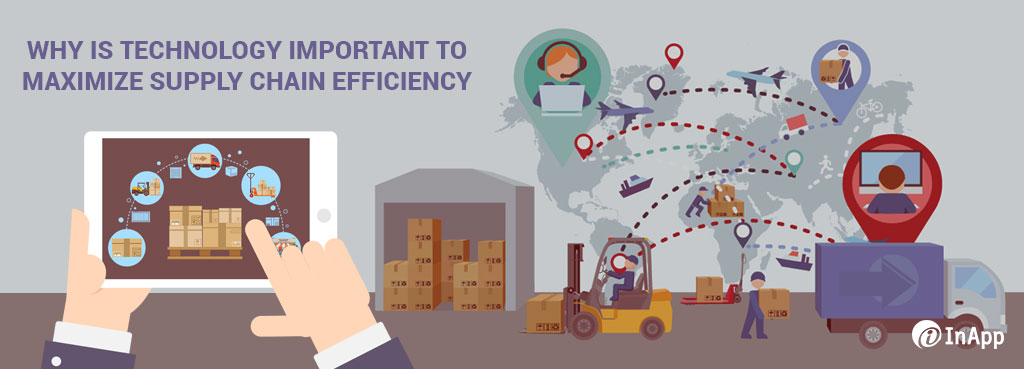
Growth in Internet retail has contributed to a massive rise in delivery volumes. In 2016, Internet retail amounted to US$1.86 Trillion. By 2021, it is expected to reach $4.48 Trillion. In addition to this surge in demand, increased customer expectations have brought about a major shift in the way brands approach customer service and deliveries. This has a major impact on the retail supply chain, making it necessary for brands to consider digital technology options to maximize supply chain efficiency. However, the supply chain is plagued by challenges related to infrastructure and cargo movement, that make it difficult to achieve seamless transit of goods. Another challenging issue is that customers demand complete transparency in the supply chain. This has led both retailers and logistics companies to turn to digital technology for help. Digital technology plays a key role in enabling them to manage their operations from dispatch to delivery efficiently, thereby optimizing the entire supply chain. Some of the Supply Chain areas that will benefit immensely from the deployment of technology innovations include: Inventory Management The first step in achieving supply chain efficiency is through proper inventory management. Excess inventory may result in waste, while inadequate inventory may affect the production schedule. Automated inventory management solutions enable manufacturers to plan for the right amount of inventory, schedule for re-fills, and create adaptable business processes. This provides much-needed flexibility for manufacturers to handle the varying supply-demand situations, as well. Moreover, with technology-aided real-time analytics, inventory managers can predict demands, and manage inventory flow efficiently. Delivery Time & Order Tracking Delivery time plays a crucial role in improving supply chain efficiency. It contributes to high customer satisfaction levels, leading to repeat business and high customer loyalty. Warehousing and in-house logistics solutions can improve delivery time through proactive order tracking features. Real-time updates on the product delivery status offer the visibility that the customer expects while ordering goods online. Solutions can even help manufacturers to interact with logistics providers to get real-time updates on the status of shipments. Live tracking mobile apps help expand market reach, drive sales, and win customers easily. Collaboration Between Stakeholders Implementing new communication technologies across the supply chain helps improve collaboration between all those involved in the ecosystem. Sending and receiving timely alerts, notifications, and emails, and tracking the movement of goods at each stop are some of the improvements that maximize efficiency. They help manufacturers and retailers to make more informed decisions, and forecast delivery time, as well. Although the supply chain landscape is a rough terrain to traverse, it also offers numerous opportunities for retailers and manufacturers to pursue. Today, new-age solutions for shipment, fleet management, warehousing, cargo, in-plant logistics, etc., are available to improve supply chain efficiency. They offer better control, clear visibility, detailed analytics, and scalability to meet growing customer demands. The right technology solution leveraged at the right time can grow business exponentially. It also helps companies maximize their efficiency in the last mile, thereby achieving high customer satisfaction and customer loyalty. Do you want to improve your supply chain efficiency with smart technology solutions? InApp offers logistics solutions that drive transparency and faster delivery for retailers. We have 22+ years of experience in this field and harness the power of disruptive technologies such as IIoT, AI, and Machine Learning to drive your supply chain efficiency. If you want to explore our solutions, drop us a line, and we’ll get back to you.
5 Major Challenges of Global Logistics
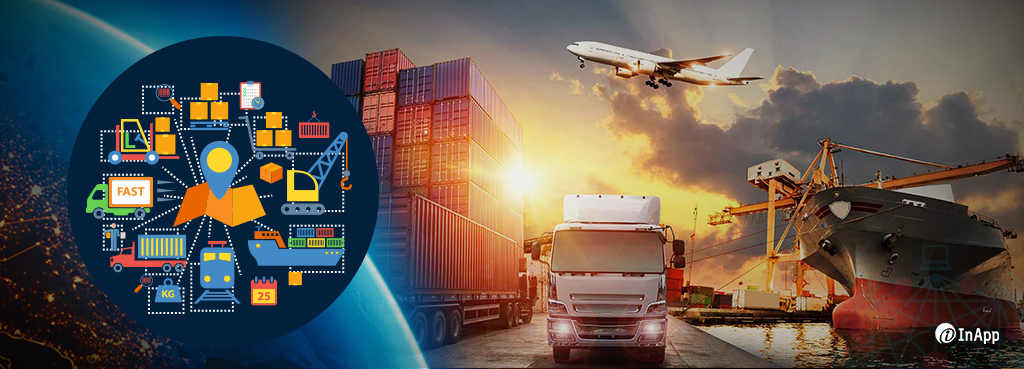
Logistics is an integral aspect of the supply chain connecting warehouses, manufacturers, and end-users such as vendors, customers, suppliers, and other third parties. It encompasses a wide range of activities that ensure material movement takes place seamlessly from one destination to the other. Global logistics includes the movement of materials and goods between countries, which requires highly optimized processes to meet the time and delivery targets. However, global logistics face 5 major challenges that need to be addressed efficiently in order to ensure a smooth flow of materials and finished goods. The following are the 5 Major Challenges of Global Logistics 1. Infrastructure Since global logistics serves multiple continents, a number of vessels including flights, cargo ships, and trucks, move along international trade lines. The lack of storage infrastructure for large vessels in the destination sites or ports causes delays in material unloading. This causes congestion problems at the shipment port, with materials hauled up in trucks for a long time. Some of the other challenging factors include a lack of technological developments, bad road conditions, and weather problems. 2. Delivery Time Delivery time is a competitive factor in global logistics but there are often factors that delay delivery time. For instance, the US West Coast port is a busy destination servicing a number of vessels starting for overseas deliveries. However, the port has faced many delays with vessels stuck at the port for many days due to delays in the arrival of pick-up containers. This creates backlogs in the distribution warehouses and eventually, a large gap in the final delivery timeline. Political insurgencies, war, storage charges, and holiday seasons also affect the delivery time for global logistics. 3. Carrier Capacity With container carriers servicing a large number of customers, overcapacity in ocean shipping is becoming a great challenge in global logistics. The alternating twin problem of lack of demand and oversupply has been a cause for this. Inside the US, trucker shortages have led to delayed deliveries to ports. An aging workforce and increased regulations are also negatively affecting the overall domestic truck movement. 4. Government Security Regulations Compliance In global logistics, material moves through many channels such as road, sea, and air to reach the final destination. Since shipment is passing through various modes of transportation and a number of logistics dealers, security has become a serious concern. Logistics companies that operate internally and overseas need to be familiar with the US customs security programs such as C-TPAT or AEO to secure their supply chain networks. 5. Transparency of Operations Similar to other industries, logistics is also dictated by customer demands. Offering complete transparency of supply chain deliveries involves too many parties, that may not work in tandem for global logistics. Complete integration of activities within the organization and with other external players is required to make this possible for customers. Each of the above factors is critical to the success of global logistics, and hence, the need to solve the impending issues is high. Effective logistics involves rising above these challenges, to offer top-class delivery service to global customers. In case you are interested in improving your logistics operations, InApp can be the right partner. InApp has over 20+ years of experience in delivering expert logistics solutions, that provide clear process visibility, and much-needed analytics to identify areas of improvement. If you want to learn more about our shipment and fleet management, or smart warehousing solutions, get in touch with us today.
3 Key Disruptive Technologies Impacting Manufacturing
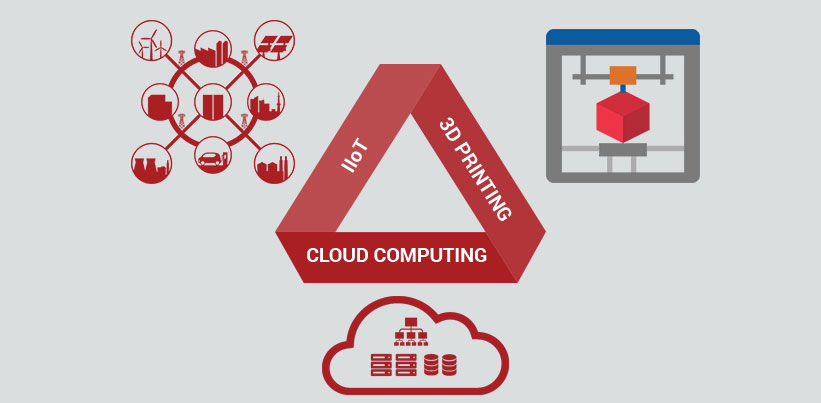
The manufacturing sector is undergoing a huge transformation in the last few years, compared to the past decade, thanks to the implementation of disruptive technologies. Manufacturers are leveraging disruptive technologies to improve their business processes and operations, and in turn, drive growth. An IoT Analytics report (2018) states, “The market for Industry 4.0 products and services is expected to grow to $310B by 2023. “. Cloud computing, the Industrial Internet of Things (IIoT), and 3D Printing are the three key drivers of disruptive manufacturing. They help replace existing approaches and processes with highly connected workflows that enable production lines to become more efficient. They enable manufacturers to connect devices on the shop floor and collect data for supply chain tools and analytics. Let’s take a closer look at how each of them is contributing to increased productivity and growth. 1. Cloud Computing Outdated manufacturing computing systems will not be able to keep up with the growing digitization needs of the business. They are not scalable and cannot contribute to the necessary increase in operational efficiency. This is where cloud computing plays a key role in manufacturing. By offering a network of remotely placed servers, that contribute to processing, data storage, and computing, the cloud enables data to be accessed from anywhere, at any time, effortlessly. The primary use of the cloud is that it helps streamline key areas of the manufacturing business while improving collaboration in real-time. Cloud computing enables manufacturing processes to seamlessly connect with a customer or supplier’s ecosystem, as well. The high connectivity enables tighter links across production systems and caters to a better system and end-product integration. 2. Industrial Internet of Things (IIoT) The IIoT is one of the most influential disruptive technologies to change the way manufacturers operate. IIoT enables them to achieve higher levels of productivity by connecting multiple production lines and machines to facilitate seamless interactions. It helps manufacturers collect huge amounts of data that can be leveraged for a wide range of activities, from real-time visibility to sensing equipment failure to predicting customer behavior. It uses sensors, controls, and automated equipment that facilitate system interaction from remote locations, without any human intervention. IIoT data is also accessible on all devices, including mobile apps. 3. 3D Printing Additive manufacturing, as it’s often called, enables the creation of 3D images of products using raw materials and a digital design as a base, within a few hours. It offers a number of advantages when compared to traditional manufacturing. In a bottom-up method, each part is created layer by layer, according to the design changes made by individual customers. It enables the design-test process by assessing the viability of the product when created using different design aspects. Therefore, it helps drive down costs and eliminate waste, to a large extent. To stay Industry 4.0 competitive, it is imperative for manufacturers to leverage the above disruptive technologies to improve efficiencies and accelerate productivity. This in turn builds organizational capabilities and leads to high customer satisfaction. Do you want to harness the power of disruptive technologies to improve your manufacturing efficiency? With over 21+ years of experience in delivering transformative solutions, InApp can help you make the transition effortlessly. To learn how to leverage our services for your business growth, contact us now.