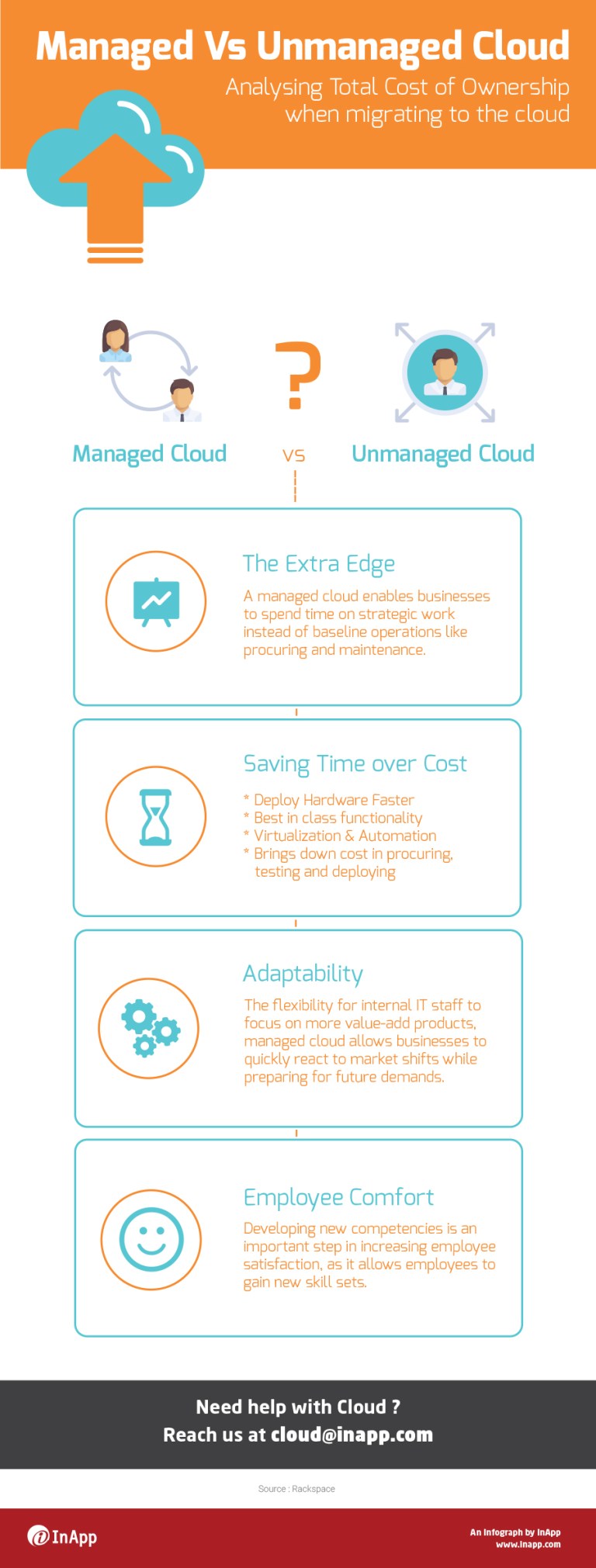
There are lots of numbers involved when migrating to the cloud. There needs to be an important choice to be taken between a managed cloud (where the vendor manages, patches, and troubleshoots your cloud surrounding) or an unmanaged cloud (where your IT department has to do that on its own). Here’s an infographic focusing on the key differences.
A managed cloud enables businesses to spend time on strategic work instead of baseline operations like procuring and maintenance.
Saving Time over Cost
Deploy hardware faster
Best-in-class functionality
Virtualization and Automation
Brings down costs in procuring, testing, and deploying
Adaptability
With the flexibility for internal IT staff to focus on more value-add products, the managed cloud allows businesses to quickly react to market shifts while preparing for future demands.
Employee Comfort
Developing new competencies is an important step in increasing employee satisfaction, as it allows employees to gain new skill sets.