
Here’s Why Developers Use Node.js and React.js for Custom Web Application Development
JavaScript has maintained its popularity in application development for more than 25 years. However, this programming language hasn’t outlived its usefulness even after all that time. Instead, JavaScript has become the Internet’s de facto programming language. While its early adoption in website development helped establish it, JavaScript also offers the general advantages of being open-source and providing standardization. Two of the most common JavaScript libraries are Node.js and React.js. The main difference is that Node.js is a back-end framework, and React is used for developing user interfaces (UI). Let’s discuss each one’s benefits and how they can affect your software development project. Node.JS Advantages of Node.js Node.js is a back-end runtime environment, which uses server-side JavaScript to enable dynamic web content before it’s sent to the client side. The advantages of Node.js include… Features of Node.js Features of Node.js include… Uses of Node.js Node.js simplifies real-time web applications in JavaScript. Common applications include… Reach.JS Advantages of React.js React.js is an open-source front-end javascript library used for building UI. Maintained by Meta, React.js offers advantages that include… Features of React.js React.js is one of the most widely used libraries. Features include… Uses of React.js React.js is used by a wide range of business and industry leaders. It’s commonly used for… While Node.js and Reac.js are both JavaScript technologies, they’re used for entirely different purposes. Want to learn more about JavaScript for web application development? Contact the web app development experts at InApp. We can help.
Top 11 DevOps Tools You Should Know About
DevOps represents a cultural shift in custom software development by creating a seamless workflow between the software development (Dev) and IT operations (Ops) teams. To implement DevOps, however, you need a set of tools that will enable these collaborative efforts throughout the entire software development lifecycle. The tools you choose depend on the type of infrastructure you want to use to develop your software. Here are the top DevOps automation tools you should consider. Puppet Puppet centralizes and automates configuration management by implementing infrastructure as a code, which means that you can test the environment for accurate deployment. This open-source DevOps system management tool can deploy, configure, and manage servers. Puppet uses Ruby DSL, which allows you to change a complete infrastructure in code format and can be easily managed and configured. Puppet can also be used to deploy software on the system automatically. Jenkins This Java-based continuous integration server can be used to test changes in real time. Jenkins helps to solve software bugs and automate the testing process. Jenkins comes with many features and plugins that streamline deployments into the development and production environment. Jenkins also can integrate services from many locations. This open-source platform is known for being user-friendly and easy to install. Docker The Docker platform helps software engineers assemble apps from components, and supports development, enhancement, and production tasks. Docker containers define the exact versions of software in use, so a developer’s environment is decoupled from the application. As software versions change, developers can dock a container to their environment, and then easily work on the task at hand without having to install/uninstall software or deal with virtual machine files. Git Git provides a centralized version control system, enabling developers to track file changes and to go back to older versions of the codebase to make revisions. This DevOps software tool helps team members work on multiple feature implementations or bug fixes in parallel. With Git, developers can work on different parts of the same file, and then merge the changes without waiting for each other or losing each other’s work. Selenium Testing teams use Selenium as a browser automation tool, streamlining user interface (UI) testing in web applications. This portable software testing framework is developed in JavaScript and can test applications in multiple browsers, such as Chrome, Edge, Firefox, Safari, and Opera. It can be integrated with other tools like JUnit and TestNG for test management. Selenium also will automate web-based administration tasks. Splunk Splunk platform is an open, extensible data platform that supports shared data across any environment. With this DevOps tool, all team members have end-to-end visibility, with context, for every interaction and business process. Splunk removes the barriers between data and action, empowering observability, IT, and security teams to ensure their organizations are secure, resilient, and innovative. Ant Apache Ant is a Java library and command-line tool that drives the processes described in build files as targets and extension points dependent upon each other. Ant can be used to pilot any type of process described in terms of targets and tasks. This DevOps tool is frequently used to build Java applications with built-in tasks to compile, assemble, test, and run Java applications. Ant can also be used effectively to build non-Java applications such as C or C++ applications. Ansible Ansible automates tasks like configuration management, cloud provisioning, software deployment, and intra-service orchestration. Used for multi-tier deployments, it models all of IT infrastructure into one deployment instead of handling each one separately. Deployment uses a simple English-like language called YAML which stands for “yet another markup language” or “YAML Ain’t Markup Language.” Nagios Nagios can troubleshoot an entire IT infrastructure to ensure systems, applications, services, and business processes are working properly. Nagios works as a scheduler and runs selected scripts in repeated time intervals. When requirements change, the previous script will be stored and new scripts will be run. Nagios sends notifications whenever there is a problem, and again after resolving the problem. Chef Chef is a configuration management tool that manages infrastructure by writing code rather than using a manual process, enabling easy automation, testing, and deployment. Chef uses a client-server architecture and supports multiple platforms like Windows, Ubuntu, Centos, and Solaris. It can also be integrated with cloud platforms like AWS, Google Cloud Platform, and OpenStack. SaltStack SaltStack, aka Salt, automates system administrative and code deployment tasks, thereby eliminating manual processes to reduce errors. This configuration management and orchestration tool use a central repository to set up new servers and other IT infrastructure; make changes to existing ones; and install the software in IT environments, including physical and virtual servers, as well as the cloud. What are the Key Features of DevOps Tools? All DevOps software tools have similar features. 1. Collaboration Collaboration between the two departments stands at the very base of DevOps operations. While it does require cross-functional training and discipline as well as may result in the changing of predefined roles, such collaboration ultimately leads to higher efficiency and effectiveness. 2. Quantification It is necessary to have a scale on whose basis a practice and its effects can be judged. By quantifying the number of deployments, failures, time taken for each deployment, uptime, etc before employing DevOps, you can successfully judge the impact and improvement of DevOps on your work culture and environment. 3. Automation While the developing department generally has a high level of automation, we don’t observe the same with the operations side. By integrating the same level of automation in both departments, we achieve a level of consistency and efficiency across the board that would not otherwise be possible. 4. Holistic A holistic system means thinking about the entire system and the ecosystem around it. Have questions about DevOps services? Contact the DevOps experts at InApp to learn more about how we can help.
What You Need to Know about Blockchain Technology in the Banking Industry

Blockchain technology holds great promise for the banking industry. But how will it change financial services for both banks and consumers? Here’s what you need to know about blockchain technology and how it will affect the banking industry. What are the Benefits of Blockchain for the Banking Industry? The use of blockchain in banking offers multiple benefits for the financial services industry. These include… Security By decentralizing transactions, blockchain technology can reduce the threat of cyber attacks while also encouraging transparency between parties. Because the data is decentralized, encrypted, and cross-checked by the entire network, it is harder to attack or hack the blockchain. Third Parties Businesses can use blockchain technology to transmit and receive payments directly. As a result, companies won’t need a third-party payment gateway, which is a common practice today. Reduced Costs Peer-to-peer networks manage payments, which do not require centralized verification. This means that a small business can accept a blockchain settlement platform as payment and pay lower merchant processing fees. Data Accuracy The permanent records of blockchain technology also improve the accuracy of financial audits for both internal and external systems. As a result, accounting teams can automate their day-to-day procedures while still adhering to tight compliance and regulatory requirements. What are the Issues with the Present-Day Banking System? The increased interest in blockchain technology for the banking industry stems from its ability to solve challenges with the current system. These issues include… Have questions about blockchain app development for the banking and financial services industry? Contact the blockchain experts at InApp to learn more about how our cutting-edge solutions can help you get ahead of this technology revolution. Frequently Asked Questions What is Blockchain Technology? Blockchain technology stores transactional records (i.e., the block) of the public in several databases (i.e., the chain) via a distributed ledger connected through peer-to-peer nodes. Every transaction in this ledger is authorized by the digital signature of the owner, which authenticates the transaction and safeguards it from tampering. That capability can offer benefits to companies in a wide range of industries, particularly banking and financial services.
MEAN vs MERN: A Detailed Comparison Between the Two Technology Stacks
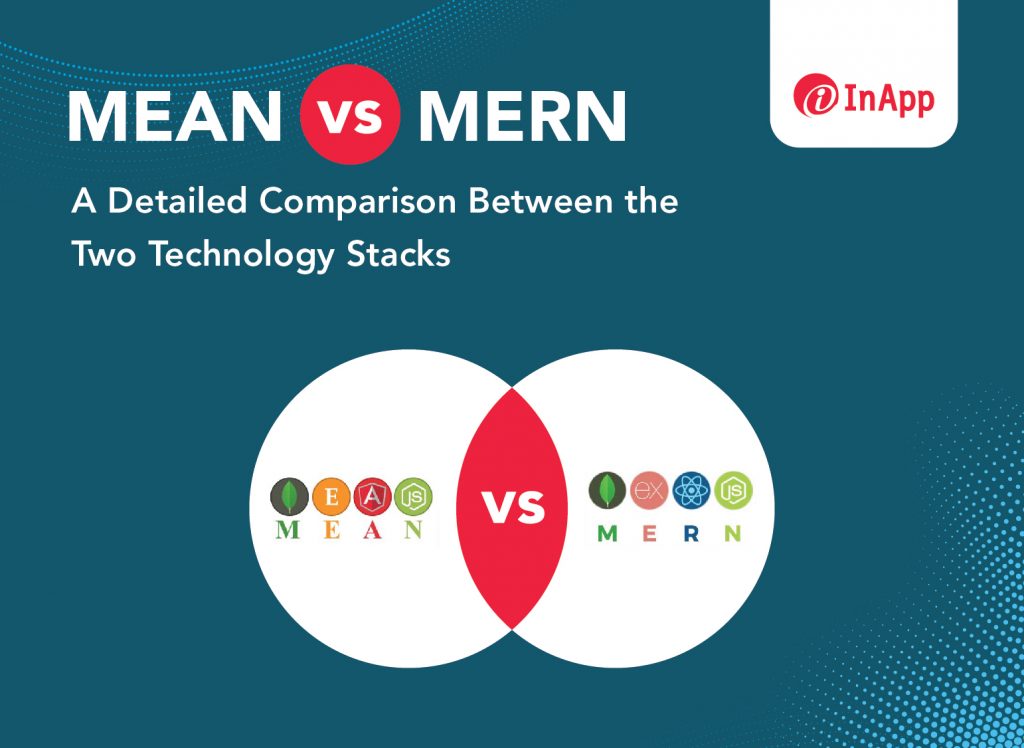
The right technology stack makes development easier because it incorporates the programming languages, software tools, and technology services needed to run an application. The MEAN and MERN stacks are two common technology stacks with JavaScript frameworks, but each one offers specific advantages and challenges. Let’s learn more about their similarities and differences, and how to pick the right one for your software development project. What is a MEAN Stack? The abbreviation of MEAN stands for MongoDB, Express, Angular, and Node, respectively. This technology stack is open source and commonly used for web and hybrid mobile app development. MEAN is a complete JavaScript-based stack that combines clients, databases, and servers. Benefits of MEAN Stack In general, the MEAN stack offers some productivity advantages for web applications, particularly for big data and/or real-time application projects for large-sized, enterprise-level applications, and websites. Benefits include… What is a MERN Stack? MERN is short for MongoDB, Express, React, and Node, after the four key technologies that make up the stack. Like MEAN, MERN offers a collection of JavaScript-based databases, frameworks, and runtime environments. The MERN stack offers an end-to-end framework for developers, and its popularity is growing rapidly. Benefits of MERN Stack MERN provides the advantage of both front-end development and back-end development, as well as advantages for mobile development. Benefits include… Which is Better: MEAN Stack vs MERN Stack? Your project requirements will drive your choice of technology stack. Picking the right one depends on your needs: What is the Difference between MERN Stack and MEAN Stack? Both the MERN and MEAN stacks use MongoDB, Express, and Node. The difference is between Angular and React. Built and maintained by Google, Angular is an open-source web application framework. React is the JavaScript-based front-end library from Facebook. Have specific questions about MEAN vs MERN? Contact the experts at InApp. We can help you save time and money by picking the right technology stack for your project.
Internet of Things in Manufacturing: A Quick Look at Uses, Applications, Benefits, and Challenges

The Internet of Things (IoT) enables manufacturing companies of all sizes to use real-time data to improve the efficiency of their operations. With IoT devices, manufacturers can collect data faster and easier than ever before. Smaller, more reliable, and more intelligent sensors for virtually all types of assets and operations are becoming more readily available at affordable prices. But the real power of this disruptive technology lies in analytics that provides a new level of business intelligence. Modern software tools support data collection from IoT devices by analyzing real-time readings—so manufacturers can react faster and use that data efficiently to make improvements in operations. Other industries—from healthcare to energy to transportation—are also harnessing the power of the IoT. Manufacturers would do well to pay close attention to these trends now. How Does the IoT Affect Manufacturers? As technology becomes less expensive and gets more powerful, an explosion of IoT devices is flooding the marketplace. The post-COVID-19 global IoT market size is expected to grow from USD $300.3 billion in 2021 to USD $650.5 billion by 2026, at a compound annual growth rate (CAGR) of 16.7% from 2021 to 2026, according to a recently published report by Markets and Markets. By component, the software solutions segment is expected to have the largest market share during the forecast period. Factors spurring that growth include… So what does this mean for manufacturers? It means more data—a lot more data—and more data in real time. And more real-time data means better insights into your operations, including what’s working, what’s not, what’s costing you money, and the best place to invest more resources. The Powerful Combination of the IoT and Custom Software The true power of the IoT isn’t actually in the sensors and devices themselves. It’s the software that stores and processes the data that makes the difference. As part of the digital transformation process, manufacturers can make sense of what to do with the data gathered by these devices, telling them to take action when the time is right. With the IoT, big data becomes even bigger. The key is finding a way to use that data to manage your operations. The combination of the IoT and custom software can improve the way operate, monitor, control, and maintain manufacturing operations. The long-term goals of the IoT and custom software are improved efficiency, better customer service, identification of new revenue-generating opportunities, and enhanced safety. Hence, custom software development is expected to become an increasingly popular business investment during the next few years. Manufacturers already use custom software solutions and a wide range of technologies to meet objectives and maintain a crucial competitive edge, such as automating functionality in manufacturing facilities. Additionally, companies are investing in software to control operations from remote locations, something that’s particularly helpful for organizations with multiple sites. Common Challenges with the Internet of Things Experience Big data analytics provide a means of turning the ever-increasing stream of asset data into actionable information. However, implementing the IoT means more data (a great deal more) in real-time, and your personnel will need training to take advantage of the value these data streams deliver. That requires new skill sets for your employees, which includes investments in training and educational programs. Technology Companies cannot readily incorporate new features and improvements in older software, sensors, and hardware. Limited integration between internal systems (managerial apps, plant data sources), and external partners also creates data silos. However, network connectivity is rapidly improving across factories and other facilities, and a wider range of providers is offering higher-capacity, lower-cost cloud-based storage. Security The number one challenge to IoT implementation is security. Aging operating systems and vulnerable operational technologies pose security risks because they cannot be easily retired or replaced. As technology evolves, however, so does security. Best practices and a wide array of evolving technologies can help companies minimize risk. Additionally, organizations don’t necessarily need to expose metrics or controls to the Internet to move forward. While this doesn’t eliminate the threat altogether, it does lessen it considerably. Infrastructure The IoT is simultaneously changing infrastructure components in both the private and public sectors. In the future, the IoT will likely provide closer connections between private businesses and governments in areas such as transportation, utilities, energy conservation, facility management, and more. While some regions face challenges in replacing legacy infrastructures, over time this transition will likely accelerate as new innovations make it more feasible both financially and operationally. Have questions about how the IoT can help your business? Contact the experts at InApp. We can help. Frequently Asked Questions What is the Internet of Things? Sometimes called the Industrial Internet of Things or Industrial Internet, the IoT describes systems that gather information directly from multiple devices, which can be almost anything with a sensor—including computers, vehicles, smartphones, appliances, building automation systems, and production equipment. Despite the name, you don’t need the Internet to use an IoT device. Instead, they typically send data to other devices via a wireless network connection or the wired local area network (LAN).
Challenges of the Metaverse and How DevOps Could Help
While the metaverse remains mostly a theoretical concept at this time, software developers can already see the possibilities — and the challenges. Because the metaverse can be used for almost anything in the real world (including socialization, work, content creation, shopping, entertainment, financial transactions, and more), its impact will alter the future of a wide range of industries. DevOps offers the benefits of a continuous integration and development pipeline with a build-test-release cycle that can meet those challenges. What Are the Challenges of the Metaverse? Even, in theory, the metaverse presents the IT world with new and unknown situations. Like any emerging technology, some of those issues may not be obvious at first. However, developers can count on needing solutions for challenges like… How Can DevOps Help with Metaverse Challenges Automation in DevOps includes the build-test-release cycle with continuous integration and development pipelines. That can help in the metaverse in multiple ways. As a set of practices and tools, DevOps enables the collaboration of IT operations and development teams throughout the entire software development lifecycle. Using automation, DevOps agile methodologies can integrate operations in a seamless workflow. Many industry experts believe DevOps is the key to winning the race to the metaverse. This strategy to develop and release software applications will likely be a vital tool as more companies leap into the metaverse and its possibilities. Have questions about the metaverse and how it might affect your business? Contact InApp. We can help you get a jump on the competition. Frequently Asked Questions What Is the Metaverse? The metaverse is an immersive internet experience that lets you replace or augment reality with computerized simulations that strive to be as realistic as possible. The metaverse will use tools based on Virtual Reality (VR), Augmented Reality (AR), and emerging technologies to overlap the physical and digital worlds for end users. AR can expand the ways devices can help with everyday activities like searching for information, shopping, and creating content. VR lets you experience what it’s like to go anywhere — whether it’s a real-life event or an imaginary world.
What is AppOps and What are its Components and Benefits?
A relatively new category of solutions can help organizations streamline the software development process. Called AppOps, these tools can simplify IT deployment for application development and performance management. That helps businesses adapt and respond quickly to changing demands. What is AppOps? AppOps refers to the operational (Ops) aspects of application (App) management. It comprises a number of tools designed to enable self-service of application management and operations for developers. With AppOpps, an operation team standardizes controls to streamline software application analysis, deployment, and management. Organizations use AppOps to improve processes at the application level. What is the difference between AppOps and DevOps? AppOps is considered to be a component of DevOps, rather than a separate strategy. AppOps simplifies the process by securely delivering and managing existing apps, while also adapting to organizational needs that may change over time. AppOps should work with any platform in its stack. DevOps services combine two key elements: software development (Dev) and IT operations (Ops). DevOps methodology enables the collaboration of both development and IT operations teams throughout the entire software development lifecycle with tools that extend automation beyond the build phase. The result is a seamless workflow between the two teams. What are the components of AppOps? The two components of AppOps are the operations related to 1) application release and 2) application monitoring. Application release refers to the operations necessary to ensure the deployment of applications and features is timely and high-quality. The goal is to reduce errors and bugs that may cause application failure. Application monitoring refers to finding software problems as quickly as possible. That involves identifying and correcting issues while DevOps works to deploy changes in the next release of the software. DevOps will define automated security controls across all deployed applications. AppOps will create the necessary application resources using the available infrastructure. As AppOps matures, technology experts expect it to remove infrastructure as a consideration for developers. The goal is to improve software development efficiency and agility. What are the benefits of AppOps? AppOps offers significant benefits for software development, including… Have questions about AppOps? Want to know more about how it can help your organization? Contact the AppOps experts at InApp. We can help.
Everything You Need to Know about Cloud-Native Architecture
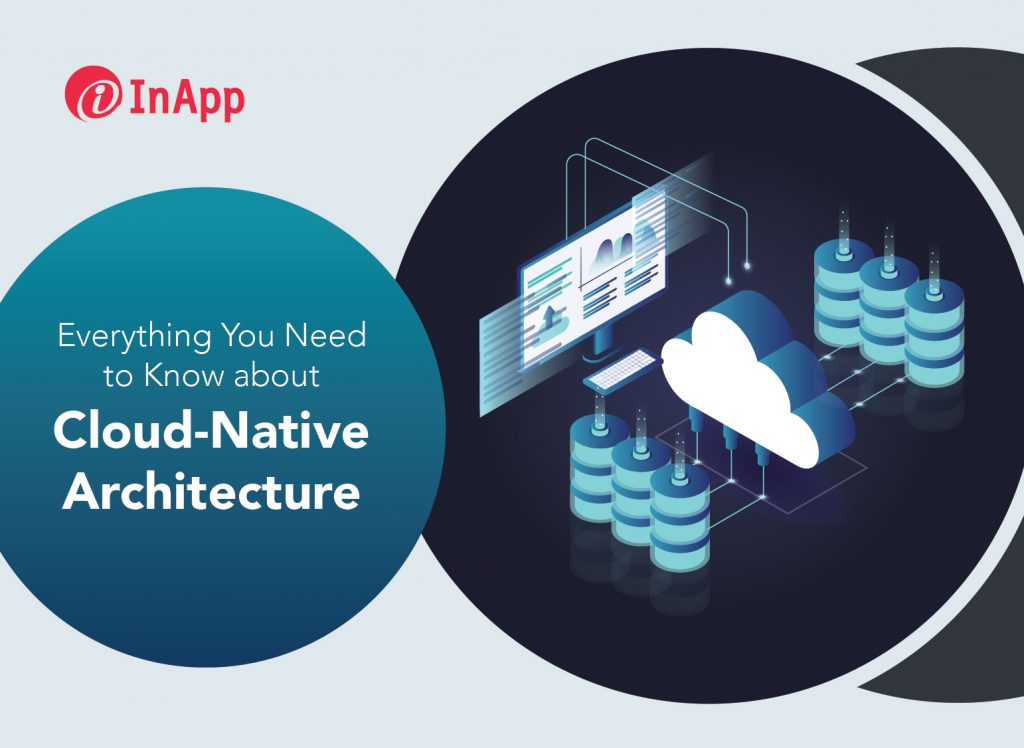
More companies are embracing cloud computing, attracted by the lower costs, flexibility, and scalability. Cloud-native architecture supports cloud-based applications. It helps organizations with resilience and flexibility via distributed processing, horizontal scaling, and automation.
Ultimately, taking a cloud-native approach is an investment that results in a more scalable and reliable architecture. Here’s what you need to know about cloud-native architecture.
What Is Augmented Intelligence and its Applications
Innovations in Artificial Intelligence (AI) and Machine Learning (ML) are creating new opportunities for businesses across all industries. One such technology is augmented intelligence. Unlike the traditional view of AI as an autonomous system that operates without human involvement, augmented intelligence uses ML and deep learning to provide humans with actionable data.
4 Blockchain Security Issues in 2022

Blockchain decentralizes, encrypts, and cross-checks data through the entire network, making it difficult—but not impossible—to attack or hack.