
Why Businesses should go for Legacy Application Modernization?
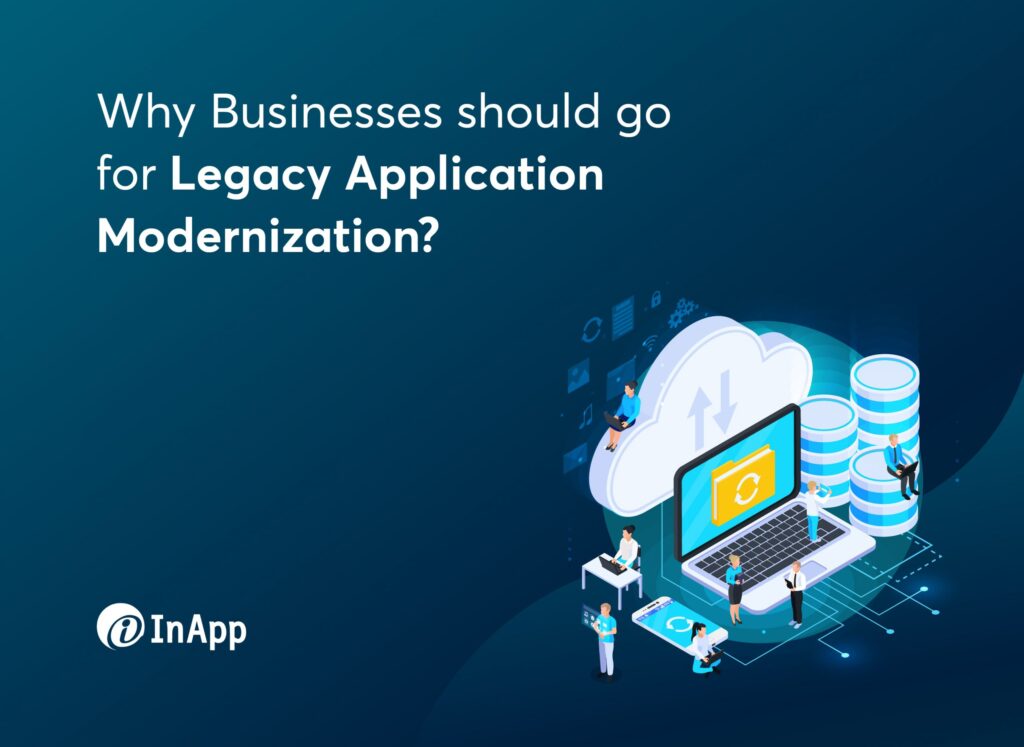
Many modern businesses across the globe are betting their organizations on legacy applications that were developed years or even decades ago. Let’s face the truth – software is not like wine, it does not get better with age. The usability and features of applications become more and more outdated with the changing demands of users. However, some systems are difficult to replace, especially those that manage the crucial business process within the company. These legacy systems, therefore, require modernization. What are Legacy Applications? As defined by Gartner, a legacy application is “an information system that may be based on outdated technologies, but is critical to day-to-day operations.” Legacy applications run on an obsolete mainframe for core business operations such as processing high-volume data. These systems are fine-tuned over the years and adapted to deliver specific functionality. Modernizing legacy applications is not always done because of their age. It might be due to the lack of support or its inability to meet the needs of the business or organization or due to its outdated architecture, underlying technology, or design. Why Should Businesses Modernize Legacy Applications? Legacy technology can be a major barrier to digital transformation. Among the CIOs surveyed by Logicalis, more than half need to dedicate anywhere from 40 to 60 percent of their time to managing their legacy IT instead of putting that energy into strategic activities. To stay competitive in modern business and protect applications from crashes, modernization is important. Here are a few other reasons: There are quite a lot of reasons to modernize your legacy systems, such as: Replacing legacy systems and applications with new and upgraded technologies is one of the most challenging tasks. Before companies dive into modernizing their legacy applications, enterprises must know the best practices to ensure compatibility with old systems and data formats that are still in use. 3 Best Practices for Application Modernization When modernizing legacy systems, enterprises are looking to either replace or improve existing functionalities through a more simplified workflow. Hence it’s important to understand the source system, properly evaluate the business needs, and plan a goal, timelines, and vision for the modernization initiative. Here is a 3-step guide to follow while implementing the application modernization journey. #1. Define business goals, not IT goals. Before starting with modernization, it’s important to define the goals and priorities of the business and how best you can address them. Consider the biggest issue and how technology can help you tackle the challenges. #2. Plan the right approach Planning the right approach requires dynamic thinking that supports DevOps principles, and enables application scalability. While there are many approaches to migrating your application, here is the 5-R strategy to follow for Application Modernization: It’s important to keep in mind that modernization strategies should be iterative. Different strategies can apply to different portions of applications. Companies can start with one approach, gain some benefits, and then continue to modernize using other approaches to ensure maximum benefit. #3. Be cloud-smart rather than cloud-first! Instead of migrating all the applications to the cloud, analyze the workload first, and prioritize the ones that need to be moved. Understand the interdependency of each application and how it performs under the current pattern of the workload. Get a clear baseline on how they relate to the critical business KPIs. Some might be required to support the complex and long-term efforts, others require more planning. Before migrating consider keeping data in an on-premises data center that can be accessed via an API. The time to evolve your application is now! InApp believes that modernizing applications is not a one-time event but an ongoing evolution. Our experts help enterprises to map out a perfect strategy that meets their business demands. We work with you to create a migration plan that will improve your service levels, fit your budget, and help you create market differentiation. Contact us to discuss more. Why Modernize Legacy Application? It is slow and cumbersome If your app lacks speed, like once tapped it takes ages to open the next screen or the app crashes frequently, it’s time to modernize your app This is mainly because your app is old or outdated. This can be improved by upgrading the app to improve performance and efficiency. It looks outdated If your app is not in line with the latest UI/UX design trends, it will look old-fashioned. This way you may potentially lose a lot of your users. For instance, if didn’t upgrade your Android app to run with a target API level of 26/27 (Android 8.1), your app will be the same as a dinosaur. Is your business ready for legacy application modernization? CONTACT US FOR HELP It’s operation and maintenance cost is high When the cost of maintaining the app’s status exceeds, it’s time to opt for application modernization. Completely revamping an app may sound costly in the start, but the overall efficiency gains will decrease your cost going forward. And efficiency is very important – because greater efficiency results in higher revenue for your organization. Your web app is not mobile-friendly This is one of many reasons to modernize legacy applications. When your app has an ‘on-the-go’ version, more people will use it. Plus, the neatly done UI/UX design will only attract potential users to your app. A decent increase in your overall user base means good revenue. So, if your e-commerce web app has no mobile version, maybe it’s time to go mobile. It’s user-engagement level is decreasing If your users are leaving which means something is not right with your current app. They may be having problems with navigation, looks, or performance. It may be your constant marketing pop-ups or complex navigation. It could be anything. So, find the problem and fix it. If you are ready to modernize your app and upgrade your overall revenue, you can get in touch with InApp for the best custom software development services. Our application modernization services include: The Best Approach to Legacy System Modernization Most
A Comprehensive Guide to Generative AI
Generative AI is a technology that often appears like magic at first glance but, upon closer examination, reveals itself as a complex and multifaceted tool. In this blog post, we will embark on a journey to explore the world of generative AI, peeling back its layers to understand its incredible potential and the challenges it poses. Generative AI is a branch of artificial intelligence that generates content by learning from existing data patterns. From predictive search to creating scholarly articles and music in the style of renowned artists, its applications are impressive and diverse. In this comprehensive guide, we will uncover the inner workings of generative models and the risks and limitations that accompany this technology. Let’s get started. What is Generative AI? Generative AI is a subset of artificial intelligence that can create new and original content, such as text, images, music, or even video, based on patterns it has learned from existing data. It is a creative machine that can generate content that seems human-made but is produced by algorithms. Generative AI works by analyzing and understanding vast amounts of data, identifying patterns and relationships within that data, and then using that knowledge to produce something entirely new. For instance, it can take a few words of text and complete a full sentence or paragraph in a way that sounds like a human wrote it. One of the most famous examples of generative AI is GPT-4, a language model developed by OpenAI, which can carry on conversations, write essays, generate poetry, and even assist in coding. Another example is the ability to generate deepfake videos, where the faces and voices of real people can be convincingly manipulated to say or do things they never did. While generative AI has immense potential for creative and practical applications, it also raises concerns about misuse, like spreading disinformation or generating toxic content. Understanding how it works and its limitations is crucial as we navigate this exciting but complex technology. Technology That Powers Generative AI Generative AI relies on the power of deep learning and neural networks, a technology inspired by the human brain’s structure and functioning. Generative AI employs a specific type of neural network known as a Generative Model, which enables it to create new data points by learning from existing examples. 1. Neural Networks: These networks consist of layers of interconnected nodes (artificial neurons), organized into three layers – an input layer, hidden layers, and an output layer. These layers work together to process information and make predictions. 2. Training Data: To make generative AI work, a substantial amount of data is needed. This data could be text, images, or other types of information. The AI system uses this learning data to understand patterns, relationships, and features. 3. Generative Models: These models are central to generative AI. The two primary types are Variational Autoencoders (VAEs) and Generative Adversarial Networks (GANs). 4. Fine-Tuning and Post-Processing: Often, the generated data might need some fine-tuning or post-processing to ensure it meets specific criteria or quality standards. Yes, the technology that powers Generative AI is incredibly complex. But It’s important to note that Gen AI doesn’t possess true understanding or consciousness. It operates purely based on patterns and statistical correlations it has learned from its training data. What are The Advantages of Generative AI? Generative AI, with its ability to create new content and generate data from existing patterns, offers a wide array of advantages that have far-reaching implications across various industries. In this section, we’ll delve into some of the key benefits of generative AI. 1. Overcoming Writer’s Block and Content Ideas: Generative AI offers a remarkable advantage in helping content creators overcome writer’s block and generate fresh ideas. It can assist in generating text, offering suggestions for articles, or sparking ideas for content creation. This not only aids in the content creation process but also fosters innovation by breaking through creative barriers. 2. Improves Productivity: Generative AI can automate repetitive tasks, saving valuable time and resources. In businesses, this means streamlining operations, whether it’s generating reports, automating customer service through chatbots, or assisting with data analysis. It can significantly boost productivity and allow human workers to focus on more complex, strategic, and creative tasks. 3. Personalization: Generative AI can analyze large datasets to understand individual preferences and behaviors, allowing personalized recommendations and experiences. This is evident in the way platforms like Netflix recommend movies or e-commerce sites suggest products based on your past purchases. The result is improved customer satisfaction and engagement. 4. Entertainment: The entertainment industry benefits greatly from generative AI. It can be used to create lifelike characters and environments for video games, generate special effects in movies, and even compose original music. This enables the development of more immersive and captivating experiences for audiences. 5. Healthcare and Medical Imaging: In healthcare, generative AI aids in medical imaging interpretation, helping doctors to detect and diagnose diseases more accurately and quickly. It can also predict patient outcomes and assist in treatment planning. 6. Language Translation: Generative AI has greatly improved language translation. Services like Google Translate use these models to provide more accurate and context-aware translations, breaking down language barriers and facilitating global communication. These advantages showcase the transformative potential of generative AI across numerous sectors. However, it’s essential to balance these benefits with a keen awareness of the technology’s limitations and ethical considerations, particularly in terms of responsible use, privacy, and bias mitigation. Risks and Ethical Considerations of Generative AI While the realm of Generative AI is brimming with innovation, it has its share of potential risks and ethical considerations. One of the prominent concerns is the rising potential for misuse, notably in the creation of deepfakes. These advanced manipulations of audio and visual content can convincingly depict individuals saying or doing things they never did. Deepfakes present a serious challenge in various spheres, from defaming individuals to spreading false information or even manipulating public opinion. This misuse threatens to erode trust and credibility, impacting not only individuals
7 Ways Mobile Apps Can Give Your Business Better Traction Than Websites
Mobile applications are becoming increasingly important for businesses of all sizes. They provide a convenient way for customers to interact with your business and can even help you increase sales and drive customer loyalty. A recent study found that mobile applications can increase sales by up to 23%. The debate of whether to develop a mobile app or a mobile website has been around for a while. There are pros and cons to both, so it’s important to weigh your options before deciding. This article will discuss in detail the seven ways mobile applications can give your business better traction than websites. Seven Benefits of Mobile Apps Over Websites Statistics show that people are spending more time on their mobile devices than ever before. In 2018, global mobile app usage reached 1.6 billion hours per day and this number is only going to continue to grow. If you want to reach your audience where they spend most of their time, then a mobile app is the way to go. Not to mention, mobile app users are more engaged and more likely to convert than website visitors. Here are the seven benefits of mobile apps. #1 Wider Audience More people are using mobile phones than computers, so it makes sense that more people would use a mobile app than a website. If you want to reach the maximum number of people, a mobile app is the way to go. Mobile apps are becoming increasingly popular, as people are using their phones for more and more activities. With a mobile app, you can reach a larger audience than you would with a website. #2. Convenience People are used to using apps on their phones, and they expect things to be quick and easy. A website can be just as easy to use as an app, but it’s not as convenient because people have to type in a URL and wait for a page to load. With an app, everything is just a tap away – no typing required! Most mobile apps are designed for one-handed use, which makes them easy to navigate. Plus, mobile apps typically have fewer distractions than websites so that you can focus on your task at hand. This makes them perfect for busy people who need to get things done quickly. #3. Feature Rich Mobile apps are designed specifically for mobile devices, which means they can take advantage of all the features that these devices offer. For example, a mobile app can use the GPS to provide location-based services, or it can use the camera to take and share photos. Websites can’t do these things as easily as a mobile app. #4. User Engagement A well-designed mobile app can be more engaging than a website because it’s designed specifically for a small screen. This means that the app can make use of animations and other visual elements to improve the user experience. Mobile apps can also use features like GPS and the camera to provide a more customized experience for users #5. Reliability Mobile apps are designed for the smaller screens of mobile devices, which makes them more reliable than websites. Websites are designed for desktop or laptop computers, which can have much larger screens. This means that mobile apps are more likely to work correctly and be user-friendly. #6. Security Many vulnerabilities can be exploited on websites, but mobile apps are generally more secure. This is because mobile apps are typically more tightly controlled and have fewer entry points than websites. Mobile apps are also typically updated more frequently, which means that any vulnerabilities that are discovered are fixed more quickly. #7. Speed and Responsiveness Mobile apps are faster and more responsive than websites. They are designed specifically for mobile devices, so they load quickly and work smoothly. That’s a big benefit for busy people who need to get things done on the go. Plus, mobile apps often provide features and functionality that you can’t find on websites. So, if you’re looking for a more streamlined experience, a mobile app is the way to go. How to Choose Between a Mobile App and a Website? Mobile apps are typically faster and more responsive than mobile websites. They can also take advantage of the phone’s features, like the camera and GPS. On the downside, they can be more expensive to develop and require users to download and install them. Mobile websites are typically less expensive to develop and don’t require users to download and install anything. They can also be accessed by any device with an internet connection. However, they can be slower and less responsive than mobile apps. For some businesses, a mobile app makes more sense than a website. If you are targeting a mobile-first audience or your app has unique features that can only be delivered through a native app, then a mobile app might be the right choice. If you’re still on the fence about whether to build a mobile app or a website, consider your audience and your goals. If you want to reach the most people and have a more engaging experience, a mobile app is probably the way to go. To Sum Up There are pros and cons to both websites and applications. It depends on your needs and preferences as to which is the better choice. Websites are generally easier to create and maintain. They are also typically more accessible since they can be used on any device with an internet connection. However, they can be slower and less interactive than applications. Whereas mobile apps are usually more engaging and can provide a better user experience. They can also be more efficient since they are designed specifically for a certain purpose. However, they can be more expensive to develop and harder to maintain. So, which is right for you? It depends on your needs and budget. A mobile app may be the way to go if you need a fast, responsive, and feature-rich experience. If you’re looking for a
7 Proven Ways to Reduce Development Costs

According to a report published by Statista, in 2022, IT spending on enterprise software amounted to around 783 billion U.S. dollars worldwide, a growth of 7.1 percent from the previous year. As of 2023, the IT budget as a revenue percentage averages 3.64 percent for all industries. As businesses strive to adapt and grow, keeping these expenses in check becomes a top priority. The need for cost optimization is more significant than ever, as it directly impacts your bottom line, resource allocation, and ultimately, your competitiveness in the market. In this article, we’ll explore seven proven strategies to effectively reduce software development costs without compromising quality or functionality. 7 Proven Ways to Reduce Development Costs #1. Outsource Software Development Requirements The avenue to cost-effective software development, without compromising quality, lies in outsourcing. Reports suggest that outsourcing software development requirements can result in substantial savings, typically falling between 30% to an impressive 70% when compared to in-house development. Outsourcing eliminates the financial burden associated with recruitment and training. By opting for outsourcing, organizations can circumvent the need to incur expenses related to hiring and onboarding new employees. Moreover, it also grants access to a global talent pool, teeming with proficient professionals, often available at competitive rates. In-house development teams come with a slew of overhead costs, encompassing office space, utilities, equipment, and administrative expenditures. Outsourcing removes these financial obligations, leading to significant savings. Additionally, outsourcing partners offer the flexibility to scale resources according to project requirements. This ensures that organizations only pay for the services they need when they need them. #2. Be Clear About Your Requirements Studies reveal a staggering statistic – approximately 45% of projects encounter cost overruns attributed to what’s known as “cost creep.” While it’s a widely accepted fact that software development is inherently dynamic, making requirement changes almost inevitable, the repercussions of these frequent alterations can significantly impact the various facets of the development process, with cost being a primary concern. Having a clear understanding of your software requirements is paramount in reducing costs and ensuring the success of your project. This is where the importance of market research comes into the picture. When you have a firm grip on what your audience wants, you’re less likely to veer off course during development. This initial research phase is cost-effective because it prevents the need for costly post-development adjustments and pivots. Once you have your market insights, the next crucial step is to translate your requirements clearly to the development team. Miscommunication or vague instructions can lead to costly misunderstandings and rework. A comprehensive understanding of your requirements, derived from diligent market research and translated to your development team, is the bedrock of cost-effective software development. It prevents expensive post-development changes, ensures your software aligns with market needs, and minimizes the risk of costly project disruptions. #3. Utilise Open Source Software Utilizing open-source software can significantly reduce development costs. Open-source solutions are freely available, eliminating the need to purchase expensive licenses. Developers can access a wealth of pre-built, high-quality code and libraries, saving time and effort. This accelerates project timelines, lowering labor costs. Additionally, the collaborative nature of open-source communities leads to rapid issue resolution and continuous improvement. Such transparency and community support enhance software quality, reducing the likelihood of costly errors. #4. Embrace DevOps DevOps is a game-changer when it comes to saving on development costs. It’s a straightforward and highly effective approach that modern organizations are increasingly adopting. DevOps accelerates development cycles by automating tasks and promoting collaboration between teams, it drastically reduces the time and effort required for each project. This translates to significant savings in labor costs. Moreover, DevOps eliminates manual intervention in mundane and repetitive tasks like testing, deployment, and monitoring. Automation not only speeds up the development process but also slashes expenses related to manual labor. And let’s not forget security. DevOps integrates security measures throughout the development cycle, reducing the financial burden of addressing security breaches post-release. DevOps is a practical, no-nonsense strategy that has a direct impact on development costs. Its emphasis on automation, collaboration, and quality ensures a more cost-effective and efficient software development process. #5. Embrace Lean Principles Lean principles, derived from manufacturing offer a robust framework for optimizing development costs. At its core, lean thinking revolves around the elimination of waste and the maximization of value. Lean in software development emphasizes a customer-centric approach, ensuring that every development aspect is aligned with the end-user’s needs and preferences. By focusing resources and effort on features and functionalities that directly contribute to customer satisfaction, unnecessary or low-value elements are eliminated, resulting in cost reductions. One of the key tenets of lean is the reduction of overproduction. In software development, this translates to avoiding the creation of excessive code or features that do not directly contribute to the software’s core objectives. This streamlining of development efforts minimizes unnecessary labor costs and reduces project complexity. Lean also emphasizes continuous improvement and encourages iterative development. By embracing ongoing feedback, teams can identify and rectify issues early, significantly reducing the cost of addressing them later in the development process. Additionally, lean’s iterative approach allows for early and frequent testing, ensuring that software quality remains high and reducing costly post-development bug fixes. #6 Start With a Minimum Viability Product (MVP) The concept of a Minimum Viable Product (MVP) revolves around creating a lean, stripped-down version of a product that contains only the core features and functionalities required to meet the immediate needs and expectations of users. MVP allows for a streamlined and efficient development process. By focusing exclusively on essential features, development teams can significantly reduce the time and resources required to bring a product to market. This lean approach minimizes labor costs and shortens development timelines, translating directly into cost savings. Moreover, an MVP serves as a testbed for gathering invaluable user feedback and real-world insights. This iterative process allows for early detection and rectification of issues, preventing costly mistakes in the later stages of development. By refining and expanding the
Top 6 Smart Contract Vulnerabilities

In blockchain technology, smart contracts stand as the bedrock of innovation. Smart contracts are like digital agreements on blockchain, and they’re supposed to make things safe and secure. But, as we delve deeper into the world of smart contracts, an essential question looms: How safe are they? According to Bankless Times, the funds lost through smart contract hacks surged to a staggering $2.7 billion, representing a jaw-dropping 1250% increase since 2020. The immutability of smart contracts, which were intended to ensure security, has become a significant vulnerability. Once these contracts are deployed on the blockchain, there is no flexibility to address or reverse vulnerabilities. This inherent risk has made smart contracts an attractive target for malicious actors. In this blog post, we will delve into the top six smart contract vulnerabilities that have become the Achilles’ heel of blockchain systems, shedding light on the challenges and risks they present in our quest for a secure and decentralized future. Top Six Smart Contract Vulnerabilities #1. Reentrancy Attack A reentrancy attack is where attackers take advantage of the way smart contracts interact with each other on the blockchain, particularly when handling cryptocurrency or digital assets. In a reentrancy attack, a malicious contract tricks another contract into executing a function it wasn’t supposed to during a transaction, often resulting in unauthorized access to funds or unintended consequences. Here’s an example to illustrate a reentrancy attack: Imagine you have a smart contract for a decentralized bank where users can deposit and withdraw funds. The contract contains a “withdraw” function, allowing users to retrieve their funds. To do this, it updates the user’s balance and sends them the requested amount. Now, imagine a scenario where an attacker comes along and creates a malicious contract. They open an account with your bank and deposit some cryptocurrency. Then, they initiate a withdrawal from their account in the savings contract. The contract doesn’t immediately process the withdrawal. Instead, it temporarily records that the attacker is due a certain amount of cryptocurrency as part of the pending withdrawal request. (This recording is necessary because smart contracts often perform multiple operations within a single transaction, and they need to keep track of the state changes they intend to make before committing them. ) Now, the malicious contract takes advantage of this situation. It has a special function called a callback function, which the attacker’s contract previously told the savings contract to call. In the callback function, the malicious contract exploits the situation by re-entering the bank contract and initiating another withdrawal. Since the bank contract still believes it owes the attacker funds, it processes this second withdrawal request, and the attacker essentially double-dips, withdrawing more funds than they should have. In short, the reentrancy attack exploits the callback mechanism and the savings contract’s belief that it owes funds to the attacker, allowing the attacker to repeatedly withdraw funds they shouldn’t have access to. #2. Integer Overflow/Underflow Vulnerability Integer overflow and underflow vulnerabilities are common issues in smart contracts that can lead to unexpected behavior or even security breaches. These vulnerabilities occur when the result of an arithmetic operation on integers exceeds the maximum or goes below the minimum representable value. For a better understanding, consider this example. Imagine you have a smart contract that represents a digital wallet. This wallet can receive and send a certain number of coins, and its balance is stored as an integer. Let’s say the wallet starts with a balance of 100 coins. Now, a user wants to receive 150 coins in their wallet. If the smart contract doesn’t have proper checks in place, it might not be able to handle this situation correctly. Instead of stopping at 100 coins (the maximum balance), it could overflow and wrap around to a negative number. So, the wallet’s balance could end up as -46 coins. This is an Integer overflow vulnerability. With the Integer Underflow vulnerability, assume the wallet balance is 10 coins, and the user wants to send 20 coins to someone. Without adequate safeguards, the contract might allow the transaction to proceed. Instead of stopping at 0 coins (the minimum balance), it could underflow and wrap around to a very large positive number. So, the wallet’s balance could end up as an unintended large positive value. #3. Uninitialized Variable Vulnerability The uninitialized variable vulnerability occurs in smart contracts when a variable is not given an initial value before it’s used in calculations or operations. This can lead to unexpected and potentially harmful outcomes because the variable’s value is undefined. This vulnerability poses significant security risks because it can be exploited by malicious actors to manipulate contract behavior in their favor, potentially leading to financial losses or other unintended consequences. #4. Code Injection Vulnerability Code injection vulnerability occurs in smart contracts when an attacker manages to insert malicious or unexpected code into a contract’s execution, leading to unintended and potentially harmful actions. This vulnerability can allow an attacker to manipulate the contract’s behavior or steal assets. Code injection vulnerabilities pose severe risks to contract integrity and user funds. To mitigate this threat, developers should implement robust input validation and avoid relying solely on external data sources. Auditing and testing contracts thoroughly can help identify and prevent such vulnerabilities, ensuring the security and trustworthiness of smart contracts on the blockchain. #5. Time Component Vulnerability A time component vulnerability in smart contracts refers to a security weakness that arises when a contract’s behavior is influenced by the passage of time. This vulnerability can be exploited by attackers to manipulate the contract’s logic or timing to their advantage. For example, if a contract relies on a timestamp to trigger certain actions, an attacker may attempt to manipulate the timestamp or force the contract to execute prematurely. This can lead to unexpected outcomes, such as unauthorized access to funds or resources. Common instances of time component vulnerabilities include timestamp dependence for access control, delayed execution, or rate calculations. To mitigate these vulnerabilities, developers should use secure time sources (like
Achieving Efficiency and Flexibility with Serverless Architecture in DevOps and Agile Development
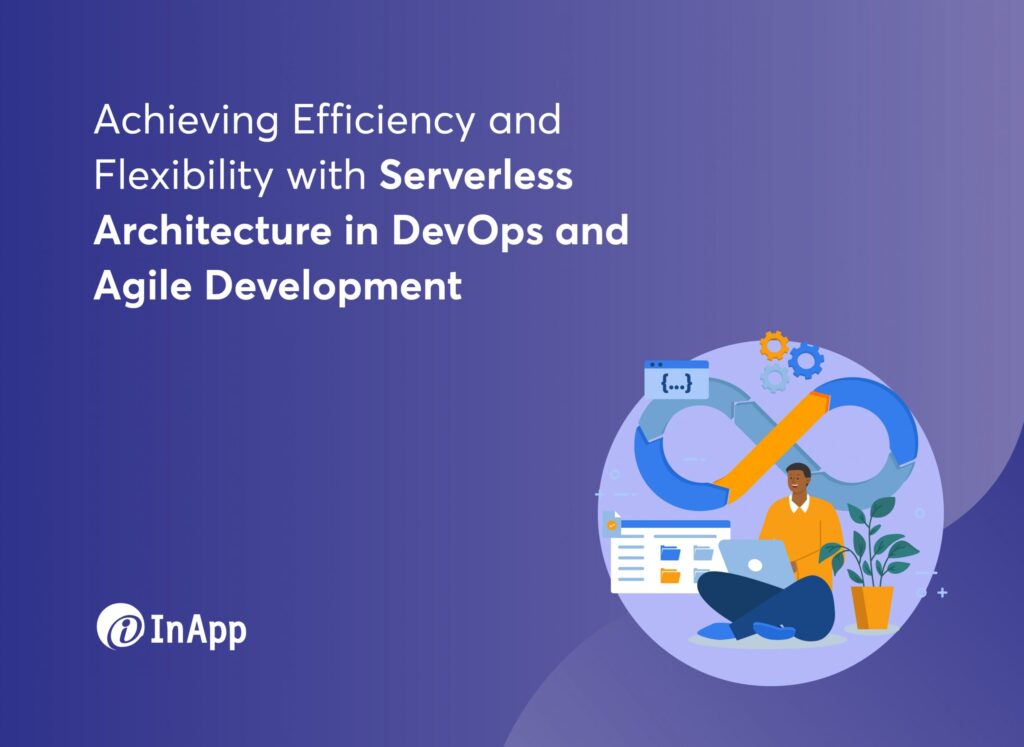
In today’s fast-paced digital landscape, businesses need to adapt quickly to meet changing market demands. Serverless architecture offers a paradigm shift for developers, allowing them to focus solely on writing code without worrying about underlying infrastructure management. By offloading infrastructure management to cloud providers, developers can speed up deployment cycles, reduce operational overhead, and achieve faster time-to-market. Furthermore, the serverless architecture enables teams to practice Agile development methodologies more efficiently. Its elastic nature allows for automatic scaling, ensuring that applications can handle unpredictable workloads. This flexibility empowers developers to accelerate the iterative cycles of Agile development, leading to faster feedback loops and more robust software. In this article, we will dive deeper into the benefits of serverless architecture in DevOps and Agile development, exploring how it enables greater efficiency and flexibility. Join us as we discover how this innovative approach can revolutionize your software development process. Understanding the Benefits of Serverless Architecture in DevOps and Agile Development Serverless architecture is a cloud computing model that allows developers to build and run applications without managing the underlying infrastructure. With serverless architecture, developers can focus solely on writing code, while the cloud provider manages the underlying infrastructure, such as servers, operating systems, and network infrastructure. One of the key benefits of serverless architecture is its ability to reduce costs. Because developers only pay for the resources they use, they can avoid the costs associated with maintaining a dedicated infrastructure. This also enables developers to scale their applications quickly and easily, without having to worry about provisioning resources. Another benefit of serverless architecture is its ability to improve efficiency. Because developers can focus solely on writing code, they can accelerate the development process, leading to faster time-to-market. Additionally, the serverless architecture enables teams to practice Agile development methodologies more efficiently, thanks to its elastic nature and automatic scaling capabilities. Case studies of Successful Implementation of Serverless Architecture in DevOps and Agile Development Many organizations have successfully implemented serverless architecture in their DevOps and Agile development processes. For example, Fender Musical Instruments Corporation, a manufacturer of guitars and other musical instruments, implemented serverless architecture to improve the efficiency of their e-commerce website (source). By using serverless architecture, Fender was able to reduce the time it takes to bring new features to market from weeks to days. Additionally, Fender was able to reduce their infrastructure costs by 50%, thanks to the pay-per-use model of serverless architecture. Another example of the successful implementation of serverless architecture is the case of Coca-Cola. Coca-Cola implemented serverless architecture to improve the efficiency of its supply chain management system. Key Components of Serverless Architecture Serverless architecture is made up of several key components. These include: Challenges and Considerations when Adopting Serverless Architecture in DevOps and Agile Development While serverless architecture offers many benefits, there are also several challenges and considerations that need to be taken into account when adopting it in a DevOps and Agile development environment. Some of these challenges include: To address these challenges, organizations should carefully evaluate their options before adopting serverless architecture. They should also consider working with experienced cloud providers and implementing strong security measures. Best Practices for Implementing Serverless Architecture in DevOps and Agile Development To ensure a successful implementation of serverless architecture in DevOps and Agile development, organizations should follow several best practices. These include: Tools and Technologies for Serverless Architecture in DevOps and Agile Development There are several tools and technologies that can be used for serverless architecture in DevOps and Agile development. These include: – AWS Lambda: A serverless computing platform provided by Amazon Web Services (AWS). – Google Cloud Functions: A serverless computing platform provided by Google Cloud. – Azure Functions: A serverless computing platform provided by Microsoft Azure. – Serverless Framework: An open-source framework for building serverless applications. How does Serverless Architecture Improve Efficiency and Flexibility in DevOps and Agile Development? Serverless architecture improves efficiency and flexibility in DevOps and Agile development in several ways. First, it allows developers to focus solely on writing code, without worrying about underlying infrastructure. This leads to faster development cycles and faster time-to-market. Second, the serverless architecture enables automatic scaling, ensuring applications can handle unpredictable workloads. This flexibility empowers developers to accelerate the iterative cycles of Agile development, leading to faster feedback loops and more robust software. Finally, serverless architecture reduces costs by enabling developers to pay only for the resources they use. This eliminates the need for dedicated infrastructure, reducing operational overhead and enabling organizations to scale quickly and easily. How to Transition to Serverless Architecture in DevOps and Agile Development? To transition to serverless architecture in DevOps and Agile development, organizations should follow several steps. These include: – Evaluate your current infrastructure: Determine which applications are good candidates for serverless architecture and which ones may require dedicated infrastructure. – Choose a cloud provider: Choose a cloud provider that meets your specific needs and requirements. – Train your team: Train your team on the tools and technologies used for serverless architecture. – Start small: Begin by implementing a serverless architecture for small, low-risk projects before scaling up. Future Trends in Serverless Architecture for DevOps and Agile Development Serverless architecture offers many benefits for DevOps and Agile development, including increased efficiency, flexibility, and cost savings. While there are some challenges and considerations that need to be taken into account, organizations can overcome these by following best practices and working with experienced cloud providers. Looking to the future, serverless architecture is expected to continue to grow in popularity as more organizations recognize its benefits. As cloud providers continue to innovate and improve their offerings, we can expect to see even more advanced serverless architectures in the years to come.
7 Green Computing Best Practices

Today, our world relies on data centers to keep devices and services running. Yet these systems consume massive energy. As climate change intensifies, organizations need to rethink hardware, software, and data management. In this blog, we unveil seven game-changing green computing practices that make your IT setup more environmentally friendly and help you do your part in battling climate change. Let’s dive in! Top Green Computing Best Practices Invest in Energy-Efficient Hardware Investing in energy-efficient computer hardware is a cornerstone of green computing practices. Whether it’s laptops, servers, or peripherals, the choice of hardware can significantly impact energy consumption and overall sustainability. When choosing hardware, look for devices with energy-efficiency certifications, such as Energy Star. These use less electricity and produce less heat, so you need less cooling. This saves energy and lowers your carbon footprint. Energy-efficient hardware can also perform better. Thanks to modern technology, you can access powerful computing without sacrificing sustainability. Incorporate Power Management Practices Efficient power management practices can lead to significant reductions in energy consumption and, consequently, contribute to environmental sustainability. Start by turning on power-saving features on your devices. For example, set computers to sleep or hibernate when not in use. This saves energy right away and helps your devices last longer. Also, smart power strips are ideal options. These devices automatically cut power to devices like monitors, printers, and chargers when they are not in use. This prevents devices from drawing power when they are off but still plugged in. Opt For E-Waste Recycling Recycling e-waste and disposing of electronics responsibly are important parts of green computing. It’s not just about getting new devices, but also about what we do with the old ones. One effective approach is to donate old electronics to organizations or schools that need them. This extends device lifespans and helps people who might not have access to technology. Another option is to recycle old electronics through certified e-waste programs. Many manufacturers now offer e-waste collection, making it easier to dispose of devices properly. This ensures parts are safely disassembled and that useful materials are reused. Promote Sustainable Software Development Supporting sustainable software development is a key part of green computing. When developers write efficient code, it uses fewer resources and less energy. This also helps systems run better overall. This not only contributes to environmental conservation but also enhances hardware efficiency, potentially extending its lifespan. Moreover, efficient software often leads to faster load times, smoother operations, and improved user experiences. Focus on Green Coding Green computing now starts with the code. Green coding means writing software that does the same job but uses fewer resources. Using efficient algorithms, choosing the right programming language, and optimizing code can lower energy use. These steps help the environment and make apps run faster and more smoothly. Tackle the Hidden Cost of Dark Data Dark data is information that is stored but never used, yet it still consumes energy for storage and cooling. As organizations generate more data, this becomes a greater sustainability challenge. Organizations can reduce storage needs by identifying unused data, deleting old or redundant files, and implementing effective data policies. This saves energy, lowers costs, and reduces their environmental impact. Optimize Data Centers with AI-Driven Efficiency Optimizing data centers now means more than just changing layouts or cooling methods. With new technology, organizations use smart systems to boost efficiency. AI-powered cooling, smart workload management, and new cooling methods, such as liquid cooling, help data centers run more efficiently. These solutions use less energy, reduce costs, and support growing computing needs sustainably. Join the Global Movement The shift to green computing is not just an option; it’s a necessity for a brighter and greener future. By adopting the above-mentioned practices, we not only reduce our environmental impact but also create a more sustainable and cost-effective technological landscape, benefiting ourselves and the planet we call home. FAQs How do energy-efficient hardware choices help? Energy-efficient hardware uses less power and produces less heat, so it needs less cooling. This helps lower electricity bills and reduces the carbon footprint of IT systems. What is dark data, and why should it be managed? Dark data is information that gets stored but is never used. Keeping it still uses energy for storage and cooling, which raises costs and harms the environment. Managing dark data makes systems more efficient and reduces wasted resources. Is green computing only for large enterprises? No, green computing is for organizations of any size. Even small teams can help by using efficient coding, managing power better, and handling data responsibly. Why is green computing important? Green computing reduces energy consumption, lowers carbon emissions, and decreases operational costs. As data usage and digital infrastructure expand, adopting sustainable practices is essential for environmental and business success.
Podcast on ‘Sounds of Artificial Intelligence in Music’
Sounds of Artificial Intelligence in Music by Reni Stephen Welcome to the podcast on the incredible influence of artificial intelligence on the world of music composition and production. In this podcast, we will dive into the fascinating ways AI reshapes the music industry. In this bite-sized podcast series, we’ll take you through the most innovative and mind-bending applications of AI in music. Whether you’re a music lover, a tech enthusiast, or just curious about the future of sound, this podcast will introduce you to the harmonious fusion of creativity and technology. So, plug in your headphones and get ready to explore the world of AI in music with us. Podcast Transcript 00:00:10Hi friends, I’m Reni. 00:00:13In this episode, I’m going to talk about the influence of AI or artificial intelligence in music production. 00:00:20So I’m not going to dive deeper into all the technical details of different services or tools that are currently used in the market, but I believe that it is better that we understand what is the latest technological trends that is happening in the industry, not to mention explore them. 00:00:36You know if we find them interesting. Over the next few minutes, we are going to start by looking into the influence of AI in music composition and also the influence of AI in the other aspects of music production such as the mixing and mastering process. 00:00:52Finally, we look into the role of humans in this AI-dominated or influenced world. So with that, we are going to conclude this small episode. 00:01:01Now imagine a realm where computers not only comprehend the intricacies of musical composition but also possess the ability to generate melodies, harmonies, and rhythms that evoke genuine emotions. 00:01:14So this is the realm of AI in music, production, or creation. 00:01:19Now when we say AI or artificial intelligence, what exactly that we mean by that? 00:01:25So AI or artificial intelligence refers to computer systems that can perform tasks that typically require human intelligence. 00:01:34When it comes to the realm of music, AI has emerged as a powerful ally, pushing the boundaries of creativity and opening new doors of possibilities. 00:01:44These AI systems and tools use different types of algorithms and machine learning techniques, and they can analyze vast amounts of musical data, whether it is classical masterpieces to contemporary hits, now it can discern patterns, understand musical structures, and even predict what nodes or codes are likely to come next. 00:02:05So this ability to learn from existing music provides a foundation for AI to create original compositions that sound remarkably human. 00:02:14But AI in music creation and production goes beyond just generating music. 00:02:20It can aid musicians and producers in the creative process by suggesting, you know, innovative chord progressions, crafting unique sound textures, or generating melodies that inspire. 00:02:31So we can say it acts as a creative or collaborative partner, you know, augmenting human creativity and enabling us to explore the uncharted Sonic territories. 00:02:41Moreover, you know, AI technology has the potential to revolutionize the entire music production industry, not just the composition or creation part. 00:02:50You know it can revolutionize. It has the potential to revolutionize the entire music production industry including the mixing and mastering process. 00:02:57Nowadays there are tools and services which can automate tasks such as you know, audio mixing and mastering which saves a lot of time and effort for artists and producers. 00:03:07You can also enhance the live performances enabling real-time improvisations and interaction between musicians and intelligent systems. 00:03:17These systems are trained to generate original compositions across different styles, whether it’s a contemporary style or a classical style with the help of different algorithms and machine learning techniques. 00:03:29Now the interesting fact is that these systems, are trained to work based on user’s input and preferences, which means even if the user is not satisfied with the output generated by the system, they are able to modify the input parameters or the preferences and system will work again based on the updated preferences of user and you know it will create new melody based on that. 00:03:55Now let’s look some of the algorithms that are used in these AI systems. I’m just mentioning a couple of those here, but they are not just limited by these. 00:04:03First, Recurrent Neural Networks or RNN. 00:04:07Second, Generative Adversary Networks or GANS. 00:04:10Third, Variational Autoencoder or VAS, 4th Reinforcement Learning or RL. 00:04:18Fifth, Rule Based Systems. Recurrent Neural Networks or RNN. 00:04:24They are often used for sequential data modeling in music generation, so they can capture temporal dependencies and generate coherent musical sequences. 00:04:34Generative Adversarial Networks or GANS. 00:04:38Now it actually consists of two parts. There will be a generator and a discriminator. 00:04:42Now the generator is strained in such a way that it will create music and so that it will trick the discriminator into believing that this is something created by humans. 00:04:58Variation Autoencoders – They are used for generating music by learning the latent space representation of music, and they can generate new music by sampling from the learned latent space. 00:05:09Reinforcement Learning or RL. RL algorithms can be applied to music generation by training an agent to learn the optimal sequence of actions, which is something like notes or chords etc, in response to a given context or reward signal. 00:05:25Finally, there is Rule Based Systems in addition to AI techniques. 00:05:29Rule-based systems are often used to enforce specific musical rules and constraints in the generated music such as harmonies, chord progressions or rhythm patterns, etc. 00:05:41Some of the AI-based music creation software or tools are Boomy, Humtap, Orb Composer, Mellow Drive, etc. 00:05:52Let me show you how simple it is to create music out of nothing, literally from scratch. 00:05:56You can create music even if you don’t know any basic music theory or knowledge. 00:06:01Still you can create music using these kinds of you know, applications or software. 00:06:07For that let me just guide you through an example. 00:06:12Just Google boomy.com and you
6 Ways SaaS Platforms Can Leverage AI to Grow Their Business
From ELIZA, often regarded as the first AI model created by Joseph Weizenbaum, AI has come a long way. Recent milestones, including OpenAI’s groundbreaking GPT-4 and Midjourney’s cutting-edge image generation tool, underscore the rapid progress of AI. In this age of extraordinary technological advancement, businesses are eagerly embracing AI and machine learning (ML) to propel themselves forward. According to DigitalOcean’s May 2023 Currents survey, about 61% of businesses expect their generative AI/ML usage to increase this year. In this article, we will delve into the intriguing intersection of AI and SaaS, unveiling how SaaS enterprises can strategically integrate AI into their future initiatives. The Synergy of AI & SaaS: How Does It Help? The fusion of Artificial Intelligence (AI) and Software as a Service (SaaS) is a strategic move that can empower SaaS startups in unprecedented ways. Imagine your SaaS application as a reliable engine, and AI as the turbocharger that takes it to the next level. Here’s how this partnership can help. 1. Enhanced User Experience AI improves user experience by making it feel more like a personalized conversation. It learns from your end users’ interaction with the software, so it can suggest things that are just right for them. Think of it like a helpful friend who knows your preferences. It also gives you quick answers to your questions through chatbots, making your experience smoother. Plus, it can predict what users might need next, so you can get things done faster and with less hassle. 2. Efficiency and Automation AI leverages data-driven insights and intelligent algorithms to improve operational efficiency. It can streamline routine tasks like data entry, report generation, and customer support, reducing human intervention and the potential for errors. Furthermore, by continuously learning from user interactions and system data, AI can optimize resource allocation and improve system performance, ensuring that your SaaS application operates seamlessly even during periods of high demand. 3. Data-Driven Insights With AI, SaaS platforms can generate data-driven insights by analyzing vast datasets swiftly and accurately. For instance, Machine learning algorithms within SaaS platforms can identify patterns, trends, and anomalies in user behavior and usage data. These insights would help businesses make informed decisions, personalize user experiences, and optimize operations. 4. Security and Compliance AI bolsters SaaS product security by continuously monitoring for anomalies and threats in real time. Machine learning algorithms analyze vast datasets to identify unusual patterns or potential breaches, issuing immediate alerts and taking proactive countermeasures to mitigate risks. This enables early threat detection, rapid incident response, and robust protection of user data. Additionally, AI enhances user authentication and access control by recognizing behavioral patterns, bolstering overall cybersecurity and compliance with data privacy regulations. 5. Competitive Advantage SaaS platforms that harness AI gain a compelling competitive edge over platforms that don’t. AI enhances user experiences by providing personalized recommendations, predictive insights, and automation of routine tasks, improving customer satisfaction and retention. It optimizes operational efficiency through automation, reducing costs, and enabling scalability. Moreover, AI strengthens security, safeguarding user data. Faster issue resolution and augmented customer support through AI-driven chatbots also set these platforms apart. Ultimately, this blend of innovation, efficiency, and enhanced customer engagement positions AI-infused SaaS platforms ahead of their competitors in today’s dynamic market. How Can SaaS Companies Leverage AI? SaaS companies can leverage AI in various ways to enhance their products, improve operations, and provide more value to customers. Here are some key applications: 1. Personalization for Enhanced User Experiences One of the most impactful ways SaaS companies can utilize AI is through personalization. By implementing AI-driven recommendation engines and user behavior analysis, SaaS platforms can tailor user experiences to individual preferences. For instance, in a project management SaaS, AI can assess past user interactions and suggest task priorities, making the software more intuitive and efficient. This level of personalization not only improves user satisfaction but also increases user engagement and retention. 2. Automation to Streamline Operations Automation is a game-changer for SaaS companies, and AI plays a pivotal role in this realm. AI-powered chatbots and virtual assistants can handle routine customer support inquiries, data entry tasks, and administrative work with speed and precision. This not only reduces operational costs but also significantly decreases response times, enhancing customer satisfaction. Moreover, automation enables SaaS companies to reallocate human resources to more strategic endeavors, such as product development and innovation. 3. Data Analysis for Informed Decision-Making Data is the lifeblood of SaaS companies, and AI is a powerful tool for extracting meaningful insights from this vast resource. AI-driven data analytics can process and analyze large datasets to provide valuable insights, helping businesses make data-driven decisions. For example, in a marketing SaaS platform, AI can analyze user engagement data to identify which strategies are most effective, enabling marketers to optimize campaigns in real time. Data analysis also helps SaaS companies detect trends and anomalies early, providing a competitive advantage in adapting to changing market conditions and customer needs. 4. Predictive Analytics SaaS companies that leverage AI can also benefit from predictive analytics. For instance, a sales management SaaS can use AI to predict future sales trends based on historical data, helping businesses allocate resources and plan marketing strategies effectively. Predictive analytics not only aids in resource optimization but also allows companies to proactively address challenges, positioning them for sustainable growth and long-term competitiveness. 5. Security Enhancement and Risk Mitigation AI is an invaluable asset when it comes to strengthening the security features of SaaS products. AI-powered security systems continuously monitor for anomalies and threats in real time. AI also enhances user authentication and access control by recognizing behavioral patterns, bolstering overall cybersecurity. In an era when data privacy and security are paramount concerns, SaaS platforms equipped with AI security measures gain a significant competitive advantage by assuring customers of their data’s safety. 6. Scalability and Resource Management AI-driven auto-scaling is another critical aspect of SaaS companies’ competitive advantage. SaaS platforms often experience fluctuations in user demand. AI can optimize resource allocation and system performance based on usage patterns, ensuring
Everything You Need to Know About Ecommerce Chatbots

E-commerce chatbots have taken the industry by swarm in 2023. According to Gartner, chatbots are poised to take center stage as the primary customer service tool for 25% of all companies by 2027. This is a testament to their surging popularity and undeniable potential! From churning out basic responses, e-commerce chatbots have today evolved into virtual assistants powered by advanced Artificial Intelligence. Today, these chatbots are not just answering questions instead, they are revolutionizing the way businesses engage with their customers. What are E-commerce chatbots? E-commerce chatbots are AI-powered chat platforms designed specifically for online shopping and e-commerce platforms. They interact with users and provide assistance, guidance, and support throughout the online shopping journey. E-commerce chatbots can be broadly categorized into three categories AI-driven chatbots are the ones that utilize artificial intelligence (AI) and Natural Language Processing (NLP) to engage users in human-like conversations. They adapt and improve with each interaction, making them versatile for various industries and functions, from customer support to operational tasks. In contrast, rules-based chatbots follow predefined decision trees and keyword recognition, lacking adaptability and learning capabilities. They are best suited for straightforward tasks and frequently asked questions, offering a quick deployment solution. Hybrid chatbots strike a balance by combining predefined rules with AI enhancements. They efficiently handle routine queries using rules while employing AI for complex interactions, gradually learning and improving to provide a seamless and flexible user experience. What are the benefits of E-commerce chatbots? E-commerce chatbots, powered by artificial intelligence (AI) and natural language processing (NLP), offer numerous benefits for both businesses and consumers. Here are some of the key advantages of implementing e-commerce chatbots: Enhanced Customer Support E-commerce chatbots provide 24/7 customer support, ensuring that customers get assistance at any time. They can answer frequently asked questions, address common issues, and guide users through the purchasing process. This availability improves customer satisfaction and reduces the need for human customer support agents during non-business hours. Personalized Shopping Experience Chatbots can analyze user data and purchase history to offer personalized product recommendations. By understanding customer preferences, chatbots can suggest relevant products, promotions, and discounts, leading to increased sales and customer engagement. This level of personalization enhances the overall shopping experience. Quick and Efficient Responses Chatbots offer instant responses to customer inquiries, reducing wait times and frustration. They can handle multiple conversations simultaneously, ensuring that customers do not have to wait in long queues or on hold. Speedy responses improve user experience and increase the likelihood of conversion. Cart Abandonment Reduction E-commerce chatbots can identify when a user abandons their shopping cart and send automated reminders or incentives to encourage the completion of the purchase. This helps recover potentially lost sales and boosts revenue for online retailers. Streamlined Sales Process Chatbots can guide users through the sales funnel, from product discovery to checkout. They can answer questions about product details, pricing, and availability, making the purchasing process smoother and more efficient. This reduces friction and cart abandonment rates. Cost Savings E-commerce chatbots can significantly reduce operational costs by automating customer support and routine tasks. Businesses can allocate human resources to more complex tasks while the chatbot handles repetitive inquiries, resulting in cost savings over time. Data Collection and Analysis Chatbots can gather valuable customer data during interactions. This data can be used to analyze user behavior, preferences, and trends. Businesses can leverage these insights to refine their marketing strategies, product offerings, and customer service approaches. Scalability E-commerce chatbots can handle a high volume of customer interactions simultaneously, making them scalable for businesses of all sizes. Whether a company is a small startup or a large enterprise, chatbots can adapt to the demand. Multilingual Support E-commerce chatbots can communicate in multiple languages, allowing businesses to cater to a global audience without the need for a large multilingual support team. This expands the market reach and potential customer base. Challenges of E-commerce Chatbots While e-commerce chatbots offer numerous advantages, they also come with several challenges that businesses must address for successful implementation. Complex User Queries E-commerce customers may have intricate questions or unique requests that go beyond the capabilities of chatbots. Handling complex inquiries and providing accurate responses can be a challenge, leading to potential frustration for users. Maintaining Context Chatbots need to maintain context within a conversation to provide coherent responses. However, they may struggle with context when users change topics or refer to previous messages, leading to disjointed interactions. Language and Cultural Nuances E-commerce chatbots need to understand and adapt to various languages, dialects, and cultural nuances, which can be challenging, especially in a global market. Misinterpretation or insensitivity in responses can harm user experience. Data Privacy and Security Handling customer data poses a significant challenge. E-commerce chatbots often collect and store user information, making them attractive targets for hackers. Ensuring robust data encryption and compliance with data privacy regulations is crucial. Integration Complexity Integrating chatbots into existing e-commerce platforms, databases, and CRM systems can be complex. It requires a seamless connection to provide users with accurate information about products, orders, and accounts. Human Handoff E-commerce chatbots may struggle to handle complex or emotional issues that require human intervention. Implementing a seamless transition from chatbot to human customer support agents when necessary is challenging but essential to maintaining customer satisfaction. Despite these challenges, businesses can overcome them with careful planning, robust development, and continuous monitoring and improvement. E-commerce chatbots, when effectively implemented, can significantly enhance customer engagement and streamline online shopping experiences. Why E-commerce Chatbots Are a Must-Have Investment for Your Business? In the ever-evolving realm of e-commerce, meeting and exceeding customer expectations is paramount. Shoppers now demand seamless experiences, instant responses, and personalized interactions. E-commerce chatbots have emerged as indispensable tools for businesses, offering a multitude of advantages. Investing in e-commerce chatbots is not a mere choice but a strategic necessity. These intelligent virtual assistants provide 24/7 customer support, increase sales and conversions, and deliver personalized, streamlined shopping experiences that foster customer loyalty. For tailored chatbot development that suits your unique requirements, get