
4 Smart Manufacturing Challenges
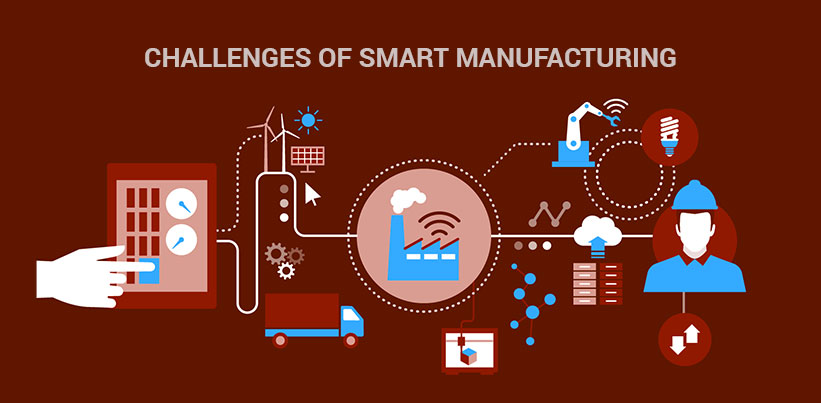
Smart manufacturing leverages disruptive technologies such as the Industrial Internet of Things, cloud computing, and Artificial Intelligence to name just a few. The convergence of these technologies serves to connect people, processes, and systems, drive seamless operations, and improve quality and efficiency. Real-time visibility means information is available at the right time for better decision-making. In this ecosystem, processes and workflows are able to communicate seamlessly, and users are able to receive timely notifications and alerts through wearables, PCs, and mobile devices. This aids in the faster resolution of issues, as well. Smart manufacturing drives easy modeling and design of machine parts and equipment, which in turn enables innovation and growth. However, there are some hurdles to overcome. The following are the 4 Smart Manufacturing Challenges: 1. Data Elicitation In manufacturing, the entire process (resource management, quality, finance, HR, subcontracting, production, sales, and service) is managed by a number of systems. Business systems and manufacturing systems give out data in different formats and contexts, making it difficult to use them together. Therefore, to make intelligent decisions, the first hurdle of contextualization needs to be overcome. 2. IT Issues Most manufacturing companies have an overworked IT team that may not have the capacity to deliver the growing number of applications required to set up a smart ecosystem. Internal IT teams also need to take care of infrastructure and application integration, which demands certified individuals to operate the process. There are also network compliance issues to be tackled before setting up new infrastructure. 3. Change Management Applications must be agile enough to adapt to changes, as change is a norm today. IT systems need to incorporate change management programs that will cater to new application development and data extraction needs. The greater the demand for customization, the more time it takes for new processes to be integrated. 4. Legacy Systems Huge legacy systems can be found in most manufacturing houses. Most of them are neither scalable nor flexible. They do not support new integrations and offer old-style dashboards to display performance data. They cannot process data rapidly and do not support real-time reporting. Since the growth rate of today’s manufacturing companies is fast-paced, and the volume of data generated is huge, working with such systems has increased the complexity for IT teams. The legacy systems are not agile and hence, cannot align with a company’s rapid growth. Smart manufacturing enables companies to go past these hurdles and achieve a fully connected and automated system. This enables businesses to operate proactively and more productively. Smart manufacturing uses a combination of various technologies such as cloud computing, analytics, Blockchain, and AI that help optimize the entire manufacturing process, thereby increasing the profit margins, as well. InApp has over a decade of experience delivering disruptive solutions that drive great transformation and innovation. Are you interested in exploring a transformative solution with us? Get in touch with us today.
Migrating from Java 8 to Java 11 – A Guide Note | Java 8 vs Java 11
More companies are embracing cloud computing, attracted by the lower costs, flexibility, and scalability. Cloud-native architecture supports cloud-based applications. It helps organizations with resilience and flexibility via distributed processing, horizontal scaling, and automation.
Ultimately, taking a cloud-native approach is an investment that results in a more scalable and reliable architecture. Here’s what you need to know about cloud-native architecture.
Java 8 to Java 11 Migration Guide | Java 11 Migration

Java version 11 was released by Oracle in September 2018 and is already making its mark in the computer world. Java 11 will serve as an important release that comes with a lot of features and enhancements. With the new release in place, Oracle will officially end its support for JDK 8 in 2019. This calls for a need to upgrade the systems that run on JDK 8 to the newer version. Other reasons to upgrade to Java 11 include the consequent non-availability of patches and security fixes to the Java 8 libraries. Important Changes in JDK 11 Release Before migrating to the new Java 11 version, it’s imperative to determine the major changes it can bring to a software system. The following are the important changes that are happening with the new Java version. Oracle has moved from major releases often at an interval of 3 years or more to a streamlined fixed feature release. A new major is released every 6 months (March and September) Oracle no longer supports 32-bit Windows downloads. Two minor updates for each (one and four months later). There will be no beta versions released. Instead, the updates will be ready-to-use features. Reason to do Java 8 to Java 11 Migration Even though there are no major language changes with Java 11, it has taken full advantage of the features released for the earlier versions. Here are some benefits of upgrading your system to Java 11 Full support for Linux containers – The JVM can now recognize the constraints set by the container control groups. Supports HTTP/2 Requests And Responses. TLS 1.3 The new default set of root authority certificates Java platform module system JShell Support for “shebang” Java files! #!/bin/java Getting Started on the Java Migration The purpose of this guide is to understand more about the latest Java version and how to proceed as you migrate your existing Java application to the latest JDK release. The document also highlights the significant changes and enhancements that come with the recent Java release.
Cloud Computing Services for Modern Manufacturing
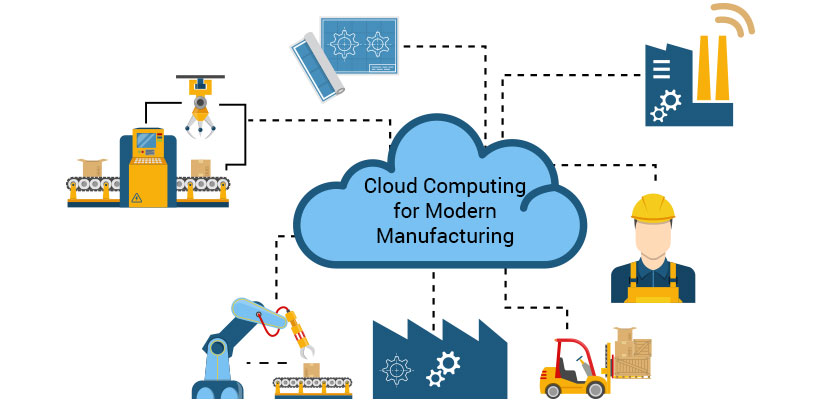
Globally, many manufacturing companies are expanding to new horizons and diversifying their operations, thanks to the advent of the Industry 4.0 revolution. Rapid transformation is taking place in the technology forefront, and cloud computing plays a pivotal role in bringing about this change. According to Gartner, “Cloud computing is a style of computing in which scalable and elastic IT-enabled capabilities are delivered as a service using Internet technologies.” Cloud Computing Services offer the following benefits for modern manufacturing practices: A TBR report states that “Agile manufacturers are planning to move their mission-critical applications to the cloud while citing security, integration, and performance as factors”. Cloud computing services can be deployed as Software as a Service (SaaS), Platform as a Service (PaaS), or Infrastructure as a Service (IaaS). Initially, the manufacturing industry leveraged cloud computing to improve primary processes such as warehouse and quality management. It is also being utilized to drive paperless workplaces, thanks to the high connectivity it provides. Cloud computing is also making it possible for companies to look deeper into data sets, and derive insights into equipment and process performance. This helps to track and analyze product quality, facilitating the improvement of quality levels and creating a competitive advantage for the company. Gauging equipment effectiveness helps analyze the health of machinery and tools and extend their performance. Discrete manufacturing involves build-to-order and configure-to-order workflows, which require real-time integration of multiple applications. Cloud computing contributes by offering seamless data transfers, reducing cycle time, and enabling easy recording of each process in detail. It provides a foundation for connected manufacturing. Another important reason cloud computing is being adopted more widely is that it empowers managers to assess supply chain performance, which contributes to better decision-making and forecasting. What’s Next? Cloud computing’s connectivity for machines, systems, and stakeholders is positively impacting modern manufacturing companies at various levels. At the enterprise level, its impact will be seen in the way how companies efficiently and seamlessly manage their operations and system integrations. This includes all the high-level processes such as production, finance, ERP, HR, training, and others. At the production level, cloud computing will change the way products are designed, developed, assembled, and packaged. It will play a key role in connected manufacturing that uses new technology such as the Industrial Internet of Things (IIoT), 3D printing, and generative design to operate seamlessly. To derive maximum benefits from cloud computing, modern manufacturing companies need to have a comprehensive cloud strategy to maximize their Return on Investments (ROI). Cloud computing partners should be chosen based on their solution’s scalability, security, flexibility, process documentation, and training capabilities. InApp has over 22+ years of experience driving transformation with best-in-class manufacturing solutions. If you are looking to deploy cloud solutions for your manufacturing concern, please contact us, and we would be glad to help.
5 More Smart Manufacturing Trends for 2019
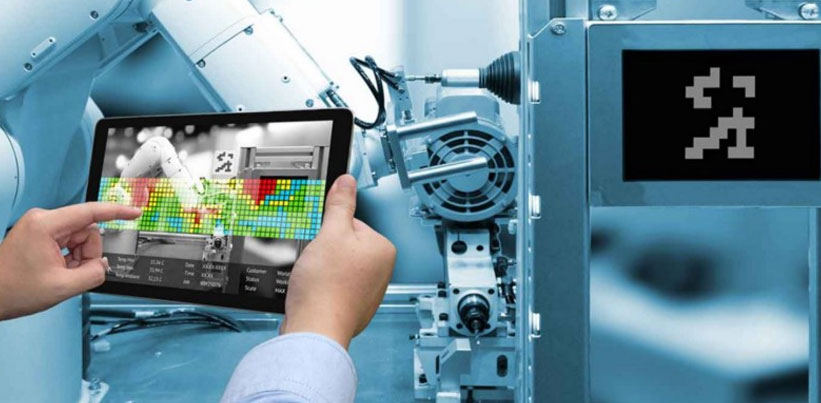
Manufacturing companies across the globe are embracing the Industry 4.0 revolution with the implementation of disruptive technologies. Smart manufacturing leverages one or a combination of such technologies to support existing practices on the shop floor and drive the adoption of new automated industry practices.
5 Smart Manufacturing Trends for 2019
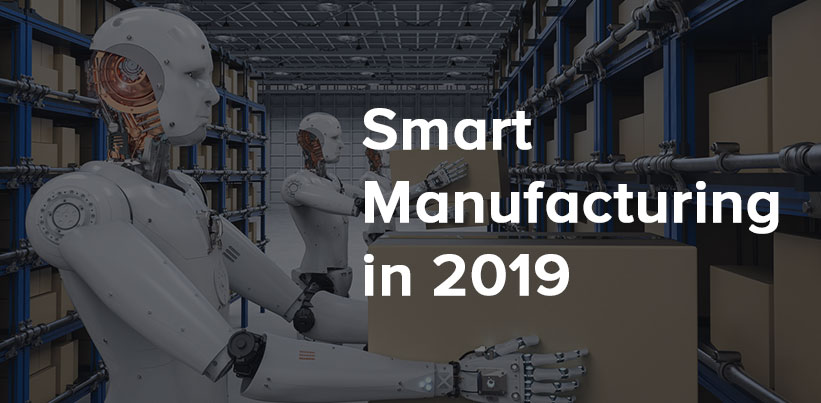
Smart manufacturing is a conglomeration of disruptive technologies that enable easy connectivity and automation across all processes involved in the industry’s ecosystem. As manufacturers across the globe are slowly transitioning, we thought it would be the right time to see what’s trending, and how the technologies will make an impact on growth, operations, and revenue.
How Disruptive Technologies are bringing in Digital Transformation in the Supply Chain Process
The supply chain process has undergone a major digital transformation in recent years. New age disruptive and emerging technologies have helped create cost-effective and highly efficient processes, that have brought about rapid growth for this segment. The industry is seeing great strides in the area of predictive modeling, which is enabling businesses to cater to new and growing demand efficiently. Supply chain businesses everywhere are in a transition phase, integrating their legacy processes with emerging technologies. Here’s a look at some of the popular supply chain digital transformation technologies that are most sought after. Lights-out Planning This technology works on the concept of “segmentation and synchronization” of all the activities involved in the supply chain process. Implementing lights-out planning can result in significant improvement in productivity and efficiency, and a reduction in working capital. It replaces human input for the planning process with machine learning which greatly aids in forecasting. From real-time scheduling of shop floor communication to the final rollout of the product, lights-out planning can offer seamless automation of the supply chain process. Blockchain Solutions Blockchain is a tamper-proof digital ledger that enables manufacturers to keep track of the purchase volume, irrespective of who initiated it – the employees, partners, or subcontractors. This technology eliminates the need to recruit a professional team to audit transactions and the price-verification process. Manufacturing companies also benefit from the fast closure of digital contracts and payments. Blockchain is also a great technology to secure supply chain transactions and identify malpractices instantly. 3D printing 3D printing was first deployed in the prototyping division of the manufacturing house. In today’s fast-paced market scenario, 3D printing has enabled supply chain processes to run perfectly even for a batch size of only one. Product designs can be customized by the customers on the fly, while engineers can design spare parts in a short time. The high-level business value of this technology is the agility with which product customization can be carried out seamlessly and effortlessly. Reduction in manufacturing, production, and distribution time is the single largest benefit here, while the process also generates minimal to no waste, reducing the carbon footprint of the manufacturing house. Artificial Intelligence (AI) & Deep Learning Amongst the new disruptive technologies, Artificial Intelligence has the greatest potential to transform the supply chain process. From building prototypes to automation, and real-time decision-making, AI technology can be applied to every aspect of the supply chain. The technology enables manufacturers to gather real-time buying behavior to better understand customer needs. AI empowers manufacturers to gain predictive insights on how to improve operations and improve customer engagement with Natural Language capable applications for voice and text. The above disruptive technologies have changed the supply chain process from a cost overhead to a revenue-generating one. Manufacturers across the globe are actively adopting these technologies to suit their production and market needs. The key to implementing these technologies is finding the right partner, with the necessary experience in the required field of automation. This adds to the overall efficiency of implementing technology and driving bottom-line growth. Are you looking to streamline your supply chain processes for greater operational efficiency? InApp is an experienced technology partner helping companies implement cutting-edge disruptive solutions and we would be glad to help. Contact us to learn more.
Industrial Internet of Things: IIoT Benefits & Challenges
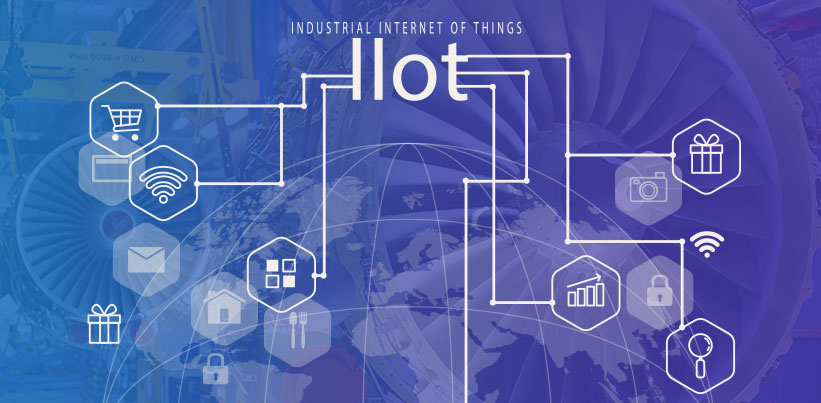
The Industrial Internet of Things (IIoT) is the single biggest technical innovation in recent times. It has slowly gained inroads into our lifestyle, making devices smarter, and communications faster. IIoT enables easy collection and communication of data, which helps companies to make informed decisions. Benefits of the Industrial Internet of Things IIoT offers a huge spectrum of business functionalities by enabling the integration of multiple datasets. Mobile phones harness the benefits of IIoT in the best possible manner. Accessing IIoT solutions via mobile applications makes them more accessible, making it easy to transmit data. For example, some medical devices with in-built sensors can help obtain health information from the patient, and transfer it to a mobile app for further analysis. IIoT-based farming employs sensors to remotely monitor weather and environment conditions, farm statistics, and livestock. IIoT offers a wide range of offerings for the retail industry, including Wi-Fi tracking systems, predictive maintenance, tracking transport systems, warehousing, and smart stores. Manufacturers can monitor truck mileage and engine health, while effectively optimizing truck routes. For large-scale manufacturers in the airlines and car business, IIoT enables ground technicians to get alerts for maintenance schedules and daily production. Despite its multiple benefits, implementation is still a challenge in many ways. Challenges of the Industrial Internet of Things While it is very clear that IIoT technology adoption can sprint the company’s growth many times over, its implementation requires a fairly large financial investment for setting up dedicated IT teams and infrastructure. For IIoT to be a success, the following needs to be executed. Shop floor operators have to monitor assets in real time and ensure that the machines perform optimally. This requires setting up the necessary IT infrastructure to get better visibility of machine performances. Management needs to ensure that all disparate systems are bound through IT, in order to ensure data security and faster access to real-time intelligence. Knowledge transition from the aging workforce to new teams needs to be conducted so that new digital technologies contain all the necessary know-how for operations. Setting up storage and communication technologies to leverage real-time data. This is also important to ensure data does not get siloed, which may lead to technical challenges. Ensure a robust security system is in place to protect organizational and financial data from cyber-attacks. It also includes coming up with a suitable mitigation plan to overcome risks. IIoT challenges for manufacturers are all about cost and implementation. By overcoming the above-mentioned steps with suitable technology solutions, companies can enjoy the benefits of improved productivity and growth. Do you want to harness the power of IIoT for your organization? With 21+ years of experience, InApp leverages disruptive technology solutions that can help you make intelligent data-driven decisions. To learn how to accelerate growth, while minimizing costs, contact us.
Blockchain Solutions by InApp

Through its blockchain solutions, InApp has been bridging the gap between the said technology and finding its usage in different modern applications. Learn here how we’ve been doing it.
Driving Digital Transformation in the Manufacturing Sector with Artificial Intelligence and ML
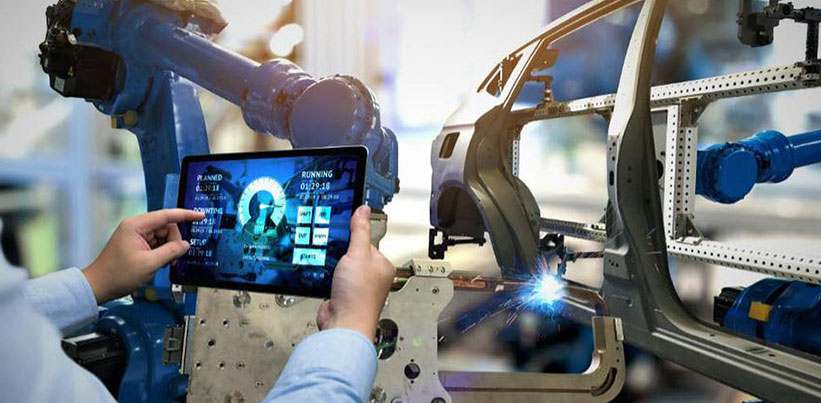
Cutting-edge, disruptive technologies like Artificial Intelligence (AI) and Machine Learning (ML) are driving process automation changes that provide corporates with unparalleled abilities to make faster decisions and drive timely outcomes and deliveries. Manufacturing is a segment that has been slow to change because of its long association with legacy systems and complex processes. What the industry did not expect is that disruptive changes are transforming all layers of the industry. Manufacturers are facing challenges to improve product quality, minimize downtime, meet highly variable demand, and cater to personalized products that require high automation efficiency. AI and ML are playing a big role in helping manufacturers transform to achieve these goals. From supply chain management to predictive maintenance, manufacturers need technology-driven innovations that can integrate processes and drive seamless operations. Coupled with the need to improve employee efficiency and drive R&D efficiency, the manufacturing industry faces multiple challenges to meet the growing demands of its customers. Building Business Value with AI and ML Bringing AI and ML technologies into the manufacturing sector can be a dream situation, given that the benefits range widely from improving operational efficiency to driving bottom-line growth. Let’s take a look at how each of the below parameters is influenced by AI and ML technologies. 1. Sensitizing Predictive Maintenance According to a PwC report, ML analytics can improve predictive maintenance processes by 38% in the next five years. Through improved process visualization and automation, the algorithms can help manufacturers expect a steep rise in their growth rate. By reducing supply chain forecasting errors, companies can achieve better product availability, and more efficient transport and warehousing administration. 2. Raising the Cost-Benefit Value Integrating AI and ML algorithms into procurement data can aid in strategic sourcing and cost management. Machine Learning-based root-cause analysis can bring down annual predictive maintenance costs, while AI-powered predictive maintenance ensures seamless operations and high yields. AI-based optimization can reduce machine downtime and inspection costs. This improved accuracy causes a ripple effect, sometimes contributing to up to a 50% reduction in manufacturing costs. 3. Asset Management and Inventory Optimization Adopting AI and ML can drastically increase your asset tracking accuracy and inventory monitoring, across global locations, thus enabling shop floor teams to gain increased visibility into their supply chain movement. Inventory optimization through ML algorithms can enable marketers to manage their demand supply, taking into account time-to-market variables. Real-time monitoring of shop floor operations offers the necessary insights to achieve optimal production schedule performance and higher visible control of maintenance activities. 4. Leveraging Real-time Testing Intelligence One of the major roadblocks in manufacturing is the testing stage. Achieving accurate prediction of calibration and test results using machine learning algorithms enables easy isolation of bottlenecks, and streamlining of the end-to-end test processes. AI and ML can certainly enable manufacturing companies to go past the boundaries of traditional tools and processes, to procure real-time intelligence that can drive real-time accelerated growth. 5. Raising the Operational Efficiency Bar Embracing AI and ML leads to a reduction in downtime due to human errors and ensures streamlining and linking of all in-house and subcontract processes. This results in the company gaining more time for innovation and R&D to cater to new market segments. A powerful operational advantage is that AI and ML-based predictive maintenance brings factory downtime to almost zero for greater efficiency. Embracing AI and ML Disruptive technologies such as AI and MI have a positive impact on manufacturing processes, delivering multiple benefits to drive business growth. InApp provides smart digitalization strategies setting the stage for long-term growth and market leadership. InApp solutions offer automation benefits, NLP capabilities, object recognition features, and real-time predictive insights. We help you choose the right AI solution that can drive digital transformation at a fast pace, and one that suits your current business needs. Interested in exploring a transformative digital solution with us? With over 21+ years of experience in the manufacturing sector, we would be happy to help. Click here to get in touch with us.